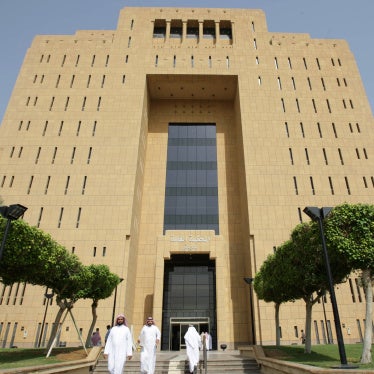
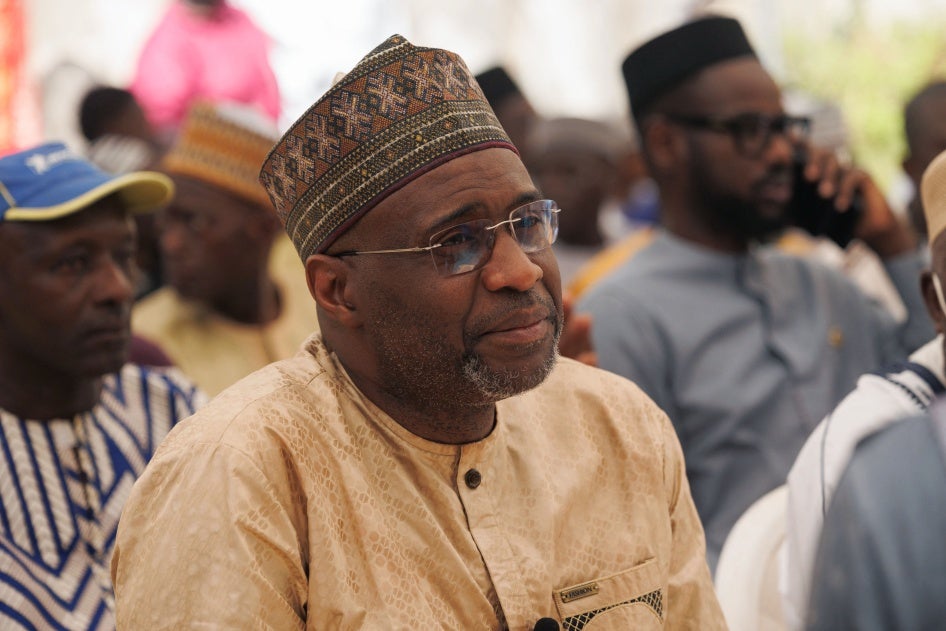
On Tuesday, former Prime Minister Moussa Mara stood calmly before a court in Mali’s capital, Bamako, while the judges rejected his lawyers’ application for his release on bail. The prosecution instead sought a two-year prison sentence, an action encapsulating the military junta’s crackdown on political opposition and dissent.
Security forces arrested Mara, prime minister for eight months between 2014 and 2015, on August 1, following a messagehe published on social media expressing solidarity with Malian political prisoners and promising to ensure them justice.
Authorities charged Mara with undermining the state’s credibility and legitimacy, opposition to legitimate authority, inciting public disorder, and spreading false information. His trial began September 29 before a specialized national cybercrime court unit and the court’s ruling is expected October 27. But there are grave concerns about the fairness of his trial.
The charges on their face appear to violate free expression rights. “These charges have nothing to do with the message Mara published on X,” said a member of his legal team. “This is a trial against the right to freedom of expression,” said President of the Bar Mounkaïla Yayé, another member of Mara’s legal team. “It can create a dangerous precedent.”
Since taking power in a 2021 coup, the military junta led by Gen. Assimi Goita has cracked down on the political opposition and civic and media space in Mali, banning all political parties and intimidating, jailing, and forciblydisappearing journalists and rights activists. General Goita has consolidated power without elections, delaying the return to democratic civilian rule.
The junta has also ignored calls for accountability and failed to uphold its international legal obligations to investigate serious rights violations by security forces, and hold those responsible to account. In January, Mali, alongside Burkina Faso and Niger, officially left the Economic Community of West African States (ECOWAS), depriving citizens of the opportunity to seek justice for human rights violations through the ECOWAS Court of Justice. In September the three countries announced plans to withdraw from the International Criminal Court treaty, a move that will jeopardize access to justice for victims of atrocity crimes.
Mara’s arrest demonstrates how even expressing solidarity with the repressed is now off limits. It also shows the junta’s intolerance of any dissert. Malian authorities should immediately drop all charges against Mara and release him, as well as all those still arbitrarily detained, and respect the right to freedom of expression.