Survivors face lack of support as sexual violence escalates in eastern Congo
Read a text description of this video
SOUNDBITE: I went there to gather cassava leaves, when the soldiers arrived and grabbed me. (“Marie” Sexual violence survivor)
TEXT: WARNING. This video includes distressing descriptions of sexual violence. The name of the survivor has been changed, and her words read by an actor.
SOUNDBITE: They tore my clothes, and one after the other they raped me. (“Marie” Sexual violence survivor)
NARRATOR: Marie is one of many survivors in eastern Democratic Republic of Congo, where sexual violence is increasingly being used as a weapon of war.
NARRATOR: The M23, other armed groups, and Congolese government forces are raping women and girls with impunity. Cuts to foreign aid by the United States and other donors have left clinics without essential emergency health care.
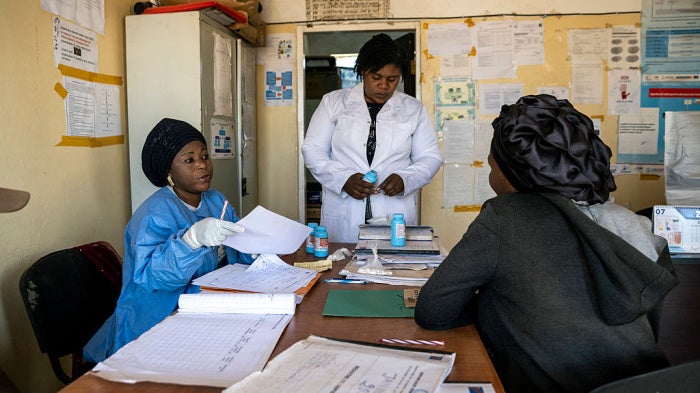
SOUNDBITE: We are a one-stop center that is available at all times, open to everyone, and care is 100% free. We provide holistic care for cases of gender-based violence and sexual exploitation. We struggle with challenges such as running out of post-rape kits. (Dr. Elisabeth Furaha, Medical Director, SOFEPADI)
NARRATOR: Crucial treatments, like emergency contraception and post-exposure prophylactic kits, known as PEP kits, can provide protection against potential HIV infection, but they need to be given within 72 hours.
NARRATOR: In eastern Congo, the US was the primary donor of these treatments. Without these and other essential supplies, clinics are struggling to provide for survivors of sexual violence.
SOUNDBITE: We are still focusing on the need to seek medical attention within 72 hours, in order to prevent unwanted pregnancies and sexually transmitted infections such as HIV, gonorrhea, syphilis, hepatitis B, and others.
SOUNDBITE: When I regained consciousness five hours later, I was in the hospital. The nurses were not there, so I washed myself. At 5 p.m. I was still at the hospital, and they told me for cases like mine you have to go to Bunia [the provincial capital]. So, I started to try and earn some money, and managed to get a bit [after two months]. I took a taxi which brought me here to Bunia where they found that I was pregnant and that I had contracted HIV/AIDS.
NARRATOR: Survivors of sexual violence are often stigmatized by their communities, making recovery and resilience much harder. So, it’s vital that care for survivors is holistic, including reproductive health care, abortion care, and psychological and socioeconomic support.
SOUNDBITE: I can say that even if the conflict persists and the number of cases continues, at least the work we are doing is not a waste of time and we are helping to give courage.
NARRATOR: So long as the war and sexual violence continue in eastern Congo, organizations supporting survivors should be given the tools and resources to address the consequences.
NARRATOR: The US and other international donors should urgently restore funding for post-rape care and survivor services in eastern Congo.
CREDITS:
SHARE THIS VIDEO
Narrators: Anna Bruckner, Janet Ngokadi
Producer/Editor: Nicolas Suarez
Producer/Videographer: Patrick Thompson
Additional Footage: AFP
Music: Audio Network
Conflict-related sexual violence in eastern Democratic Republic of Congo has escalated while support to survivors has significantly dropped, Human Rights Watch and the Congolese women’s rights organization SOFEPADI said today.
Human Rights Watch has documented sexual violence by members of at least five non-state armed groups and the Congolese army in eastern Congo. Expanded fighting in Ituri, North Kivu, and South Kivu provinces as well as funding cuts and limited access to health services, have made it increasingly difficult for women and girls who survive sexual violence to get the holistic support they need. Many clinics offering health care and other support have been forced to close.