Ngofeen: Robert Taylor. You were born in 1940.
Robert: Yes.
Ngofeen: And you grew up in St. John the Baptist Parish. I think it's about 30 miles west of New Orleans, just north of the river.
Robert: Yes.
Ngofeen: Describe the town. Like, who lives there? What kind of place is it?
Robert: It was a town that was actually created by the sugarcane industry. I can remember going out the backyard and pulling a sugar cane out the ground and eat it.
[Ngofeen laughs.]
Host: I want you guys to meet someone I spent some time with recently. Robert Taylor. He was in Louisiana, I was in New York City. It was almost like a porch chat, but virtual. We talked about his life, and all the changes he’s seen in the place where he grew up…
Robert: I lived about a half block off the refinery itself in housing that was provided by the company for its employees.
Ngofeen: At that time when you're growing up, how do you know that you live in Sugar Land, you know? Sounds like you're literally eating the food.
Robert: Yes, exactly. Well, I didn't know anything else. Uh, I don't know, by the time I was a teenager is when I began to realize there was a world outside of sugar. But, uh, I was quite happy and content as a kid living in that environment and in that culture. It's what everybody relied on. That was our way of life.
Host: Robert grew up along the Mississippi. The Great American River where something like 40 percent of the land in this country - the lower 48 drains. From as far north as Montana, all the way across the Midwest -- so, the Great Lakes, the Wabash River, the Tennessee River -- all the way through western Pennsylvania, even to the edge of states like North Carolina, that whole stretch of land. It drains all down one channel, one funnel, the Mississippi River. All the sediment slides through there.
For a lot of reasons, the land around the Mississippi river is valuable, precious. So many people have wanted it. Traders, slavers. And for almost the last near century, the fossil fuel and petrochemical industry wanted it.
They dug up graves, exhuming the bones of the dead. Sometimes, they built right on top of graves and cemeteries. They dug a vast network of oil and gas pipelines. They carved into the land, cutting across wetlands, across various ecosystems. Some of that carving took place when Robert was a young man.
Ngofeen: Ok, so if I’m walking around in that area, how do I start to notice that the fossil fuel and petrochemical industry is coming in?
Robert: Well, the first time it was brought to my attention, it was by my wife. I can remember her asking me, Bobby, ‘what's that, what's going on over there’ on what was then Belle Point Plantation, which was just a few blocks from our house. And I hadn't noticed the construction, even me being in construction, but she did.
And, uh, I didn't know -- this was 1963, the year that we got married. So by the time our fourth and last child was brought home, that plant has been built and went into operation the year that Raven came home, our baby. But growing up, as the kids growing up, they would always come in complaining about odors, about chest pains, because of some odors and smells they were getting. But all of that was new to us.
Host: The area where Robert lives has one of the highest concentrations of fossil fuel and petrochemical plants in the Western Hemisphere. It’s got the highest risk of cancer from industrial air pollution in the country. It’s called Cancer Alley, an 85-mile stretch of land along the tail end of the Mississippi River, from the capital Baton Rouge, which is inland, to New Orleans, where the nation’s rivers pour out like a bowl into the Gulf of Mexico.
In Robert’s corner of the River, there are people, there are communities, there are houses and schools just across the fence line from giant refineries.
And that’s what I wanted to talk to Robert about.
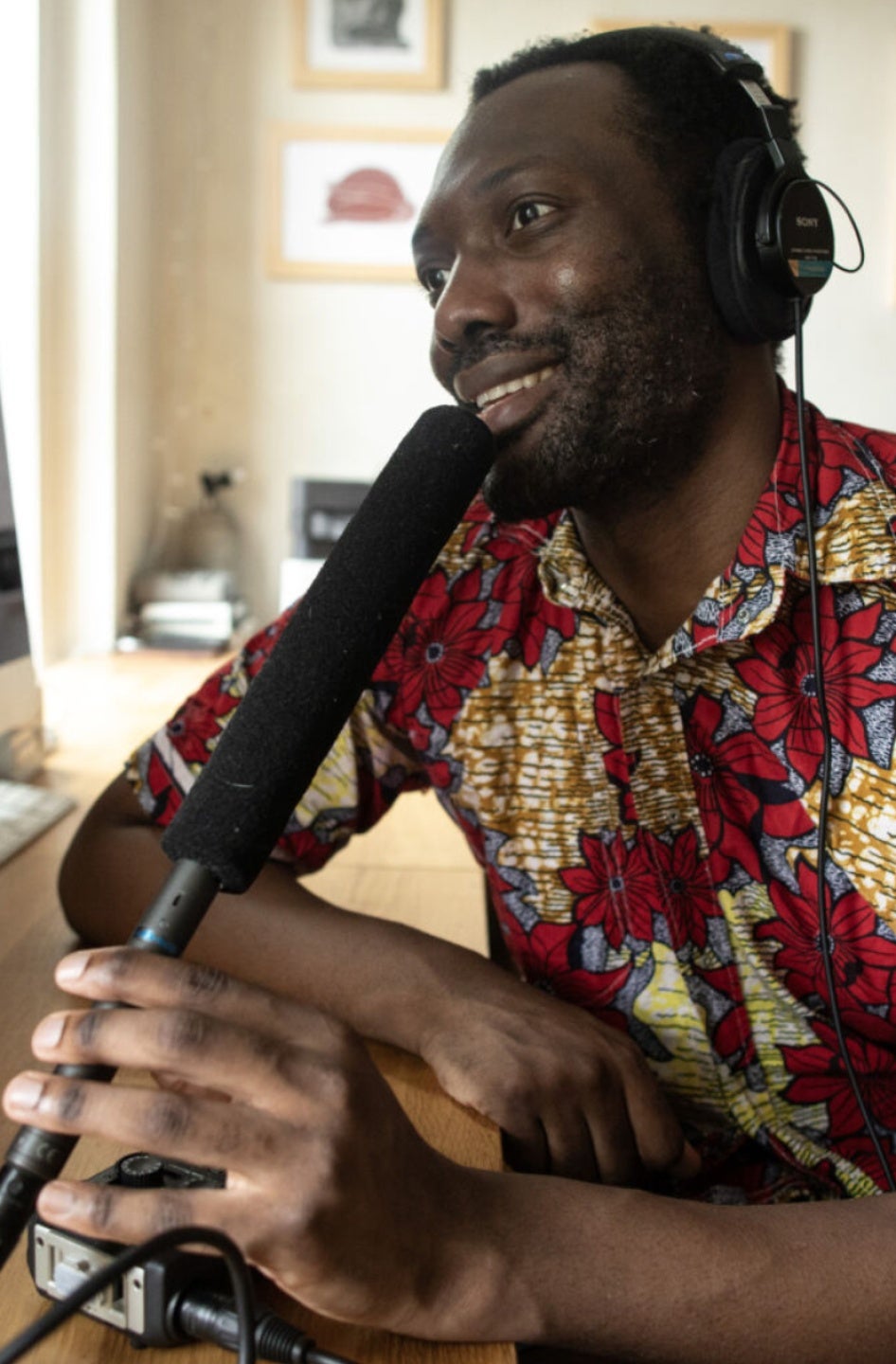
This is Rights and Wrongs, a podcast from Human Rights Watch. I'm Ngofeen Mputubwele. I am a writer, a lawyer, and a radio producer. Human Rights Watch asked me to look at the human rights hotspots around the world through the eyes and ears of the people on the front lines of history.
Ngofeen: So you grow up there, you get into the construction business, you get married, you get your own land. Why did you want to buy a plot of land?
Robert: Well, that was the American dream -- to own a home. You know, if you're thinking about marriage and a family, for me, that's what really drove me to make sure that I did have something. A legacy, something to leave for my children, you know, which is one of the things my father used to always say to me that it was unfortunate, that he felt bad about it, but, uh, I thought he did a wonderful job. But he instilled that in me, to plan ahead for my, for our children in our future.
Ngofeen: What was your father, what did he feel regret about?
Robert: Well, he and my mom separated when I was four years old. She left him. Uh, and so he moved away and he wasn't able to have me as close to him as we were in those first four years, which was precious to me, the memories of the love and care that he gave me. And so, uh, by ten years old, I found him again. And he vowed never ever to lose contact with me.
And, uh, he worked very hard, worked on the railroad. He bought land and built the family home that he gave to my mother and the new guy she was living with. Because, uh, we weren't doing very well without him. So he extended his help anyway to us. And that's when he always would tell me, you see how hard I got to work. I want you to go to school and get a good education so that you can take care of your family and don't have to work as hard as I 'm working.
Ngofeen: And can you just tell me about the importance of owning land to your father?
Robert: He knew about slavery. He was born in 1898. His dad was born into slavery, and his grandfather. What he wanted for us, for me -- his emphasis was on education and economics. Uh, you have to acquire land and make sure that your children understand that they need to work towards the future -- the future of their children to keep our legacy whole. So acquire land. First make your peace with God. He was a religious man. And uh, and then go about building your family in a way that they could live happily.
Ngofeen: I wonder if you could just actually just like describe that plot of land to me, like, what does it look like?
Robert: The plot that I acquired?
Ngofeen: Yes, sir.
Robert: It wasn't anything where I could do farming. It was a, uh, 60 by 90 foot plot of land, and I could build a home on. The initial home that I was able to acquire, it was a nine thousand, a nine hundred and twenty square foot, three bedroom home. But immediately, uh, I, uh, I started to expand on that. And in two years, I turned that into a seven bedroom home. I had learned the building trade, so that's why I was able to do that. But I was encouraged by my wife because she was right at my side, whatever I was trying to do. And uh, it was, it was a two story building. And people would pass by and see me and her, she would be on that roof right beside me. People would actually stop and scream up there, tell her to get down from there. ‘You must be crazy. What are you doing on that roof?’ You know? No, but she, she, uh, we did everything. We, we worked hard and we were able to build a real nice home for our family. And when I say a home, I'm talking about the community. Our home was the center of activity in the community.
Ngofeen: When you got your plot of land, you know, is that sort of what, what it meant to you, like, what's going through your mind is like, you got, you got that thing that your dad had told you…
Robert: Very, very much so. What really was a blessing to me and I hope to him, was in his later years, he got ill and couldn't work anymore. But I had built a home, and uh, when we went to visit him and found out in the hospital, and they told us that he was going to have to go from there to a nursing home, and my wife wouldn't hear it, you know.
She said, ‘no, dad is coming home with us’. And we took him home with us. Our children fell in love with him. And I'm, I'm thankful that we were able to have him in his latter years. He died happily with us. And all of us was happy to have had him.
Ngofeen: So, at 25 you get this plot of land and eventually your dad comes back, settles there, which means your kids grew up with him around.
Robert: Yeah.
Ngofeen: So as you're buying this land, buying it, and building at that same time, the petrochemical industry is starting to come into the region.
Robert: Yes.
Ngofeen: What do you think at that time, is that like, you know, when companies come in, usually that means jobs. What are you thinking about it at the time as it's coming in… initially?
Robert: I really didn't have much thoughts in that direction because I had always been self employed, and I never worked in the parish. But there was one guy, my next door neighbor, who did get a job at the plant. And they were very prosperous. He would buy a brand new Lincoln Continental, you know, and park on his driveway.
And as the kids grew up, he would buy them nice expensive cars. Yeah, you could tell the difference in some, you know, in our community, somebody who's got a good job like that. And his lifestyle was, was decidedly different from the rest of the people in the community.
Ngofeen: So I want to bring in -- for the listeners, they don't know -- there's another person here with us, your daughter, Tish. So you had four kids?
Robert: Yes.
Ngofeen: Tish, what number are you?
Tish: Number one.
Ngofeen: Oh, you're number one. Okay. Okay. Eldest!
Tish: Yes I am.
Ngofeen: And so Tish, when your dad mentioned the Lincolns, the new cars, you were nodding your head. Do you, do you have any memories of sort of like either the new cars or how the, the neighbors who were working at the plant, they had, like, they seemed a little bit wealthier.
Tish: Absolutely. They were the family that had it. [00:12:00] It was the nice cars. Now, what my dad didn't mention was that he was also a musician. So he had a band.
Ngofeen: Okay.
Tish: Now they had nice cars and they probably had nicer clothes, but across the street from them, we had it going on. We were like, we had the swing set, we had the musicians every Tuesday and Thursday. The cars are lined up, people in the street listening to the band practice. So we had it going on over there, um.
Everybody came over to the Taylor house. So the whole community watched him add onto that house with cash because he did not believe in getting in debt. So first the front was brick, then it had arches. And then it was next thing in week, tore the roof off and put a whole new roof. And everybody was just Like, ‘wow, when is it going to stop’? And he was like, I got a family, we, we have to have room. We have, we need this to be the compound, which it turned into the family compound.
Host: Ok so near this house, the family compound, the fossil fuel and petrochemical industry built a plant. Robert and Tish and everybody who lives there refer to the plant as Dupont, but in 2015 a Japanese company called Denka bought it. It makes neoprene, a synthetic rubber that’s used in things like wet suits, fan belts, boots, leggings. The process releases a toxic pollutant called chloroprene.
Ngofeen: Can you describe, Tish, your childhood memories of what the plant looked like?
Tish: I thought it was a beautiful city. And I thought when we passed there that I knew I was close to home because it was a city with all those bright lights.
Ngofeen: What did it smell like?
Tish: The smells were not all the time. It's just like certain atmospheric things happening. You know, when it's really foggy, most of the time at night, you get the smells, raining and stuff like that. I guess when the, you know, atmosphere is heavy, it kind of hovers low. So we would get the smells then.
You know, it'll give you a headache, you know, you, you know, it wasn't comfortable, but it was just what we knew. I was four when they started the neoprene plant, and obviously all the smells came from there and somewhere in that process, you know from the production of the neoprene because chloroprene is actually odorless. A lot of the chemicals that we're exposed to are odorless.
Tirana Hassan: Hi. This is Tirana Hassan – the Executive Director of Human Rights Watch. At Human Rights Watch, we investigate and report on abuses happening in every corner of the world. We’re journalists, country experts, lawyers and other professionals who are doing everything we can to expose perpetrators and to help protect vulnerable people. We’re a nonprofit, but to keep our independence, we don’t take money from governments. That’s why we rely on support from people like you. If you value what we do, please donate. Go to hrw.org/podcast/donate. That’s hrw.org/podcast/donate. Thank you.
Ngofeen: Did you have any health problems when you were, when you're growing up?
Tish: Just sinus problems allergies sinuses I was taking sinus medicine by the time I was in fifth grade and all of us had that. We all were taking prescription medication for sinus infections at young ages.
Ngofeen : Okay.
Tish: Well, you know, that's just the area we live in. That's what they said, ‘that’s just the area we live in’. Because as I was growing up, there was more and more industrial facilities being built.
Robert: My, my sinus problems were so severe that my doctor would have to treat me -- once a week he'd bring me in and rub cotton on a stick and stick it all the way up my nose and make me sit in his office for a half hour with it.
Then one of my wife's cousins came from Los Angeles to visit, and she saw our house that I had built. And she asked me, ‘Would you come to California and do this to my house?’ You know. When I went to California, my sinuses disappeared. And the minute I came back home, it started over again because of the environment that I was living in.
Host: As Tish mentioned earlier, over time the fossil fuel and petrochemical industry built more and more plants in the region. Now there’s an estimated 200 plants in Cancer Alley. I asked Tish, how did you figure out that in the community as a whole, people were getting sick?
Tish: Well, first our next door neighbor across the street, um, was diagnosed with cancer. He had throat cancer. So he talked differently after he had the surgery, you know, he had like a whisper almost kind of voice, you know? And so that was the first time we ever heard of cancer. And then my grandmother was diagnosed with bone cancer. One of the neighbors a few houses down was diagnosed with cancer. And it just started like, the conversation in the community itself was ‘all these people are getting sick and that wasn't like that before. It's got to be all these plants that's coming in our neighborhoods that's doing this’. And that was it, because we felt helpless anyway, there's no way we can do anything about it. But it was like, under the surface, we all felt the same, that all the illnesses were, were not, you know, that, that was a whole generation of things that we had not experienced. Daddy's generation had not experienced it, but now people are getting very ill. My brother, um, had kidney disease, um, he was in and out of the hospital all our childhood. My sister always had problems with digestive problems. Years later, she was diagnosed with gastroparesis, which is her stomach was paralyzed and then her large intestine. And when she went and actually got some serious in-depth testing, she was diagnosed with some rare autoimmune disease. My generation, our generation of families were having miscarriages. But as we grew into being adults, we started having more of our generation, having cancer in their twenties and thirties.
And, uh, it's like we're burying our classmates and they're 30 years old. We're burying classmates from then on. It was just normal for us to have, you know, this one had cancer or they survived cancer and other rare autoimmune diseases.
Host: Tish went on and on about all the sickness in her family and community…
Tish: … it's rampant, but we always hear someone say rare diseases. My mom was diagnosed with thrombocytosis where the blood platelets in her bone marrow make too many platelets so her blood is thick. And she's taking leukemia medicine, it's a blood disease. Um, and then later diagnosed with multiple sclerosis.
Host: …She talked about illnesses among workers in plants, including Tish’s ex-husband.
Tish: Prostate cancer, kidney cancer, colon cancer. A lot of them have passed.
Host: …she went on for like 5 minutes!
Tish: And our next door neighbor across the street, he had prostate cancer.
Ngofeen: Did it ever cross your minds to be like, maybe we got to sell this and leave?
Tish: No, it was home. And we didn't know that it wasn't like that anywhere else. Because we were a small community. We didn't travel a lot. We might have went visit somebody, but we were right back home. And you visit someone along the river, and everybody's living the same life.
And you have to remember, this is not the time of having social media or anybody investigating anything. There's no data that we could look up, even though we might not have had the capacity to look it up anyway, we weren't involved politically and another plant came in and another plant came in and we just were getting sicker.
You know, I, I love telling this story about my dad. My mom calls me one morning. She was like, ‘your dad has lost his mind’. And I'm like, ‘what's going on’? And she said, ‘your daddy called 911 on DuPont’. And I'm like, ‘stop the madness. What do you think they’re going to do, arrest them?’
But Daddy tell them what else happened.
Robert: Yeah, I called 911, you know, which we had been instructed, if we smell strange odors, to call. So I call 911 and the fire department showed up. They always get there first. The police come. Then here come the fire chief about five minutes later.
And we're all out in front of the house and he jumps out of his car and comes towards us. And he stopped dead in his track and he look around. And he said, ‘Oh my God, how do they expect you people to live like this’?
He was shocked at the power of that odor. There’s just something about it. And especially for people like him, you know, he's a professional, he'd been in these, but he don't live in Reserve. All of the whites had moved out north of the Parish. North of the airline highway. Didn't get the direct effect like this.
Ngofeen: Why did they leave? Or like, how'd they know to leave?
Robert: They started leaving in 62 and 63 at the start of construction. By the time, uh, 69, when that plant really went into effect, our population had switched. Man, the demographics of our pop -- that had changed dramatically. All the whites were gone.
92% of the victims in cancer alley are black. That's not coincidental. In every parish you go in, the white population is secluded off in the safest area in the parish. There's no way around that. That is too obvious.
Knowledge is key. So you have to inform yourself so that you, how can you protect yourself if you don't know that you are being threatened, and you don't even know who your enemies are? See, you don't know that it's the hand that is supposedly feeding you that is really poisoning you. What are those people working in this industry here, what do they do when they find out that the, uh, those little jobs is going to cause the destruction of their generations?
Not just them, but generations of our people are going to be destroyed because they're able to buy a new car every few years. One or two people. I think it's horrible for those people to say, well, we brought jobs to the community. I mean, what, what are they talking about? You can kill all this amount of people just because you gave a handful of people a job? How do humans begin to sit and weigh somebody's health and life and the generation against this person who's working and got a job?
Ngofeen: In 2010, after a whole lot of studies, the Environmental Protection Agency came out and they classified chloroprene as a likely human carcinogen, and they set a limit: .2 micrograms. And that was a, that was a really big deal. So you had this like official, finally, an official statement from an official source being like, this is the correct level, or, or this is the level that is tolerable. Since then, and even before then, you guys have been engaged in all kinds of activism and advocacy to try to change the situation.
Robert: I mean, you mentioned a 0.2 suggestion that the EPA made. That was a suggestion. And as the head of the Louisiana Department of Health, Mr. Jimmy Guidry, told us that there is no such thing as a safe level of exposure for a human being to chloroprene.
When we entered into this fight, specifically because of what DuPont Denka was putting up on those poor, unsuspecting school children, hundreds of times over the level, which we know that level was hundreds of times too dangerous anyway. And then now they are getting away with not even adhering to that 0.2. And then those people were licensed by the state of California to -
Tish: Louisiana.
Robert: state of, who did I say?
Tish: California.
Robert: Oh my God. The state of, of Louisiana. That's what DuPont brag about right now. Oh no, we're within the law. Your government said we can dump, uh, this amount of poison. Oh, yeah, that's, that's, that's, that's a couple thousand times over what is a safe level. But so what? Who are the victims of it? Oh, well, that's the sacrifice zone. Don't you understand?
Ngofeen: So what we have here are two very different standards. The federal government, or the EPA, wants to see tighter limits imposed on emissions of chloroprene, but the state of Louisiana is not enforcing that standard. And Denka, the new owner of the plant, has continued to release chloroprene at many, many times the EPA’s recommended level. The children Robert was talking about go to a school right near the facility.
Robert: Kindergarten through fifth grade, black kids who are bussed in from all over the parish to that school …
Host: When we asked Denka for comment, the company replied, quote “There is no ‘imminent’ endangerment near the Denka Performance Elastomer (DPE) La Place facility”. The quote continues, “Real-world evidence backs that up, as borne out by Louisiana Tumor Registry data demonstrating an absence of increased cancer in the community, a finding vetted and confirmed by EPA itself”. Denka also said, quote, “Since purchasing the facility in 2015, DPE has invested over $35 million to reduce chloroprene emissions, which have fallen by 85 percent and now sit at the lowest level since the plant began operations. The fenceline monitoring system confirms that chloroprene emissions remain at historically low levels. DPE remains firmly committed to its ongoing efforts to reduce emissions while continuing its operations”, close quote.
New EPA rules give Denka 90 days to reduce its emissions of chloroprene. Denka is suing the EPA in federal appeals court and they responded to us by saying that the EPA has quote “singled out” the company and quote “unlawfully imposed a 90-day compliance period that is impossible to meet”. Denka said it was challenging the 90-day timeframe along with what it described as quote “EPA’s steadfast refusal to consider the most recent science on chloroprene risk in setting the requirements of the rule,” close quote. According to Denka’s website, the company believes that the EPA’s 0.2 limit overstates the risk of cancer by a factor of one hundred and thirty times.
‘Reveal’ Promo: Samuel Miller; 40 acres on Edisto. Fergus Wilson; 40 acres on Sapelo Island. Primus Morrison; 40 acres on Edisto.
More than 1,200 formerly enslaved people got land from the federal government and then had it taken away.
This was a betrayal.
I’m Al Letson, host of the Reveal podcast. Our new series ‘40 Acres and a Lie’ is available now. Subscribe to ‘Reveal’ wherever you get your podcasts.
Meanwhile, policymakers in Louisiana debate to what extent there’s any cancer risk at all.
Lambert: The Mississippi River is, you know, full of petrochemical plants as well as grain elevators because they are truly the gateway to the world.
This is Republican state senator Eddie Lambert. He’s the chairman of the Environmental quality committee. Just this past April, the PBS NewsHour journalist William Brangham interviewed Senator Lambert about Cancer Alley.
Brangham: I'm sure your committee has seen the number of studies that have linked living in these areas to disproportionately high negative health outcomes. You don't accept that as a, as a premise.
Lambert: I don't accept that as a -- as a complete truism. I mean, you know, there may be some, uh, some correlations. I mean, I'm going to tell you, let's start looking, you know, uh, vaccines. You know, we've had an explosion of vaccines in the last, you know, 20-30 years. Now you have autism. You know, is there a connection there? I don't know. There's a lot of people who think there are.
Brangham: There's a lot of people who think there are, but there's no good evidence that they are connected.
Lambert: And, and, you know, and that may be the same thing with some of the situations with the chemical plants. There's, you know, circumstantial evidence that's there. But you know what, let's really dig down and see what is the real, you know, what is there.
Host: Human Rights Watch recently spent a lot of time looking at what’s there. They interviewed Tish and Robert -- that’s how we found them -- and dozens of other residents. They also looked very closely at many health studies on the effects that the fossil fuel and petrochemical industry has had on the region. And it’s been devastating, with Cancer Alley having the highest risk of cancer from industrial air pollution of any location in the entire nation, at 7 times the national average.
Host: In 2016, Robert founded Concerned Citizens of St. John, a non-profit that is fighting with residents and groups throughout the region and the state for the health and safety of Cancer Alley’s residents.
They want the state of Louisiana, or failing that, the federal government, to pass tighter regulations. Other local residents have called for a moratorium on new fossil fuel and petrochemical plants in the region.
These community organizing efforts are bearing fruit. Robert and Tish have been to the White House to attend a ceremony with President Biden strengthening federal environmental justice provisions. They’ve led Michael Regan, the head of the EPA, on tours of Cancer Alley. They’ve seen the EPA pass new rules restricting the pollution these plants can emit, and monitor more tightly.
In spite of all this, Robert doesn’t live in the house he built anymore. In 2021, a hurricane destroyed the home. Robert didn’t have the insurance to rebuild. Meanwhile, Robert’s been at Tish’s house nearby in LaPlace.
Imagine yourself there for a second. From Tish’s house you can hear the sounds of trains carrying fossil fuel and petrochemical products day and night. Fly up into the sky and look out further. See hundreds of fossil fuel and petrochemical operations dotting the land on both sides of the river.
In the areas with the worst pollution, hear the children born with low birth weight at three times the national average. Preterm birth rates, almost two and a half times the national
average. Preterm birth is a leading cause of infant mortality.
Now come back down to the ground.
Ngofeen: You talked about your dad having given you advice of how to sort of steward, you know, go to school, build this thing for your family. What do you think if your dad was able to see the situation? What kind of advice do you think your dad would have given you?
Robert: My dad was a, was a, was an ordained minister. He was a very religious man. And the, the level of evil that's involved here, I don't think he had conceived that. I tremble at leaving my children that property over there as an. And this is going to continue to be a sacrifice zone. Then if my children stay there, they'll be sacrificed. There's no future there.
Ngofeen: Human Rights Watch has released a detailed report of the impact of extreme pollution from the fossil fuel and petrochemical industry on residents of Cancer Alley. You can read the report, which includes a list of recommendations on how to solve this problem, you can watch a video in which Robert and Tish appear, and so much more, via www.hrw.org
You’ve been listening to Rights and Wrongs, from Human Rights Watch. This episode was produced by me and Curtis Fox. Our associate producer is Sophie Soloway. Thanks also to Ifé Fatunase, Stacy Sullivan, and Anthony Gale.
I’m Ngofeen Mputubwele. See you next time.