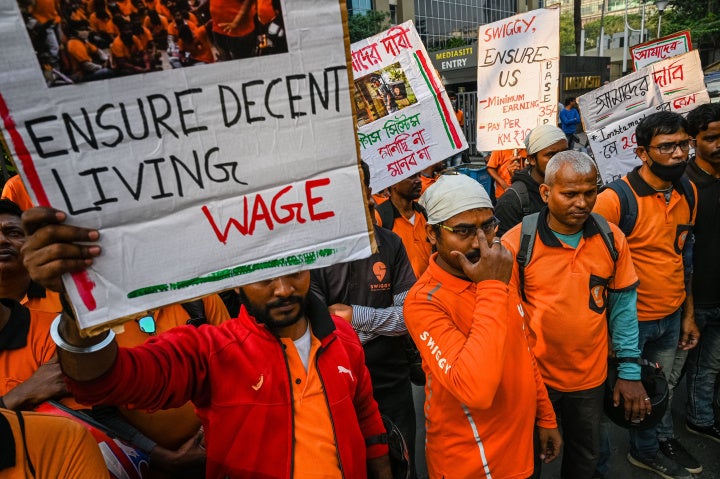
The multimedia report, “Algorithms of Exploitation: Rights Abuses in the Gig Economy and the Global Fight for Change,” documents the experiences of platform workers across nine countries, including India, Kenya, Kuwait, Lebanon, Mexico, Pakistan, Saudi Arabia, the UAE, and the United Kingdom. Human Rights Watch found that workers across all countries studied face low and unstable earnings, unsafe working conditions, and little or no protection when they are injured or unable to work.
Poverty and Gender in Germany’s Social Security System
The 81-page report, “‘It Tears You Apart’: Poverty and Gender in Germany’s Social Security System”, documents increasing poverty and the failure of the German social security system to ensure the right to an adequate standard of living for many people. In particular, the lack of adequate support affects single mothers raising young children and older women living alone on low incomes.
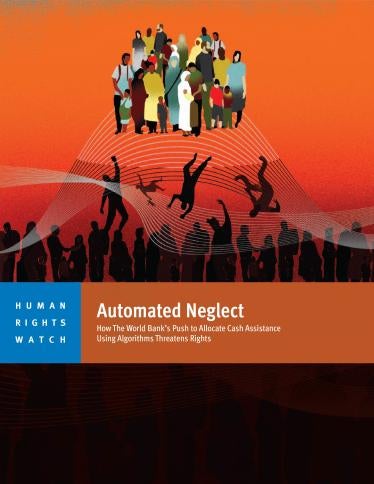
How The World Bank’s Push to Allocate Cash Assistance Using Algorithms Threatens Rights
The 74-page report, “‘Automated Neglect’: How The World Bank’s Push to Allocate Cash Assistance Using Algorithms Threatens Rights,” details how an automated cash transfer program in Jordan known as Takaful (a word similar to solidarity in Arabic) profiles and ranks the income and well-being of Jordanian families to determine who should receive support – an approach known as poverty targeting. This system, which the World Bank has funded in Jordan and seven other countries in the Middle East and North Africa, is depriving many people of their right to social security even as they go hungry, fall behind on rent, and take on crippling debt.
The Impact of the Covid-19 Pandemic on People Living in Poverty in Lagos, Nigeria
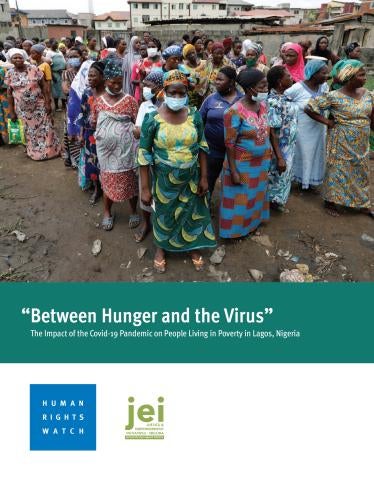
The 87-page report, “‘Between Hunger and the Virus,’ The Economic Impact of the Covid-19 Pandemic on People Living in Poverty in Lagos, Nigeria,” documents how a five-week lockdown, rising food prices, and a prolonged economic downturn have had a devastating impact on informal workers, slum dwellers, and other urban poor families in Lagos. The absence of a functioning social security system meant that government assistance, including cash transfers and food handouts, reached only a fraction of people going hungry.
Kenya’s Pandemic Cash Transfer Program Riddled With Irregularities
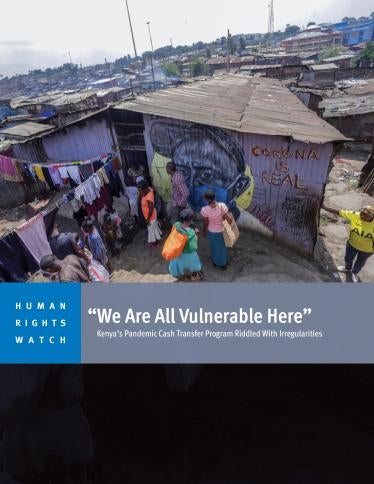
The 66-page report, “‘We Are All Vulnerable Here’: Kenya’s Pandemic Cash Transfer Program Riddled with Irregularities” found that only a small fraction of vulnerable families in Nairobi benefited from the program, which was characterized by lack of transparency, cronyism, nepotism and outright favoritism. Government officials failed to follow the stated selection criteria or to share information that should have enabled more vulnerable families to enroll.
Covid-19, Poverty, and Child Labor in Ghana, Nepal, and Uganda
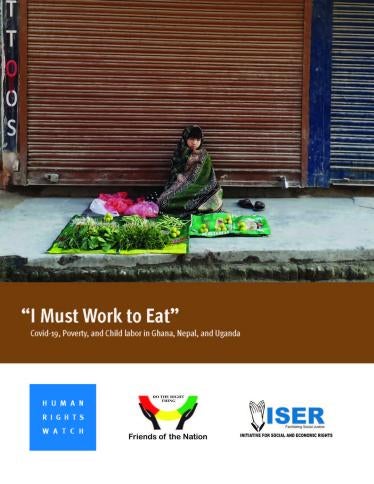
The 69-page report, “I Must Work to Eat”: Covid-19, Poverty, and Child labor in Ghana, Nepal, and Uganda,” was co-published with Initiative for Social and Economic Rights (ISER) in Uganda, and Friends of the Nation in Ghana. Researchers examined the rise in child labor and poverty during the Covid-19 pandemic, and the pandemic’s impact on children’s rights. Children described working long, grueling hours for little pay after their parents lost jobs or income due to the Covid-19 pandemic and associated lockdowns. Many described hazardous working conditions, and some reported violence, harassment, and pay theft.