Arbitrary Detention, Killings, and Forced Recruitment by the M23 and the Rwanda Defence Force
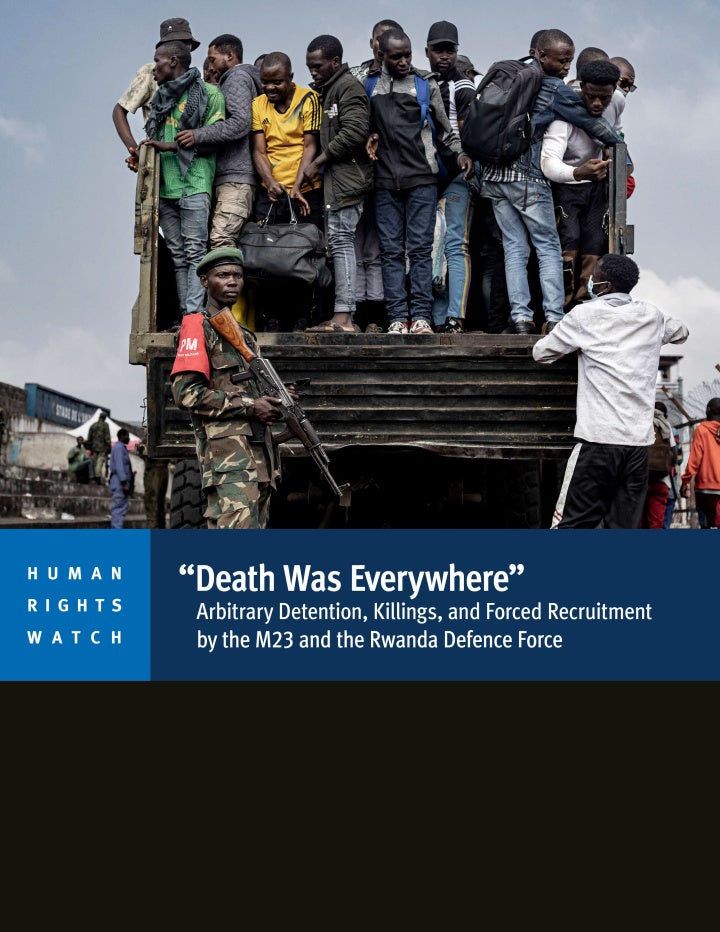
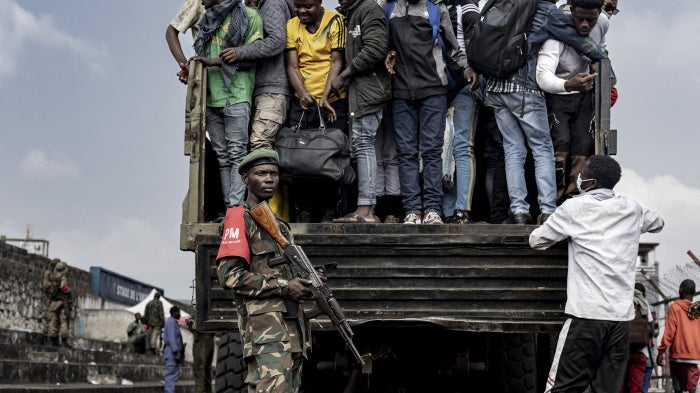
The 78-page report, “‘Death Was Everywhere’: Arbitrary Detention, Killings, and Forced Recruitment by the M23 and the Rwanda Defence Force,” documents large-scale roundups and arrests in North and South Kivu provinces in eastern Congo, as well as grave abuses against detainees at the Rumangabo and Tshanzu training camps in North Kivu, between mid-2024 and December 2025. M23 fighters, backed by Rwandan military personnel, have committed murder, torture, corporal punishment, and used forced labor and child soldiers, researchers found. These abuses are war crimes and should be investigated as possible crimes against humanity.
On October 6 the European Commission will publish its 2004 Regular Report on Turkey’s progress toward European Union membership. This document provides a background, highlights key issues to look for in the report, and ends with an assessment of the progress of reforms.
Human Rights Watch provides background on the Oct. 4, 2004, House of Lord's Judicial Committee meeting that will consider the lawfulness of detaining foreign terrorism suspects without trial.
Turkey has made significant progress in reducing torture and other ill-treatment by the security services through successive legislative reforms since 1997. There are continuing problems implementing these laws, however, as the Turkish government itself concedes.
The interrogation techniques used by U.S. personnel on detainees at the naval base at Guantanamo Bay, Cuba remain shrouded in mystery. While U.S. policy is that the detainees be treated “humanely,” the Department of Defense has never revealed publicly how the detainees have been interrogated.
Indefinite Detention Without Trial in the United Kingdom Under Part 4 of the Anti-Terrorism, Crime and Security Act 2001
The U.K. government introduced emergency legislation in the wake of the September 11 attacks in the U.S. The resulting Anti-Terrorism Crime and Security Act became law on December 14, 2001. This briefing paper details how indefinite detention, contained in part 4 of ATCSA, has seriously damaged the mental and physical health of the detainees.
This 38-page report examines how the Bush administration adopted a deliberate policy of permitting illegal interrogation techniques – and then spent two years covering up or ignoring reports of torture and other abuse by U.S. troops.
Detainees held by the United States in Iraq, Afghanistan, and elsewhere have been subjected to sleep and sensory deprivation, held in painful stress positions, forced to stand for long periods of time, interrogated while nude, and otherwise mistreated.
Human Rights Watch has repeatedly tried to gain access to U.S. detention facilities in Iraq but U.S. military officials in Baghdad have denied requests for visitation rights. Human Rights Watch is able to have regular access to prisons and detention centers under Kurdish control in northern Iraq.
Torture in Egypt is a widespread and persistent phenomenon. Security forces and the police routinely torture or ill-treat detainees, particularly during interrogation. In most cases, officials torture detainees to obtain information and coerce confessions, occasionally leading to death in custody. In some cases, officials use torture detainees to punish, intimidate, or humiliate.
There is growing concern in the United States, and a growing belief around the world, that the United States itself has engaged in torture or condoned its use by others as part of its war against terrorism. Newspapers such as the New York Times and the Washington Post have published credible reports, based on interviews with former detainees and unnamed U.S. officials, alleging that U.S.
In recent weeks Northern Alliance and other anti-Taliban forces in Afghanistan have captured hundreds of foreign fighters with the Taliban or al-Qaeda. The United States has announced that it would detain upwards of 500 captured fighters and has been screening persons taken into custody by Afghan forces.
As a result of the findings contained in this report, Human Rights Watch is calling on the Georgian government to take a number of steps to amend the applicable laws and improve practices so as to safeguard against torture, and to meet United Nations and other international standards regarding fair trials and the treatment of persons held in pre-trial detention. This report reiterates the U.N.
International humanitarian law categorically prohibits hostage-taking. On April 12, 2000 Israel's highest court ruled that the administrative detention of Lebanese nationals as "bargaining chips" -- hostages -- was illegal under Israeli domestic law, making Israel's continued detention of Lebanese nationals as hostages a violation of Israeli domestic law as well.
On Wednesday, 26 May 1999 the Israeli Supreme Court, sitting as the High Court of Justice, will hear testimony challenging the legality of secret interrogation procedures used by the Israeli General Security Service (GSS).