School Fees and other Barriers to Education in Liberia
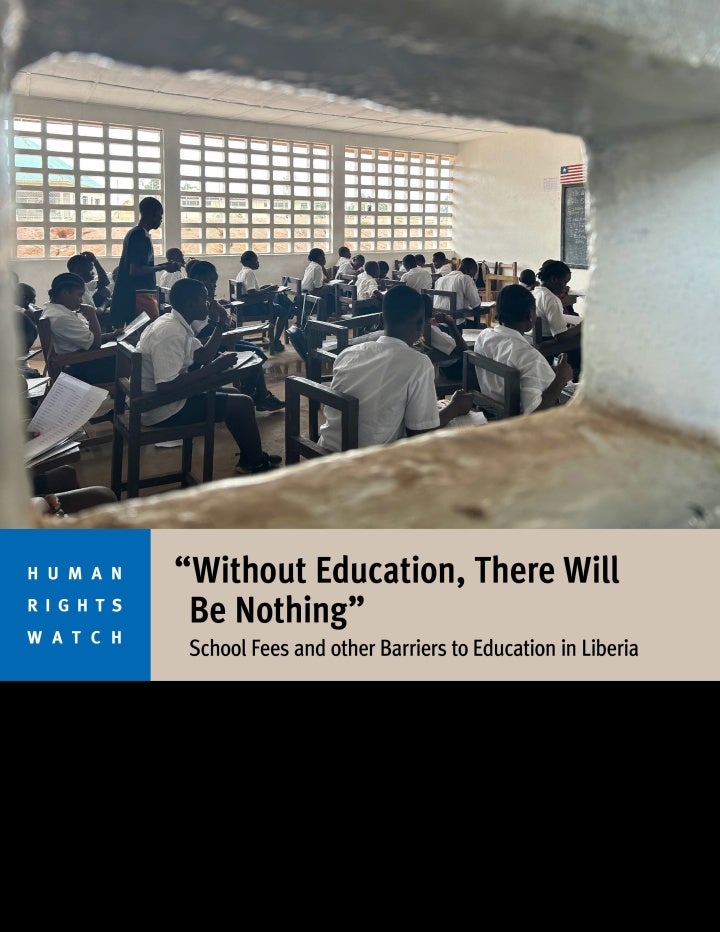
The 75-page report, “‘Without Education, There Will Be Nothing’: School Fees and Other Barriers to Education in Liberia,” documents that mandatory fees—despite a legal guarantee of free and compulsory education for grades 1 to 9—place a heavy financial burden on families and violate children’s right to education. Children in Liberia often enroll in school years late and are sent home when their parents are unable to pay their fees, or work to help pay them. Many drop out entirely or never attend school.
Abuses Against Children Affected by HIV/AIDS in India
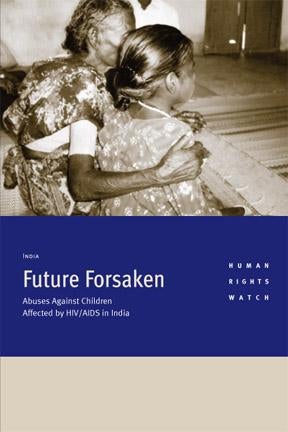
This 209-page report documents how many doctors refuse to treat or even touch HIV-positive children. Some schools expel or segregate children because they or their parents are HIV-positive. Many orphanages and other residential institutions reject HIV-positive children or deny that they house them.
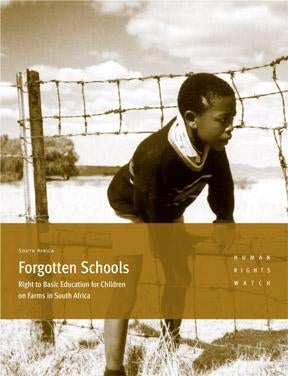
Right to Basic Education for Children on Farms in South Africa
This 59-page report found that the government’s failure to negotiate contracts with farm owners impedes children’s right to basic education. In the worst cases, farm owners have deliberately obstructed children's access to the schools.
HIV/AIDS, Human Rights And Federally Funded Abstinence-Only Programs In The United States
Programs teaching teenagers to "just say no" to sex before marriage are threatening adolescent health by censoring basic information about how to prevent HIV/AIDS, Human Rights Watch charged in a new report released today.
The global scandal of violence against children is a horror story too often untold. With malice and clear intent, violence is used against the members of society least able to protect themselves—children in school, in orphanages, on the street, in refugee camps and war zones, in detention, and in fields and factories.
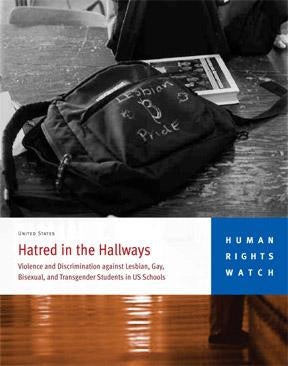
Violence and Discrimination Against Lesbian, Gay, Bisexual, and Transgender Students in U.S. Schools
In this report, Human Rights Watch documents attacks on the human rights of lesbian, gay, bisexual, and transgender youth who are subjected to abuse on a daily basis by their peers and in some cases by teachers and school administrators.
Sexual Violence Against Girls in South African Schools
In schools across South Africa, thousands of girls of every race and economic group are encountering sexual violence and harassment that impede their access to education, Human Rights Watch charged in a report released today.
Every recognized country in the world, except for the United States and the collapsed state of Somalia, has ratified the Convention on the Rights of the Child, pledging to uphold its protections for children. Today the convention stands as the single most widely ratified treaty in existence.
For most Kenyan children, violence is a regular part of the school experience. Teachers use caning, slapping, and whipping to maintain classroom discipline and to punish children for poor academic performance. The infliction of corporal punishment is routine, arbitrary, and often brutal.
Sierra Leonean refugee children in Guinea are among the most vulnerable children in the world. They have lived through an extremely brutal war -most have witnessed or suffered unspeakable atrocities including widespread killing, mutilation, and sexual abuse.
In March and May 1995, the Human Rights Watch Children=s Rights Project conducted an investigation in Louisiana into the conditions in which children are confined in that state, examining the human rights aspects of their incarceration.We found that substantial numbers of children in the state training institutions are regularly physically abused by guards, are kept in isolation for long periods o
During the period of Ethiopian rule in Eritrea (1962-91), a systematic policy of denying educational freedoms to Eritreans was followed. This ranged beyond stifling freedom of thought to a sustained attempt to dismantle the educational system and block the emergence of a university serving Eritreans.