Reports

Torture and Other Abuses Against Venezuelans in El Salvador’s Mega Prison

The 81-page report, “‘You Have Arrived in Hell’: Torture and Other Abuses Against Venezuelans in El Salvador’s Mega Prison,” provides a comprehensive account of the treatment of these people in El Salvador. In March and April 2025, the US government sent 252 Venezuelans, including dozens of asylum seekers, to the Center for Terrorism Confinement (Centro de Confinamiento del Terrorismo, CECOT) mega prison in El Salvador, despite credible reports of serious human rights abuses in El Salvador’s prisons. The Venezuelans were subject to refoulement—being sent to where they would face torture or persecution—arbitrary detention, enforced disappearance, torture, inhumane detention conditions and, in some cases, sexual violence.

A person sits inside a cell while a guard with a riot shield stands outside
A woman looks out of the window of a damaged building

Search

  • May 18, 2009

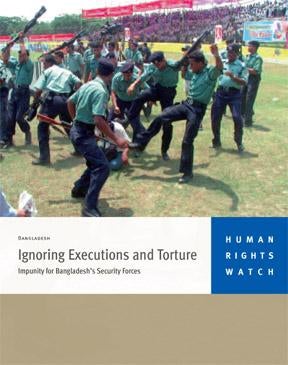
    Impunity for Bangladesh’s Security Forces

    This 76-page report details the involvement of soldiers, paramilitary officers, and police in so-called "crossfire killings" and other custodial killings, torture, "disappearances," and arbitrary arrests. It examines a number of cases that have received national and international attention, in which those responsible have not been prosecuted.
  • April 29, 2009

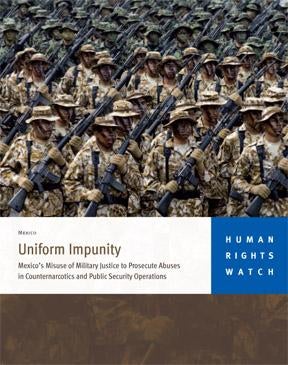
    Mexico's Misuse of Military Justice to Prosecute Abuses in Counternarcotics and Public Security Operations

    This 76-page report details 17 cases involving military abuses against more than 70 victims, including several cases from 2007 and 2008. The abuses include killings, torture, rapes, and arbitrary detentions. Not one of the military investigations into these crimes has led to a conviction for even a single soldier on human rights violations.

  • April 20, 2009

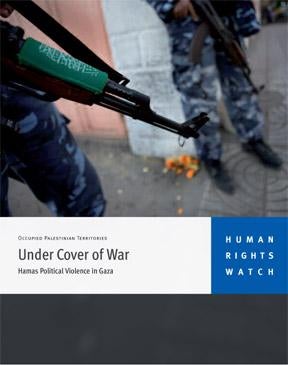
    Hamas Political Violence in Gaza

    This 26-page report documents a pattern since late December 2008 of arbitrary arrests and detentions, torture, maimings by shooting, and extrajudicial executions by alleged members of Hamas security forces. The report is based on interviews with victims and witnesses in Gaza and case reports by Palestinian human rights groups.

  • April 16, 2009

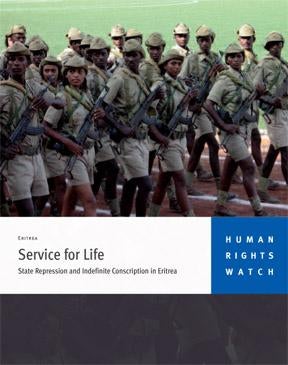
    State Repression and Indefinite Conscription in Eritrea

    This 95-page report documents serious human rights violations by the Eritrean government, including arbitrary arrest, torture, appalling detention conditions, forced labor, and severe restrictions on freedom of movement, expression, and worship. It also analyzes the difficult situation faced by Eritreans who succeed in escaping to other countries such as Libya, Sudan, Egypt, and Italy.

  • October 22, 2008

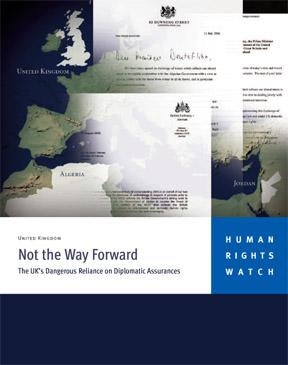
    The UK’s Dangerous Reliance on Diplomatic Assurances

    This 36-page report focuses on two important appeals in the House of Lords this month that will test the reliability of no-torture promises from the governments of Algeria and Jordan. In the pending appeals, Britain’s highest court will grapple for the first time with the government’s “deportation with assurances” policy, an important component of its counterterrorism strategy.
  • June 12, 2008

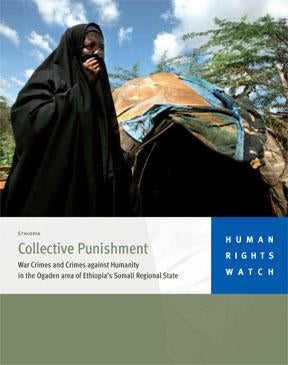
    War Crimes and Crimes against Humanity in the Ogaden area of Ethiopia’s Somali Region

    This 130-page report documents a dramatic rise in unchecked violence against civilians since June 2007, when the Ethiopian army launched a counterinsurgency campaign against rebels who attacked a Chinese-run oil installation.

  • April 30, 2008

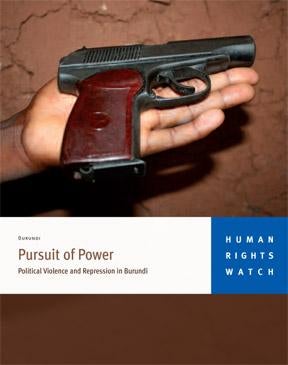
    Police Abuses in Burundi

    This 42-page report documents 21 cases of beatings and torture of civilians carried out in October 2007 by a special reserve unit known as Rapid Mobile Intervention Group (Groupement Mobile d’Intervention Rapide, GMIR) in Muramvya province.
  • February 13, 2008

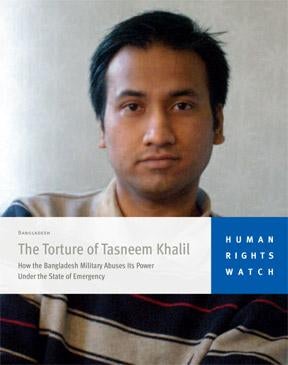
    How the Bangladesh Military Abuses Its Power under the State of Emergency

    This 39-page report graphically details Khalil’s 22-hour ordeal in May 2007 in Bangladesh’s clandestine detention and torture system – a setup well known to the government, ordinary Bangladeshis, Dhaka’s donors and diplomatic community.

  • July 24, 2007

    Intervention Submitted by Human Rights Watch and AIRE Centre

    The third party intervention by Human Rights Watch and the AIRE Centre in the case of Ismoilov and Others v. Russia analyzes states’ reliance upon diplomatic assurances against torture and ill-treatment in extradition context. The intervention includes relevant international, regional, and national jurisprudence regarding the use of assurances against torture.
  • March 28, 2007

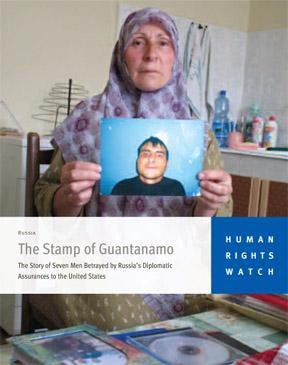
    The Story of Seven Men Betrayed by Russia’s Diplomatic Assurances to the United States

    This 43-page report reconstructs the experiences of the detainees after being returned to Russia in March 2004, based on interviews with three of the detainees, their family members, lawyers, and others. Access to the ex-detainees is limited because three of them are in prison and the rest have either managed to leave the country or are in hiding.
  • November 13, 2006

    Human Rights Watch Briefing Paper for the 37th Session UN Committee against Torture

    This 16-page briefing paper is addressed to the Committee against Torture. It documents ill-treatment and torture by pro-Moscow Chechen forces under the effective command of Prime Minister Ramzan Kadyrov, as well as by federal police personnel.
  • November 2, 2006

    UK Policy on Torture since 9/11

    This 45-page paper documents how the UK government is undermining the torture ban, even as it proclaims its efforts to combat torture worldwide. Torture, including returns to risk of torture, is prohibited by international law. No exceptions are allowed, even in time of war or national emergency.
  • July 22, 2006

    Soldiers' Accounts of Detainee Abuse in Iraq

    Torture and other abuses against detainees in U.S. custody in Iraq were authorized and routine, even after the 2004 Abu Ghraib scandal, according to accounts from soldiers in this 53-page report. Soldiers describe how detainees were routinely subjected to severe beatings, painful stress positions, severe sleep deprivation, and exposure to extreme cold and hot temperatures.
  • June 28, 2006

    On November 7, the Supreme Court agreed to review the case of Salim Ahmed Hamdan, who is challenging the lawfulness of the U.S. government trying him for alleged war crimes before a military commission at Guantánamo Bay. The Court is expected to render a decision in the case of Hamdan v. Rumsfeld in late June, 2006.