The Inhumane Effects of White Phosphorus Munitions and the Need for Stronger Law
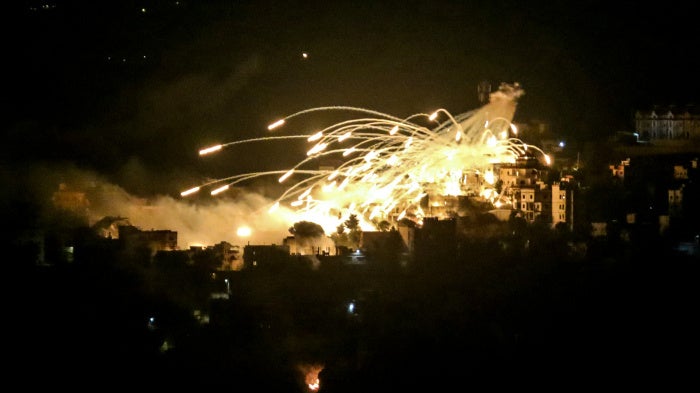
The 45-page report, “Uncontrolled Burn: The Inhumane Effects of White Phosphorus Munitions and the Need for Stronger Law,” documents 23 verified incidents of Israeli use in southern Lebanon between March and May 2026. The report also details the horrific harm the munitions have caused in armed conflicts in recent years. White phosphorus munitions, which produce fire when their payload is exposed to oxygen, are not currently regulated by a specific treaty.
A potential U.S.-led military action against Iraq would likely have profound humanitarian consequences for the Iraqi civilian population. Consistent with our established policy, Human Rights Watch takes no position on the legality or appropriateness of such a war. Yet we have concerns with regard to the manner in which it may be conducted.
The countries of Central and Eastern Europe, including several that are candidates for European Union (E.U.) membership, have long been a major source of weapons flows to human rights abusers, conflict regions, and clients suspected of diverting weapons to unauthorized destinations. There has been some recent progress to tighten controls, but serious problems remain.
In the next few weeks, the Bulgarian parliament is due to enact important changes to the country's arms trade law. The legislation would amend the Law on the Control of Foreign Trade Activity in Arms and Dual-Use Goods and Technologies, which was adopted in 1995.
Weapons Proliferation, Political Violence, and Human Rights in Kenya
This 119-page report, entitled Playing with Fire: Weapons Proliferation, Political Violence, and Human Rights in Kenya, documents the dangerous nexus between arms availability and ethnic attacks in Kenya. The report highlights politically instigated armed violence on Kenya's coast during the last general election cycle, in 1997.
As part of the military buildup resulting from the December 13, 2001, attack on the Indian parliament, both India and Pakistan have emplaced large numbers of antipersonnel and antivehicle mines along their common border.
The purpose of this backgrounder is to document the practice established by States Parties since entry-into-force of the treaty with respect to AVM with sensitive fuzes or AHD. It is regrettable that limited progress has been made in clarifying what specific types of AVM and AHD are permissible and which are prohibited under the treaty.
Changes to U.S. Military Assistance After September 11
Since September 11, the U.S. government has extended new military assistance to governments engaged in serious human rights abuse, including torture, political killings, illegal detention, religious persecution, and attacks on civilians during armed conflict, Human Rights Watch said in a report released today. The 15-page report, "Dangerous Dealings: Changes in U.S.
Leaders of some forty-six countries are anticipated to attend the North Atlantic Treaty Organization (NATO) summit in Prague, Czech Republic, on November 21 and 22, 2002.
In this briefing paper, Human Rights Watch builds on the U.N. experts’ report to examine the manner in which the Liberia arms embargo has been systematically breached to furnish weapons to gross human rights abusers. Much attention has been given in the past to the subject of individual arms traffickers and the transport networks they use to illegally deliver weapons to abusive end users.
The United States-led alliance began its air campaign in Afghanistan on October 7, 2001. While the Pentagon has been reluctant to talk of specific weapons used in the bombing, U.S. military sources have told Human Rights Watch that the Air Force began dropping cluster bombs within a matter of days.
Afghanistan is one of the most heavily mined countries in the world. Landmines pose an ever-present danger to civilians now attempting to flee the country or areas of conflict.
The United Nations Security Council should impose a comprehensive embargo on all military assistance against all warring factions in Afghanistan, Human Rights Watch urged today. In this report, Human Rights Watch accused Pakistan, Iran, and Russia of providing military support to Afghan factions with a long record of committing gross abuses of human rights.
When Colombian President Andrés Pastrana meets with President George W. Bush next Tuesday (February 27), the two leaders will discuss U.S. military aid to Colombia, including the issue of Colombia's progress on improving human rights.
Human Rights Watch urged President Clinton to keep the promise he made in 1994 to ban antipersonnel landmines by joining the 1997 Mine Ban Treaty.
"Clinton's Landmine Legacy," the 42-page report from Human Rights Watch, details U.S. policy and practice on antipersonnel mines and recommends a dozen steps the president should take before leaving office.