Recruitment and Use of Children by Colombian Armed Groups
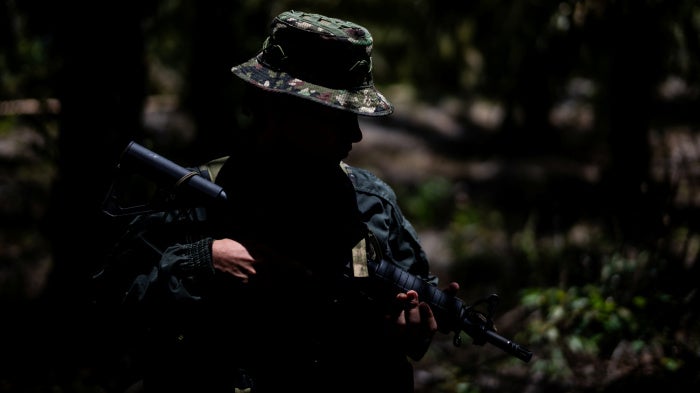
The 102-page report, “‘I Thought I’d Never See My Mom Again’: Recruitment and Use of Children by Colombian Armed Groups,” examines the dynamics of child recruitment, the factors that place children at risk, and the strategies and tools used by armed groups, including through social media platforms, to recruit them. Researchers also analyzed the government’s response and its shortcomings in preventing child recruitment, protecting and rescuing children, assisting the reintegration of those who have been released, and prosecuting the individuals responsible.
Abductions, torture, recruitment of child soldiers, and other abuses have sharply increased in the past year in northern Uganda due to renewed fighting between Ugandan government forces and rebels, a coalition of national and international organizations. This 73-page report details how a slew of human rights abuses have resulted in a humanitarian crisis.
Child soldiers who fought in the Angolan civil war have been excluded from demobilization programs, Human Rights Watch said in a new report released today. April marks the one-year anniversary of the agreement that brought peace to mainland Angola in 2002.
Children are being abducted in record numbers in northern Uganda by the rebel Lord's Resistance Army (LRA), Human Rights Watch said in a new report released today. The children are subjected to brutal treatment as soldiers, laborers and sexual slaves. Since June of 2002, an estimated 5,000 children have been abducted-a striking increase from 2001, when fewer than 100 children were abducted.
Burma is believed to have more child soldiers than any other country in the world. The overwhelming majority of Burma's child soldiers are found in Burma's national army, the Tatmadaw Kyi, which forcibly recruits children as young as eleven. These children are subject to beatings and systematic humiliation during training.
Amidst the intensive coverage of the terrorist attacks on New York and Washington and the west’s preparations for a military response, there have been suggestions in the media that Osama Bin Laden’s Al Qaida organisation may have recruited and trained children for military actions.
The global scandal of violence against children is a horror story too often untold. With malice and clear intent, violence is used against the members of society least able to protect themselves—children in school, in orphanages, on the street, in refugee camps and war zones, in detention, and in fields and factories.
Children and Adults forcibly recruited for Military Serivce in North Kivu
This report, based upon a mission to the region in December 2000 and subsequent research, documents an intensive campaign of forcible recruitment of adults and children begun by RCD-Goma and its Rwandan allies in the last quarter of 2000.
When Colombian President Andrés Pastrana meets with President George W. Bush next Tuesday (February 27), the two leaders will discuss U.S. military aid to Colombia, including the issue of Colombia's progress on improving human rights.
In the past two years, Ugandans have recruited and trained both Hema and Lendu to serve in the forces of the Congolese Rally for Democracy-Liberation Movement (RCD-ML), a rebel group which is backed by Uganda and which nominally controls this area. Within the last year, however, at least some Ugandan officers have reportedly favored the Hema.
Every recognized country in the world, except for the United States and the collapsed state of Somalia, has ratified the Convention on the Rights of the Child, pledging to uphold its protections for children. Today the convention stands as the single most widely ratified treaty in existence.
The Expulsion of Civilians from Israeli-Occupied Lebanon
For more than a decade, Israel and its auxiliary Lebanese militia have been expelling innocent civilians from their homes and villages in south Lebanon, Human Rights Watch said today. In this report, Human Rights Watch says that entire families have been expelled from the occupied zone in a summary and often cruel manner, without due process law.
Sierra Leonean refugee children in Guinea are among the most vulnerable children in the world. They have lived through an extremely brutal war -most have witnessed or suffered unspeakable atrocities including widespread killing, mutilation, and sexual abuse.
The Global Use of Child Soldiers: An estimated 300,000 children under the age of eighteen are currently participating in armed conflicts in more than thirty countries on nearly every continent. While most child soldiers are in their teens, some are as young as seven years old.
In a report released today, Human Rights Watch condemns the war of terror now underway against civilians in Sierra Leone, and calls on the international community to take emergency measures to end the killings, amputations, and abductions taking place in that civil war.
Children Abducted by the Lord's Resistance Army in Uganda
In northern Uganda, thousands of children are victims of a vicious cycle of violence, caught between a brutal rebel group and the army of the Ugandan government.