US Expulsions of Third-Country Nationals to Countries in Africa
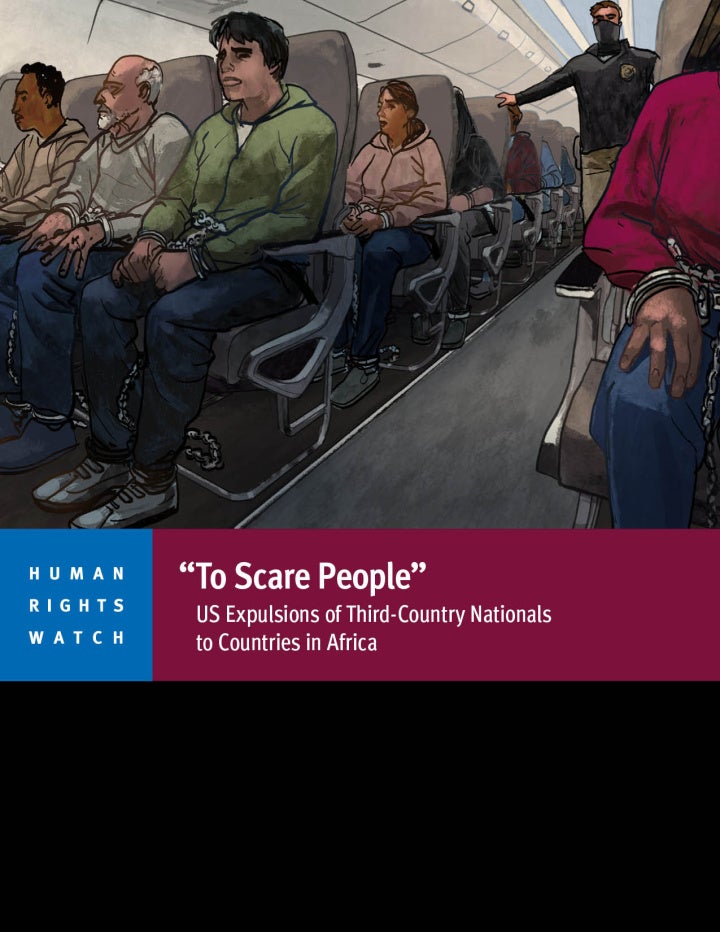
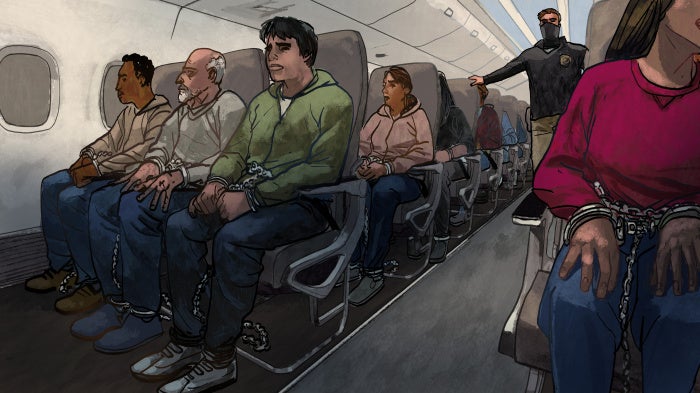
The 125-page report, “‘To Scare People’: US Expulsions of Third-Country Nationals to Countries in Africa,” documents that US authorities denied the more than 500 people transferred to third countries a meaningful chance to contest their removals or to articulate their fears of being removed to these countries. Some countries arbitrarily detained people they had accepted, and some have sent people onward to the risk of persecution or torture in their home countries, violating the international law principle of nonrefoulement.
Rights Abuses of Ethnic Khmer in Vietnam’s Mekong Delta
This report documents ongoing violations of the rights of the Khmer Krom in southern Vietnam and also abuses in Cambodia against Khmer Krom who have fled there for refuge. Wary about possible Khmer Krom nationalist aspirations, Vietnam has suppressed peaceful expressions of dissent and banned Khmer Krom human rights publications.
The Plight of Civilians in Sri Lanka’s Vanni Region
This 49-page report documents the Sri Lankan government's responsibility for the plight of the 230,000 to 300,000 displaced persons trapped in the Vanni conflict zone. They face severe shortages of food and other essentials because of government restrictions on humanitarian assistance.
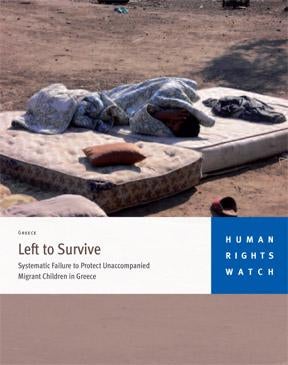
Systematic Failure to Protect Unaccompanied Migrant Children in Greece
Some 1,000 unaccompanied migrant children who have entered Greece in 2008 without parents or caregivers struggle to survive without any state assistance, Human Rights Watch said in a new report issued today.
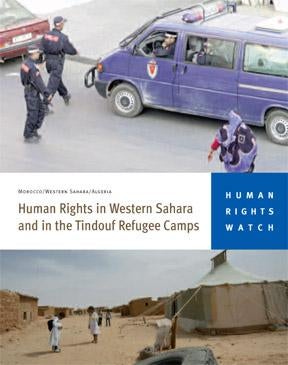
This 216-page report focuses on the present-day situation rather than on past abuses. Human Rights Watch documents how Morocco uses a combination of repressive laws, police violence, and unfair trials to punish Sahrawis who advocate peacefully in favor of independence or full self-determination for the disputed Western Sahara.
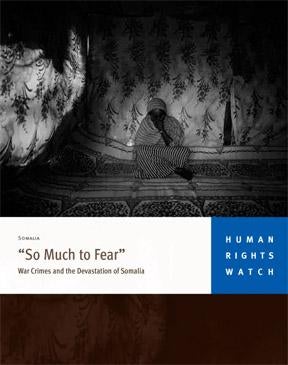
The 104-page report, "So Much to Fear: War Crimes and the Devastation of Somalia," describes how the Somali Transitional Federal Government (TFG), the Ethiopian forces that intervened in Somalia to support it and insurgent forces have committed widespread and serious violations of the laws of war.
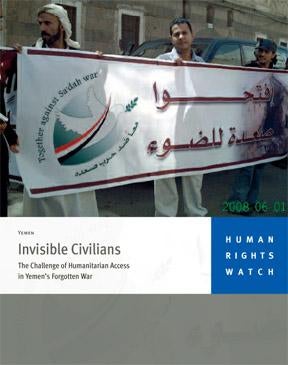
The Challenge of Humanitarian Access in Yemen’s Forgotten War
This 50-page report documents how the Yemeni authorities have severely restricted humanitarian access to its northernmost governorate, Sa’da, ravaged by four years of armed conflict. As of October 2008, up to 70,000 people in remote areas and towns remained outside the reach of aid agencies.
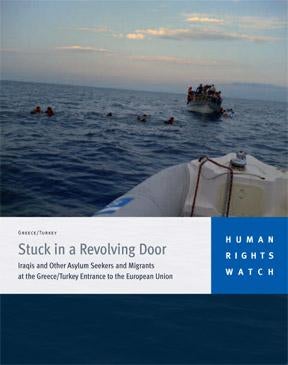
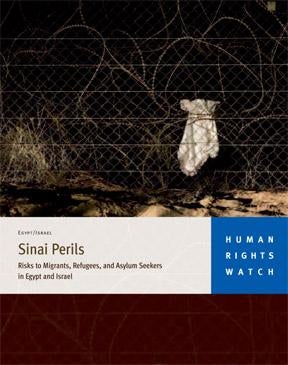
Risks to Migrants, Refugees, and Asylum Seekers in Egypt and Israel
In this 90-page report, Human Rights Watch called on Egypt to halt the use of lethal force against border crossers and all deportations of persons to countries where they risk persecution or ill-treatment. Israel should halt forced returns of migrants to Egypt, where they face military court trials and possible unlawful deportation to their countries of origin.
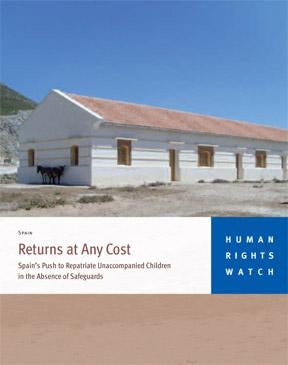
Spain’s Push to Repatriate Unaccompanied Children in the Absence of Safeguards
This 22-page report says that in Andalusia, the southern region that is a common entry point for migrants, authorities have said they intend to send up to 1,000 unaccompanied children in their custody to Morocco, claiming that safeguards are in place. But officials could not explain how they determined it was in a child’s best interest to return, as required by law.
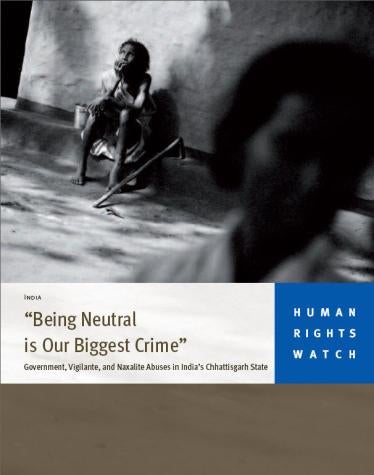
Government, Vigilante, and Naxalite Abuses in India’s Chhattisgarh State
This 182-page report documents human rights abuses against civilians, particularly indigenous tribal communities, caught in a deadly tug-of-war between government security forces and the vigilante Salwa Judum and Naxalites.
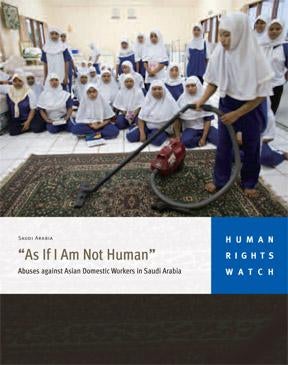
Abuses against Asian Domestic Workers in Saudi Arabia
This 133-page report concludes two years of research and is based on 142 interviews with domestic workers, senior government officials, and labor recruiters in Saudi Arabia and labor-sending countries. Saudi households employ an estimated 1.5 million domestic workers, primarily from Indonesia, Sri Lanka, the Philippines, and Nepal. Smaller numbers come from other countries in Africa and Asia. While no reliable statistics exist on the exact number of abuse cases, the Saudi Ministry of Social Affairs and the embassies of labor-sending countries shelter thousands of domestic workers with complaints against their employers or recruiters each year.
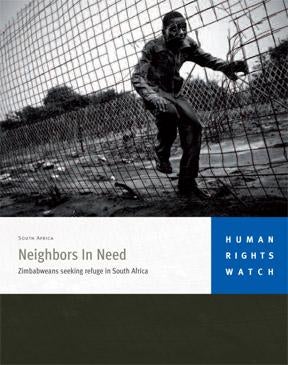
This 119-page report examines South Africa’s decision to treat Zimbabweans merely as voluntary economic migrants and its failure to respond effectively to stop the human rights abuses and economic deprivation in Zimbabwe that cause their flight and to address their needs in South Africa. Human Rights Watch spoke to almost 100 Zimbabweans in South Africa about their plight.
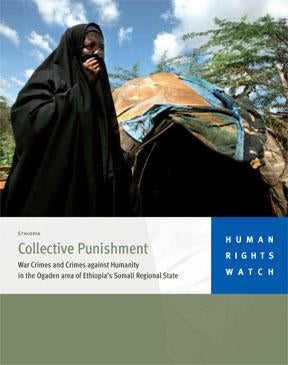
War Crimes and Crimes against Humanity in the Ogaden area of Ethiopia’s Somali Region
This 130-page report documents a dramatic rise in unchecked violence against civilians since June 2007, when the Ethiopian army launched a counterinsurgency campaign against rebels who attacked a Chinese-run oil installation.
The 44-page briefing paper offers an analysis of the Dutch overseas integration test in light of the Netherlands’ international human rights obligations. Human Rights Watch found that people of Moroccan and Turkish origin are especially affected, while citizens from “western” countries such as Canada, Australia, and Japan are exempt.
This 23-page report documents how such children live without legal identity or access to elementary education. These children live in the Yanbian Korean Autonomous Prefecture in eastern Jilin Province, northeast China (near its border with North Korea). Some are from North Korea while others were born in China and have Chinese fathers and North Korean mothers.