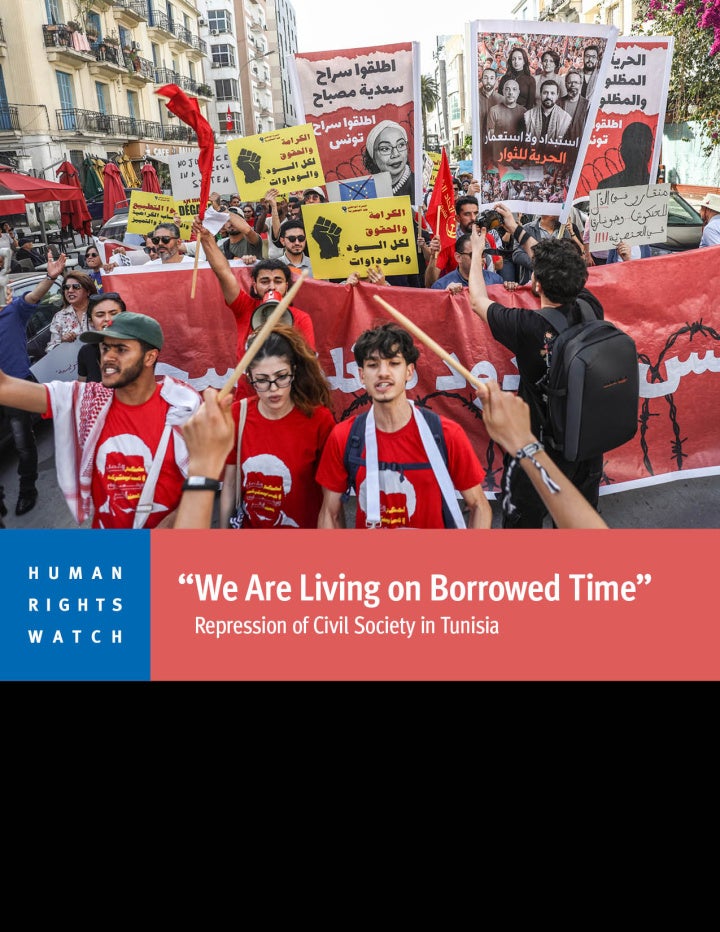
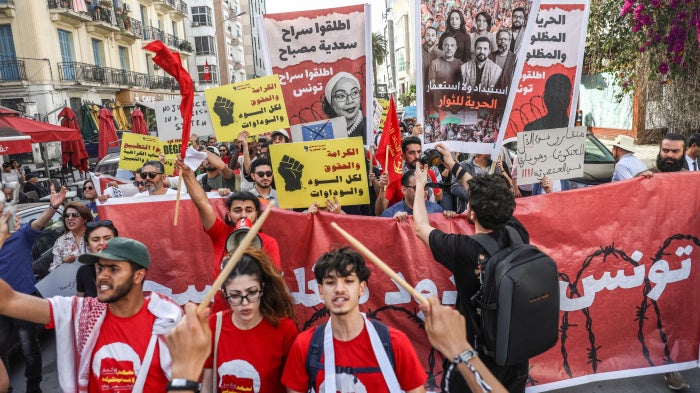
The 49-page report, “‘We Are Living on Borrowed Time’: Repression of Civil Society in Tunisia” documents the Tunisian authorities’ escalating repression of local and international civil society groups, workers, members, and affiliates through the weaponization of abusive prosecutions, arbitrary arrests, detention, financial and criminal investigations, mass suspensions, and threats of dissolution.
Turkey’s public universities are still emerging from more than twenty years of military influence and centralized ideological and operational controls.
This 40-page report documents killings, arrest, detention, ill-treatment, torture and other forms of harassment and intimidation of real or perceived critics of the government over the past two years. Most of these abuses have been carried out by the Nigerian police or by members of the intelligence services known as the State Security Service (SSS).
Since the mid-1990s, Armenian authorities have used administrative detention as a tool of repression, locking up protesters and activists at times of political tension. The 2003 presidential election and its aftermath mark the most sustained, extensive abuses in the last seven years.
This report focuses on three major abuses: repeated, unjustified use of lethal force by security forces to put down political protests by students; continued repression of the independent Ethiopian Teachers' Association, whose members include many of Ethiopia's most distinguished professors; and the stifling of independent thought through denial of university autonomy and government control of act
Turkey's human rights record is marred by its severe restrictions on the right to freedom of expression. Individuals in Turkey face prosecution and prison terms merely for using forbidden minority languages or expressing opinions on certain taboo subjects.
Saadeddin Ibrahim, aged 63, is one of Egypt’s leading voices for political reform and democratic rights. A sociology professor at the American University in Cairo, he founded in 1988 and then directed the Ibn KhaldunCenter for Development Studies until it was closed down by the Egyptian government in June 2000.
Concern for human rights in Saudi Arabia has ranked extremely low on the agenda of the U.S., although Washington has long been well aware that the country remains a veritable wasteland when it comes to respect for the fundamental human rights of its 22 million residents, including some six to seven million foreign workers and their families.
The report on Turkey, its fourth (including the Progress Reports that pre-dated Turkey's formal candidacy), has become an important annual measure of progress on the political elements of the Copenhagen Criteria for membership, which require "stability of institutions guaranteeing democracy, the rule of law, human rights, and respect for and protection of minorities."
On 21 November 2001 the Court of Appeal in Rabat acquitted 36 human rights defenders who had been sentenced earlier in the year to three months in prison for “participating in the organization of an unauthorized demonstration” on 9 December 2000.
Tajikistan shares a 1,200 kilometer border with Afghanistan and is one of the countries identified by military planners as a possible base of U.S. military and humanitarian operations in the region. Tajikistan has been a low priority for U.S. foreign policy makers since its independence from the Soviet Union in 1991.
As the Internet industry continues to expand in China, the government continues to tighten controls on on-line expression. Since 1995, when Chinese authorities began permitting commercial Internet accounts, at least sixty sets of regulations have been issued aimed at controlling Internet content.
On Tuesday May 8, 2001, the police arrested Prof. Mesfin Woldemariam, the founder and first chairman of Ethiopia's Human Rights Council (EHRCO), and Dr. Berhanu Nega, an academic and human rights activist associated with EHRCO, on claims that they instigated student protests that took place in Addis Ababa University in mid April.
The factional struggle behind the current presidential elections in Iran is having a devastating impact on human rights, Human Rights Watch said in a new report released today.
Human Rights Watch welcomes the opportunity to submit information to the Human Rights Committee regarding Venezuela's implementation of the International Covenant on Civil and Political Rights.