The Harms of State-Mandated Parental Notification for Abortion and Judicial Bypass in the United States
The 89-page report, “Whose Abortion Is It? The Harms of State-Mandated Parental Notification for Abortion and Judicial Bypass in the United States,” documents how state-mandated parental notification laws in six US states threaten young people’s health and safety and undermine their human rights. Most young people considering abortion involve a parent in their decision. Those who do not often have no access to a parent or fear that parental involvement will lead to severe consequences, such as physical abuse, loss of housing, family alienation, or forced continuation of a pregnancy against their wishes. The alternative to notifying a parent involves petitioning a judge for a court order in an invasive, stressful, and often traumatizing process called “judicial bypass.”
Lack of Accountability for Reproductive Rights in Argentina
This 52-page report documents the many obstacles women and girls face in getting the reproductive health care services to which they are entitled, such as contraception, voluntary sterilization procedures, and abortion after rape.
Barriers to Fistula Prevention and Treatment in Kenya
This 82-page report describes the devastating condition facing women with fistula in Kenya and the wide gap between government's policies to address reproductive health and the reality of women's daily lives.
This 57-page report details how women struggle to overcome the financial, logistical, physical, and emotional burdens imposed by restrictive laws and policies that force them to seek care abroad, without support from the state. Every year thousands of women and girls travel from Ireland to other European countries for abortions.
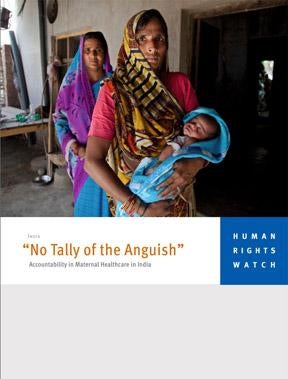
This 150-page report documents repeated failures both in providing health care to pregnant women in Uttar Pradesh state in northern India and in taking steps to identify and address gaps in care.
This 52-page report documents the difficulties women face in accessing therapeutic abortion – those needed to save the life of the woman or avoid serious health risks – in Peru’s public health system. While no reliable statistics are available on how many women have been turned away from a legal abortion, in interviews with women, healthcare providers, rights activists and government officials, Human Rights Watch found that women in general lack accurate information about their right to a legal abortion, and public health care professionals are often unclear about the intent of laws guaranteeing women access to legal abortions.
Denial of Access to Emergency Obstetric Care and Therapeutic Abortion in Nicaragua
This 18-page report documents how this ban on abortion has made women afraid to seek even legal health services. Fearing prosecution under the new law, doctors are unwilling to provide necessary care. The report is based on interviews with officials, doctors from the public and private health systems, women in need of health services, and family members of women who died as a result of the ban.
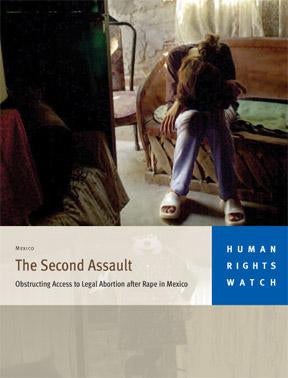
Obstructing Access to Legal Abortion after Rape in Mexico
This 92-page report details the disrespect, suspicion and apathy that pregnant rape victims encounter from public prosecutors and health workers. The report also exposes continuing and pervasive impunity for rape and other forms of sexual violence in states throughout Mexico.
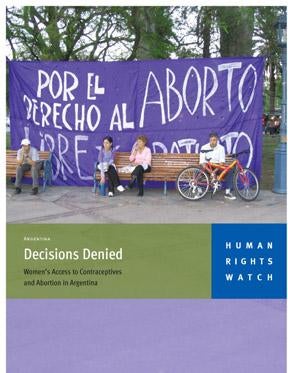
Women’s Access to Contraceptives and Abortion in Argentina
Decisions about contraception and abortion are difficult, deeply personal, and sometimes wrenching. In Argentina, women are routinely prevented from making such decisions.