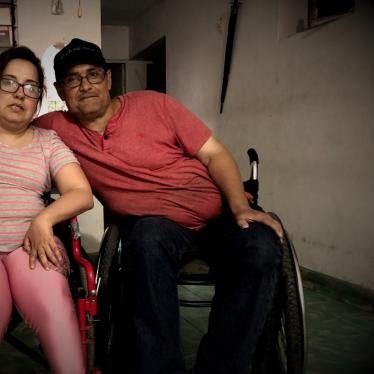
I have had a disability since I was 4 months old. I grew up in an environment where disability was something to be managed privately, without open conversation. When other children asked me as a child whether I would ever walk, I answered yes, because my parents had told me that by the time I turned 18, I would.
They did not act in bad faith; they simply did not know how else to respond. There were no tools, no shared language, no spaces in which disability could be openly discussed as part of a full and dignified life. Only as an adult did I come to understand how different my childhood might have been if I had grown up in a community where living with disability was acknowledged rather than denied.
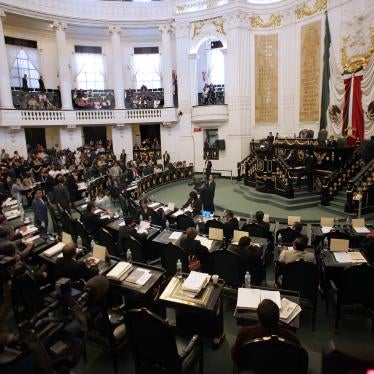
Children with disabilities have the full range of human rights. They are not merely the subjects of protection or extensions of their families: they are people in development, with their own identities, and with the right to participate and inhabit the world on an equal basis with others. As Mexico City Congress reviews the care and support bill, it should ensure that children with disabilities are also included as rights-holders, not only as recipients of care.
The proposal advanced by the coalition Care Yes; Supports Too, of which Human Rights Watch is a member, for the Mexico City care and support legislation begins from this recognition. It affirms that children with disabilities require specific support not only to remain within their families, but also to fully exercise their rights in the broader community. Support systems should move beyond a narrow understanding of care and instead guarantee the conditions for participation, identity formation, and equal inclusion from childhood onward. As Congress reviews the care and support bill, policies should ensure that children with disabilities are heard and recognized as rights-holders, not only as recipients of care.
The coalition’s approach is reinforced by the recent report of the UN special rapporteur on the rights of persons with disabilities, Heba Hagrass. She highlights in a report how the absence of community-based services continues to drive the institutionalization of children with disabilities and calls for comprehensive, rights-based systems that prevent separation and ensure access to support.
Development does not end within the family sphere. There is a “beyond” the family that must also be guaranteed: the right to build identity, to socialize with peers, to play, and to belong. One of the most overlooked of these dimensions - yet perhaps the most essential to childhood itself - is the importance of play.
Play is at the heart of how children grow and learn. As the philosopher and cultural historian Johan Huizinga famously argued, play is a fundamental part of what makes us human. Play is central to human development. Through play, children construct relationships, imagination, shared rules, and a sense of belonging.
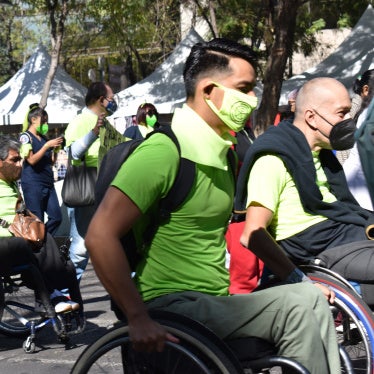
Yet many children with disabilities are excluded from these spaces—not because they lack ability, but because environments are not designed to include them. Inaccessible playgrounds, segregated school activities, and limiting social attitudes restrict their participation and development.
Exclusion from play is also exclusion from identity. Growing up with a disability means navigating barriers, but it also means building a strong identity. Family support is essential, but children also need spaces for peer interaction —spaces where children with disabilities can see themselves reflected in others, share experiences and strengthen their identities.
Within this framework, Centers for Independent Living can play a strategic role. They should not be conceived solely as spaces for adults. These centers can develop programs for children with disabilities: inclusive play initiatives, rights education, support for decision-making, family guidance, and peer networks. In doing so, they can help shift children from isolation to participation and belonging.
Recognizing the rights of children with disabilities means understanding that protection must not become confinement, nor support a substitute for children’s voices. Support must not only sustain families; it must open the world. Ensuring supports means guaranteeing that children with disabilities can play, learn, relate to others, and build identity. Their right to independent living does not begin in adulthood. It begins in childhood—with the right to participate, to belong, and to fully inhabit the world.