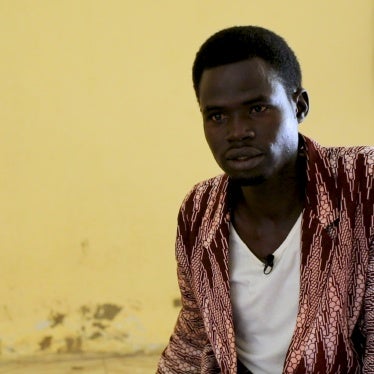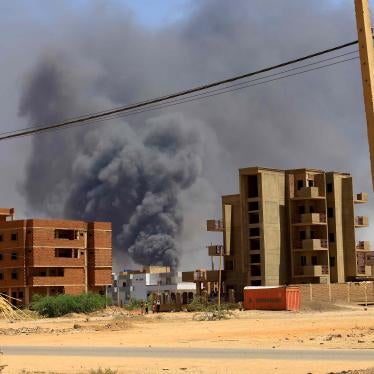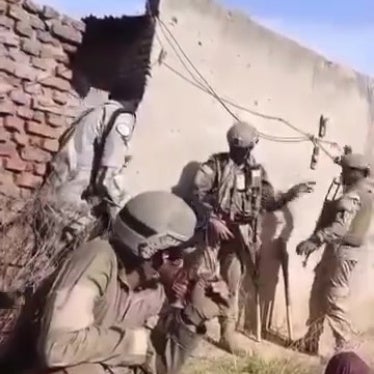
Laetitia Bader, Human Rights Watch’s deputy Africa director, and Jean-Baptiste Gallopin, senior Crisis and Conflict advisor, traveled to eastern Chad in mid-December 2025 where they interviewed dozens of refugees who had fled El Fasher, the capital of Sudan’s North Darfur state, following the takeover of the city in late October 2025 by the Rapid Support Forces (RSF), one of Sudan’s two main warring parties.
Meeting with survivors confirmed that the world has failed civilians in Sudan. What happened when El Fasher fell was a massacre foretold. The conflict has since shifted to the neighboring Kordofan region, civilians once again face the risk of mass atrocities, and it is more urgent than ever for the international community to act to protect them.
In the Q&A below, the team describes some of the initial findings from their trip.
What were your first impressions from the refugees from El Fasher you interviewed?
We were immediately struck by the scale of the prolonged suffering people had faced.
For 18 months, the Rapid Support Forces laid siege on the city. Fighters dug a trench and built a sand berm to encircle the city, largely preventing aid from entering and making it hard for civilians to flee. Many faced famine conditions.
Then, during the final weeks of its offensive, the Rapid Support Forces led particularly brutal assaults on areas still under the control of the Sudanese Armed Forces, allied Joint Forces of the Darfur Armed Movements, and local popular defense groups. Interviewees described a bombardment campaign, with hundreds of explosive munitions falling every day. The Rapid Support Forces also further tightened its siege on the city, ensnaring fighters and civilians around Daraja Ula neighborhood and the area around the University of El Fasher.
The final attack began around October 23 with Rapid Support Forces assaulting the city from multiple directions; heavy fighting occurred through October 26. As Rapid Support Forces closed into the last areas, they unleashed a pandemonium of violence, massacring hors-de-combat fighters, who were disarmed or injured, and civilians on a large scale.
What did you learn about the mass killings, notably around the trench?
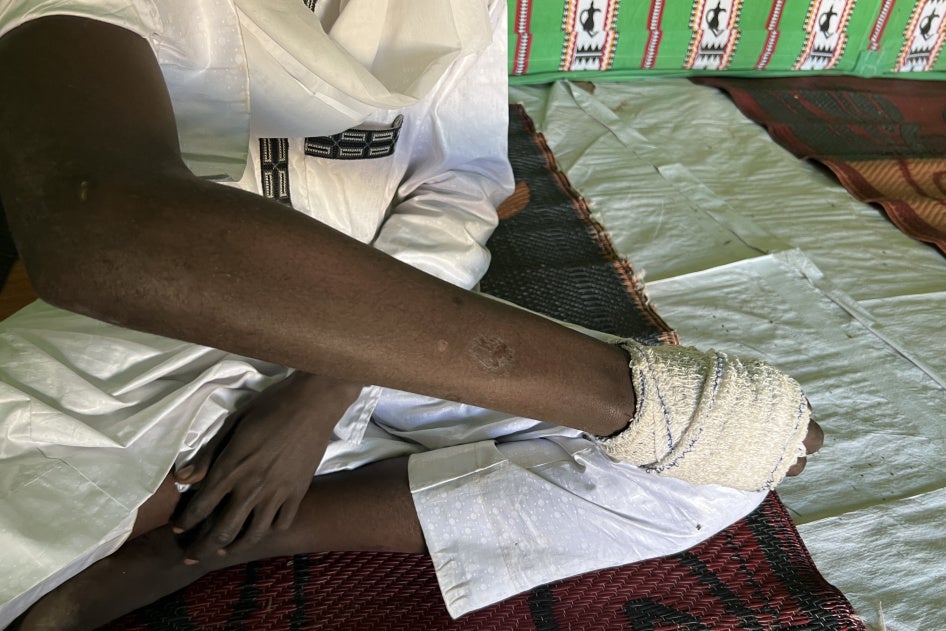
Survivors spoke of multiple massacres as the Rapid Support Forces took control of the city.
The berm and trench around the city were the site of several large-scale massacres, as Rapid Support Forces fighters repeatedly carried out mass killings of civilians and fighters trying to flee, in and around several points along the trench.
Nearly all interviewees who tried to go to Garni, a village to the northwest of El Fasher, described methodical Rapid Support Forces attacks, with forces shooting at crowds from a distance, opening fire from several directions, and then from up close, killing large crowds of people trapped in the trench.
They also hunted people down beyond the trench and the berm—chasing them through fields and grassland, and opening fire on sight.
What other abuses did you uncover during the fall of the city?
The Rapid Support Forces subjected women and girls to widespread sexual violence. We spoke to survivors who were abducted on the road from El Fasher and raped, many gang-raped, sometimes in front of their relatives, other times in the bushes away from the road. Many people saw adolescent girls and young women being abducted in groups and taken to an unknown fate. One woman said she was held by Rapid Support Forces for ten days and repeatedly gang-raped. She said a 13-year-old girl abducted alongside her died because of injuries sustained during rape. Survivors told us that many victims who had subsequently fled feared stigma and were reluctant to ask for medical care or had received it too late to prevent pregnancy or counteract the transmission of HIV and other sexually transmitted infections.
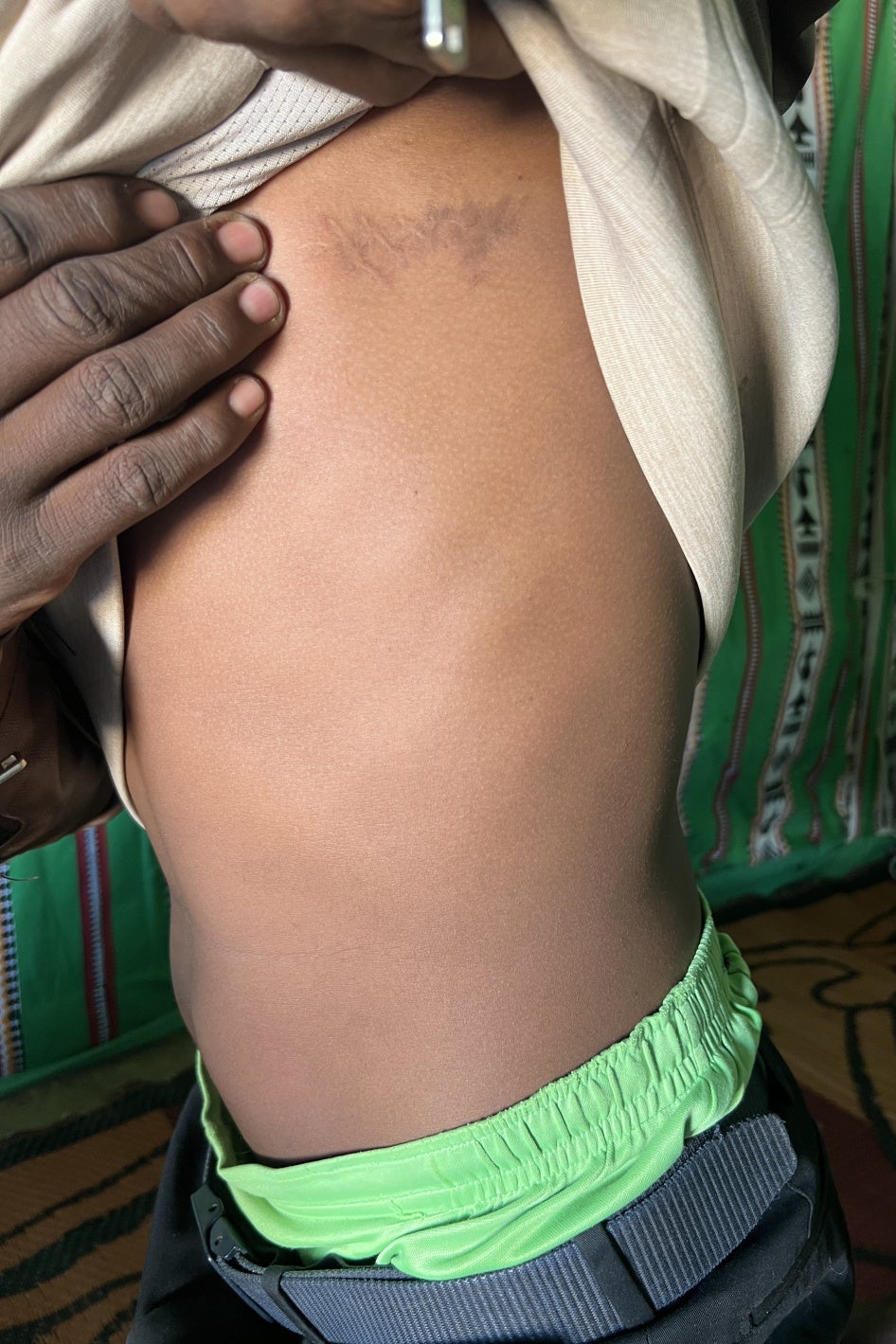
The Rapid Support Forces detained people, separated them into groups by age and gender, and killed large numbers of men and adolescent boys. People with disabilities were sometimes targeted because they had a disability. Interviewees described some RSF groups running a systematic kidnap-for-ransom racket. They detained men and boys, in particular, for periods ranging from a few hours to almost two weeks, until the victims’ relatives secured their releases by paying exorbitant ransoms. Men who couldn’t pay, or who didn’t have relatives to call, were executed.
Interviews and media reports also point to ongoing mass detentions of men from El Fasher inside El Fasher itself and suggest that many detainees were taken to Nyala, the capital of South Darfur.
As they carried out these abuses, Rapid Support Forces often used racial slurs, indicating they were targeting non-Arab communities, particularly ethnic Zaghawa, based on their ethnicity. They also repeatedly asked survivors why they had stayed in El Fasher, alleging that they must have supported the government forces and their allies if they stayed behind.
It’s also important to remember that these mass killings targeted a population that had already been starved by a year and a half of siege. By the final stages of the siege, the Rapid Support Forces had successfully cut off goods from reaching the city. Youth and traders who continued to try to smuggle in food and goods past the Rapid Support Forces berm described deadly Rapid Support Forces attacks. By the end, people from all walks of life relied on animal fodder for food and sometimes skipped meals altogether. Several interviewees said that many children died of malnutrition.
What stories and images have stayed with you?
The Rapid Support Forces fighters did not spare anyone. One witness described seeing the Rapid Support Forces kill a child with Down syndrome, a blind girl, and a woman with a physical disability who was unable to walk.
A woman recounted how her 17-year-old daughter was abducted along with three other girls on the road to Garni. She felt helpless as the Rapid Support Forces fighters took her daughter away, but she had to make the devastating choice of leaving her behind so she could flee with and protect her other children. She was later reunited with her 17-year-old daughter, who had been gang raped for a day. Since then, the girl screams in her sleep.
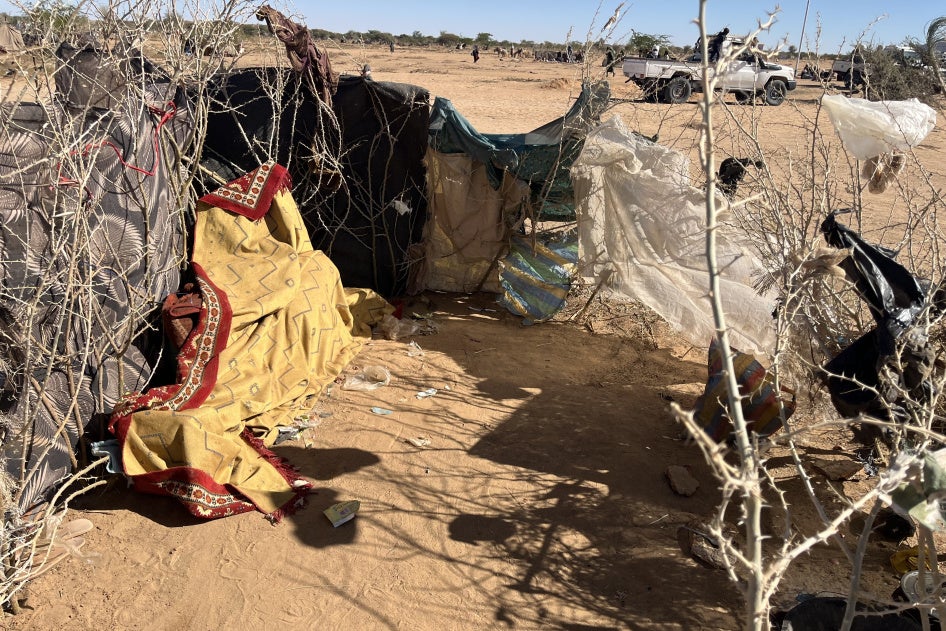
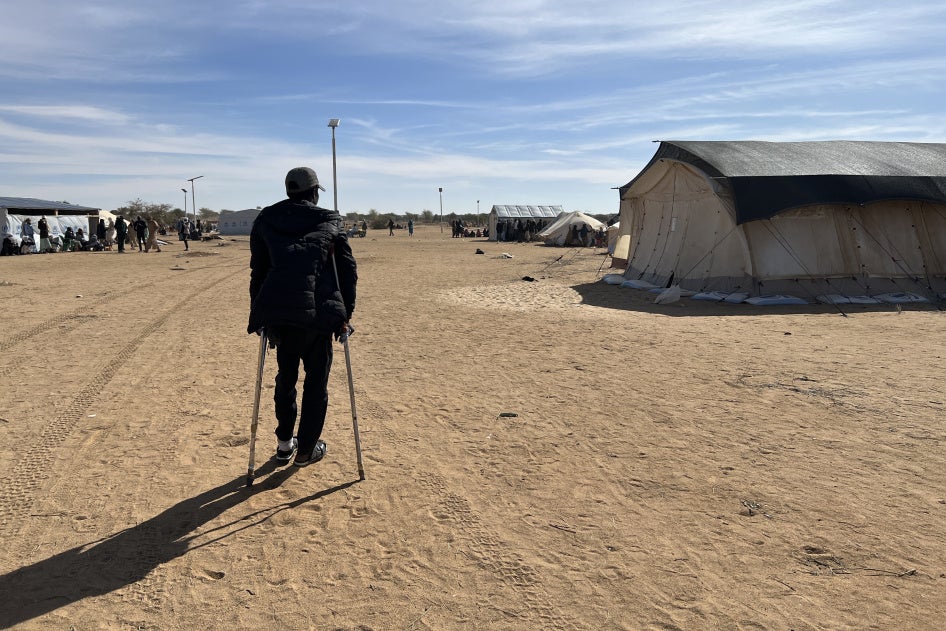
The lack of immediate support for the refugees at the border areas once they cross into Chad will also stay with us. Having escaped such horror, they faced days, sometimes weeks-long journeys to reach neighboring Chad. The people we met had nothing but tarpaulin and sticks to build makeshift shelters to protect themselves and their children from the sweeping winds that hit the region in the winter.
How do the events in El Fasher fit into the broader picture of what has been happening in Darfur and Sudan at large?
This pattern the Rapid Support Forces’ conduct has played out across Sudan—in Darfur, in Kordofan, in Gezira, and other places. The Rapid Support Forces don’t just carry out atrocities during their attacks—in fact, some of the worst abuses happen after their military victories, when they have secured control over an area and are free to lash out at defenseless civilians.
We initially documented this in West Darfur in 2023. First in June of 2023, when Rapid Support Forces and allied armed groups opened fire on a kilometers-long convoy of civilians and fighters fleeing West Darfur’s capital, El Geneina, killing large numbers; then again in November that same year when the Rapid Support Forces killed hundreds of civilians in Ardamata, a suburb of El Geneina, following its takeover of the army garrison there. These killings took place in what we found to be part of a campaign of ethnic cleansing by the RSF against the ethnic-Massalit and other non-Arab communities in El Geneina.
Similarly, the Rapid Support Forces deliberately killed civilians and held women and girls in sexual slavery after it took over parts of the Kordofan region in late 2023 and early 2024. It did the same around the same time in the central Sudan state of Gezira just south of Khartoum.
What is Human Rights Watch calling for now?
Action against perpetrators, efforts to prevent further atrocities, and redress for survivors.
There is damning evidence that high-ranking Rapid Support Forces commanders, including the forces’ deputy commander Abdelrahim Dagalo, directed operations in El Fasher. The United Nations Security Council should immediately sanction them, with clear messaging that there will be consequences for grave violations. Human Rights Watch has previously called for sanctions against the Rapid Support Forces’ top commander, Mohammed Hamdan Dagalo “Hemedti,” for bearing primary command responsibility for previous episodes of mass atrocities. Sanctions can serve as a tool to avert further atrocities, notably in the Kordofan region, where the Rapid Support Forces and some of its new allies are battling against the Sudanese Armed Forces and their allies for control.
Civilians in Sudan also need protection. To achieve that, the deployment of a robust United Nations-mandated mission to protect civilians is by far the best option, notwithstanding the many obstacles involved. States that are committed to securing civilian protection need to start working together to create both the operational architecture and political momentum towards the deployment of such a mission. States can and should immediately act to ensure that local responders are supported and able to safely operate and that parties face consequences for ongoing attacks, reprisal and otherwise, against civilians.
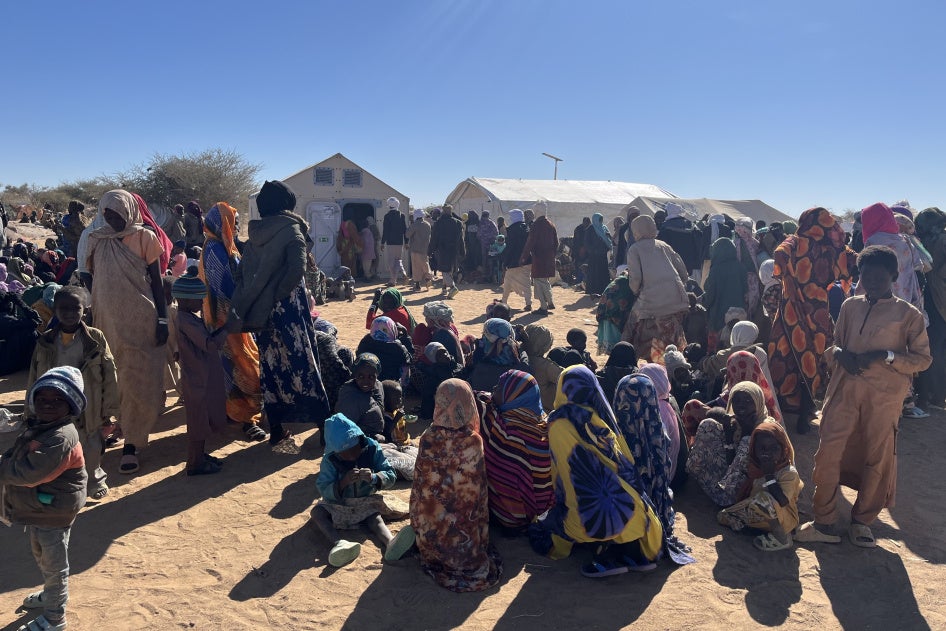
Of course, those displaced, within Sudan and in neighboring countries, should not be forgotten. The humanitarian context in Chad, a country that now hosts almost a million refugees because of the events in Darfur, is dismal. Given the scale of the sexual violence, international donors should significantly increase funding for national and international protection and gender-based violence responses in Sudan and in neighboring refugee hosting countries.
Survivors we spoke with believe that justice is key. They want Rapid Support Forces leaders to be held to account.
In light of the Trump administration’s ongoing attack against the International Criminal Court (ICC), state parties to the court should redouble their efforts to support and protect the court’s work in Sudan. They can do so by providing the court with adequate resources and by urging the Trump administration to revoke its International Criminal Court-related sanctions.
As grave abuses continue to be committed in Darfur and across Sudan, United Nations Security Council and International Criminal Court members should call for expansion of the court’s mandate so that it can cover crimes committed in the whole country. Member states should also investigate and, as appropriate, prosecute on their own soil any commander responsible for committing serious crimes in Sudan through the principle of universal jurisdiction, in line with national laws.
States should also rally to ensure that the United Nations Independent International Fact-Finding Mission for the Sudan and the Joint Fact-Finding Mission to Sudan that was mandated by the African Commission for Human and Peoples’ Rights (ACHPR) have the necessary political and financial resources to carry out their mandates, and that their recommendations on accountability are fully implemented.
The world cannot keep failing the victims of atrocities in Sudan.