On January 29, the junta’s Council of Ministers approved a decree dissolving all political parties in the country and a draft law repealing the legislation governing their operations and financing. The minister of territorial administration, Émile Zerbo, said the action is part of a broader effort to “rebuild the state,” following what the junta describes as “abuses” and “division of citizens” caused by the multiparty system.
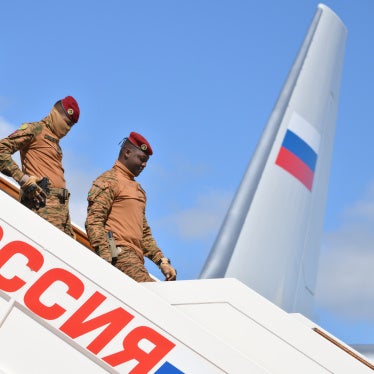
This is the latest in a series of attacks on the political opposition that began immediately after junta leader President Ibrahim Traoré seized power in September 2022. Despite promises to return to civilian rule, Traoré instead consolidated his authority and suspended political parties. Following nationwide consultations that were widely boycotted by opposition parties and civil society groups, Traoré announced in May 2024 that the junta would remain in power for an additional five years. In April 2025, he stated that Burkina Faso was “no longer in a democracy,” but rather in a “progressive people’s revolution.”
Since the coup, the junta has also carried out a relentless assault against perceived political opponents, civil society organizations, the media, and peaceful dissent, shrinking the country’s civic and political space. The military authorities have used a sweeping emergency law to arbitrarily arrest, forcibly disappear, and unlawfully conscript critics, dissidents, judges and journalists.
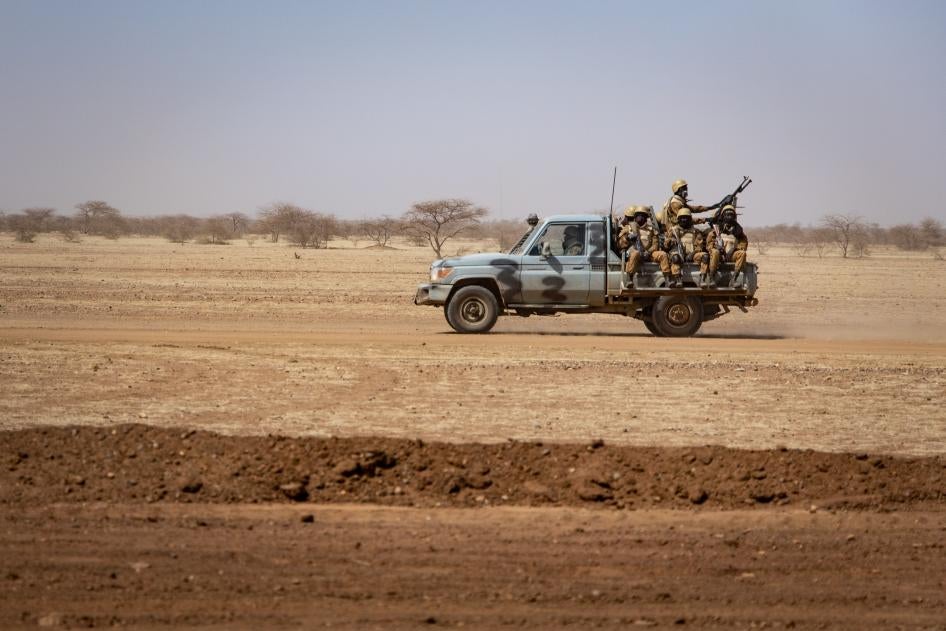
The dissolution of political parties comes amid Burkina Faso’s deepening Islamist insurgency, underscoring how the country’s armed conflict is unfolding alongside a sharp contraction of political space.
“The military are putting democratic institutions on trial using the pretext of terrorism,” said Ahmed Newton Barry, a journalist and former president of the Burkinabè national electoral commission who is currently in exile. “The junta believes that the fight against terrorism is incompatible with democracy, but counterterrorism efforts should not undermine civil liberties and the rule of law.”
The dissolution of political parties marks a significant escalation in the country’s democratic backslide. Burkina Faso’s international partners, including the African Union, the United Nations, and the European Union, face a clear choice: remain passive as democratic institutions disappear, or signal decisively that, unless the junta’s trajectory changes, continued repression will carry political, economic, and diplomatic costs.