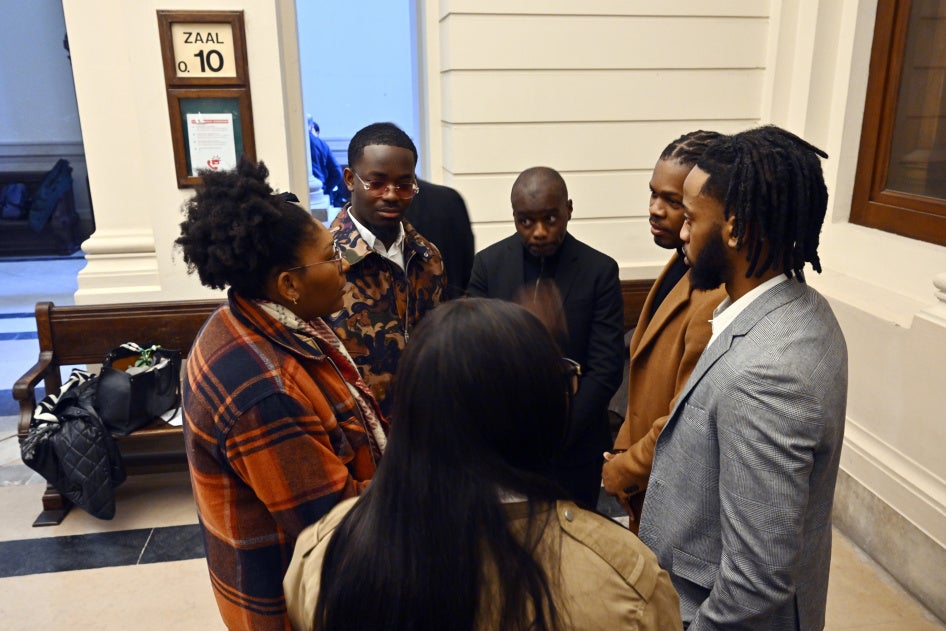
On January 20, a Belgian court held a closed-door hearing to determine whether to pursue a criminal case against the last living former Belgian official for his alleged involvement in the 1961 assassination of the first democratically elected prime minister of the Democratic Republic of Congo, Patrice Émery Lumumba, following the country’s independence from Belgian colonial rule.
The historic case was brought by Lumumba’s family, whose perseverance could now lead to the first instance of a European court pursuing individual criminal responsibility for a crime linked to European colonial rule. Former European colonial powers considered Lumumba a threat to their political and economic interests, as he symbolized African self-determination and decolonization.
During a press conference following this week’s hearing, Lumumba’s family described the case as a step toward “justice and truth.” A decision is expected on March 17.
The importance of the case cannot be overstated as former European colonial powers remain unwilling to take legal responsibility for their colonial crimes and abuses. Instead democratic leaders should be genuinely reckoning with historical injustices and taking action consistent with international human rights law and norms on justice, dignity, and accountability.
Governments should build on the momentum for reparations seen in 2025 at the United Nations, African Union (AU), the Caribbean Community (CARICOM), and at national levels to address enduring global systemic racial and economic injustices rooted in legacies of colonialism, enslavement, and the slave trade.
Last year, governments at the UN committed to a Second International Decade for People of African Descent. Meanwhile, the AU dedicated the year to reparatory justice, later extending it to a decade. The AU also joined reparatory efforts with CARICOM.
International human rights law and standards create obligations for states to provide effective remedies and reparations for gross rights violations, many of which occurred during colonization. But political unwillingness continues to denyaffected communities justice.
Without addressing historical injustices, cycles of inequality, exclusion, and violence will persist. Reparations are therefore not symbolic but a legal obligation and a necessary foundation for a just and equitable future.