(London) – Kazakh authorities should drop charges against 18 Kazakh activists who peacefully protested against Chinese government abuses in Xinjiang, Human Rights Watch said today. The activists, from the Nagyz Atajurt Volunteers group, face up to 10 years in prison for exercising their freedom of expression. Thirteen are in pretrial detention, while the rest are under house arrest. The trial is expected to begin on January 21 in the city of Taldykorgan.
“Kazakh authorities should withdraw the criminal charges against the Atajurt activists and release those in detention immediately,” said Maya Wang, deputy Asia director at Human Rights Watch. “Instead of aiding China’s repression, the Kazakh government should press the Chinese government to stop its crimes against humanity in Xinjiang.”
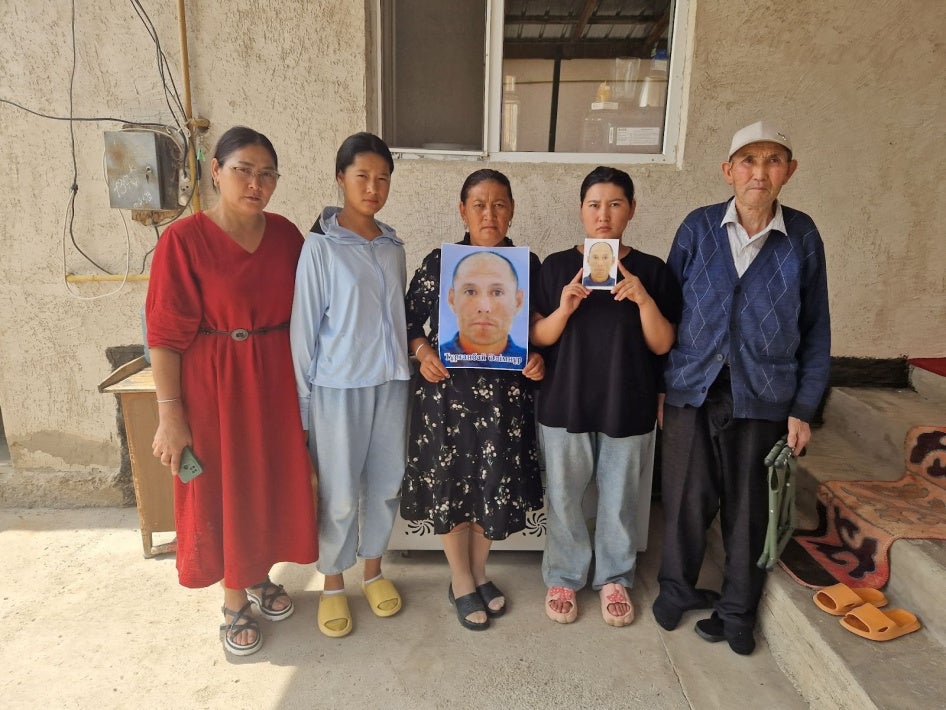
The charges of “inciting national discord” stem from a November 13, 2025 demonstration in Qalzhat, Almaty’s Uyghur District, where activists burned three Chinese flags and a portrait of Chinese President Xi Jinping. Protesters demanded that the Chinese authorities release Alimnur Turganbay as they were chanting slogans such as “Stop the pressure and injustice against Kazakh and Uyghur peoples” and “Down with the Communist Party! Down with Xi Jinping!” A Kazakhstan citizen originally from Xinjiang, Turganbay has been detained on unknown grounds by Chinese authorities since July 2025.
This is the first time Kazakh authorities have sought to criminally prosecute in a single case such a large group of activists advocating for human rights in Xinjiang, Human Rights Watch said.
According to the indictment, the activists “premeditatively gathered … using mass media, with the aim of inciting national discord, as well as insulting the national dignity and honor of representatives of the Chinese nationality.” State-ordered forensic examinations of the protest video—which demonstrators had posted on social media after the event—allegedly found “signs of incitement to interethnic discord or national enmity.”
Evidence suggests Kazakh authorities may be acting at China’s request. Kazakh police initially detained the protesting activists on November 13, and an administrative court convicted them of “hooliganism,” imposing sanctions ranging from fines to 15 days’ detention.
On November 14, the Chinese Consulate in Almaty sent a diplomatic note to Kazakhstan’s Ministry of Foreign Affairs calling the protest a “deliberately planned … open provocation” and urged authorities to “take appropriate measures.” Kazakh authorities then opened a criminal investigation into the activists.
Authorities have also targeted other Atajurt activists in recent months. On November 15, authorities arbitrarily detained four other Atajurt volunteers in Astana and held them for ten days for administrative offences. On December 23, a Kazakhstan citizen in the capital city of Astana was fined for sharing information about the protest on Facebook. Officials have warned other Atajurt activists not to provide video or financial support to Atajurt.
Authorities in Kazakhstan have long misused the vague and overly broad offence of “inciting discord” (article 174 of the criminal code) to silence individuals for actions and speech that are protected under international human rights law.
International human rights bodies have repeatedly called on Kazakhstan to amend the law, including at Kazakhstan’s last Universal Periodic Review, where the government received and supported at least six recommendations to amend the “inciting discord” offence. Yet, authorities persist in using the law to silence government critics.
Kazakhstan shares a long border with China and is home to a sizable Uyghur and Kazakh diaspora from Xinjiang, where the Chinese government has carried out severe repression against these Turkic Muslim communities since late 2016. The Chinese government’s abuses in Xinjiang, including those constituting crimes against humanity, have been a point of contention in Kazakhstan-China relations. These abuses include mass arbitrary detention, torture, enforced disappearances, mass surveillance, cultural and religious persecution, separation of families, and forced labor. Since 2016, Chinese authorities have punished Uyghurs and ethnic Kazakhs who have foreign ties by detaining and imprisoning those with family in, or who have visited, any of the “26 sensitive countries,” including Kazakhstan.
In recent years, the Chinese government has also escalated its harassment of critics abroad, known as “transnational repression.” While Kazakhstan has refrained from extraditing ethnic Kazakhs or Uyghurs wanted by the Chinese government, the Kazakh government has sacrificed respect for human rights in an apparent effort to maintain good relations with the Chinese government, Human Rights Watch said.
In recent years, Kazakh authorities have barred researchers and prosecuted activists exposing Xinjiang abuses from entering the country. In May 2025, Kazakh authorities denied entry to Danish anthropologist Rune Steenberg. Similarly, in 2021, Kazakh authorities barred Gene Bunin, founder of Xinjiang Victims Database, from entering the country for five years.
In 2019, authorities charged Kazakhstan citizen and Atajurt activist Serikzhan Bilash for “inciting discord.” Bilash was released only after he agreed to cease his Xinjiang activism; he is currently in exile in the United States. Other Kazakh nationals who have intermittently protested the Chinese government’s abuses in Xinjiang have also faced arrest and short-term detention.
Kazakhstan’s international partners should urge the government to drop these unfounded charges, release the Atajurt activists, and uphold freedom of expression.
“The Chinese government should end its crimes against humanity in Xinjiang and stop intimidating peaceful critics abroad,” said Wang. “Kazakh authorities should protect its citizens from Chinese government repression, not prosecute peaceful activists for speaking out against it.”