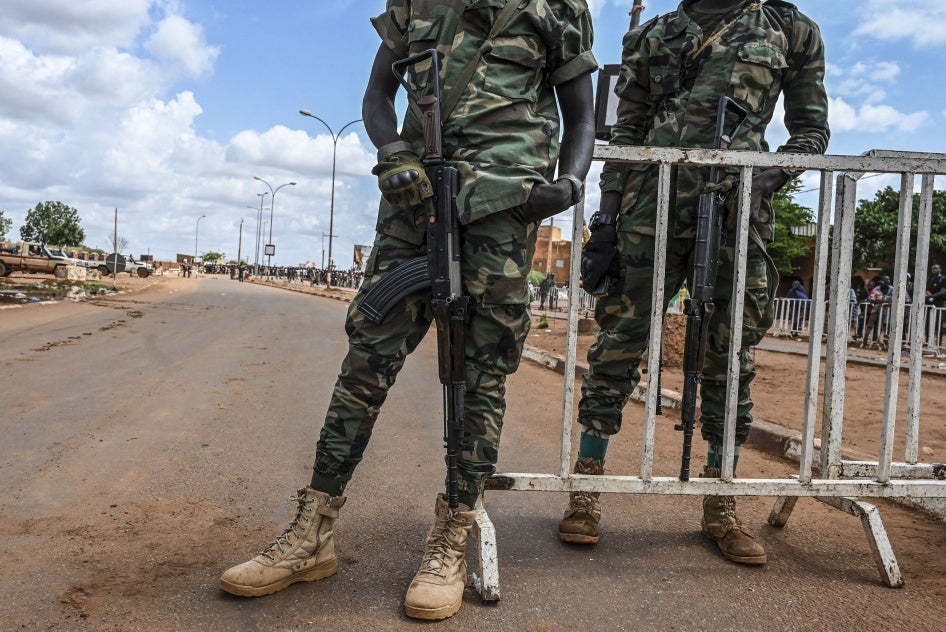
Niger’s military junta adopted a sweeping “general mobilization” decree on December 26. The new law grants authorities far-reaching powers to confront security threats, but at the expense of human rights.
The decree establishes a broad legal framework allowing the government to summon citizens, seize goods, compel the reporting of alleged “hostile activities,” and restrict communications deemed harmful to “national mobilization efforts.” Authorities say the measure is intended to “preserve the integrity of the national territory and state sovereignty” and protect people and institutions from internal and external threats.
The decree risks becoming an instrument of repression in a country where civic space has steadily narrowed since the July 2023 military coup. Because the provisions are broad, they could be used to suppress peaceful dissent and restrict the rights to freedom of movement and expression. One clause, for example, obligates citizens to report the presence of any “foreign national from a hostile country.” Such vague terminology invites abuse and could be weaponized to target critics of the junta.
These concerns arise amid the military junta’s crackdown on the political opposition, independent media, civil society, and trade unions. The authorities continue to arbitrarily detain former President Mohamed Bazoum and his wife, held since the coup, as well as the prominent human rights defender Moussa Tiangari, among others.
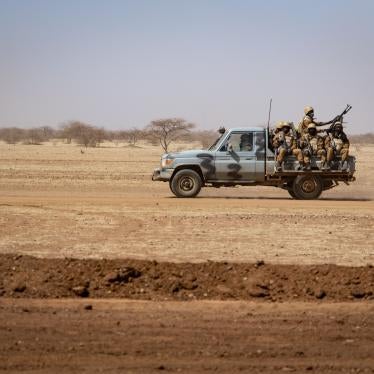
Niger faces worsening insecurity, particularly in the western Tillabéry region, where Islamist armed groups linked to the Islamic State and Al-Qaeda have carried out repeated attacks on civilians as well as security forces.
Under the International Covenant on Civil and Political Rights, to which Niger is a party, governments may impose restrictions on certain rights during a state of emergency, but they must be tailored to the “exigencies of the situation.” The United Nations Human Rights Committee has stressed that limits on free expression must be narrowly defined and not undermine the right itself.
Under the African Charter on Human and Peoples’ Rights, no restriction on charter rights is allowed during a time of emergency.
Niger’s junta should not use threats to the country’s security to plunge the country into an ever-deeper human rights morass, but recognize that upholding fundamental freedoms is key to restoring security. Legal safeguards and independent oversight mechanisms should be urgently adopted to prevent abuse of the mobilization decree.