Growing up in Africa, I witnessed how much enthusiasm the Africa Cup of Nations can raise among fans. During the Cup, also known as AFCON, bars and clubs in my hometown, Libreville, Gabon, would be filled with fans chanting to support their favorite teams.
Whether Cote d’Ivoire in 2023, Egypt in 2019, or other African states, the host country usually becomes the continent’s center of attention during the tournament, bringing frenzied events and a sense of national pride.
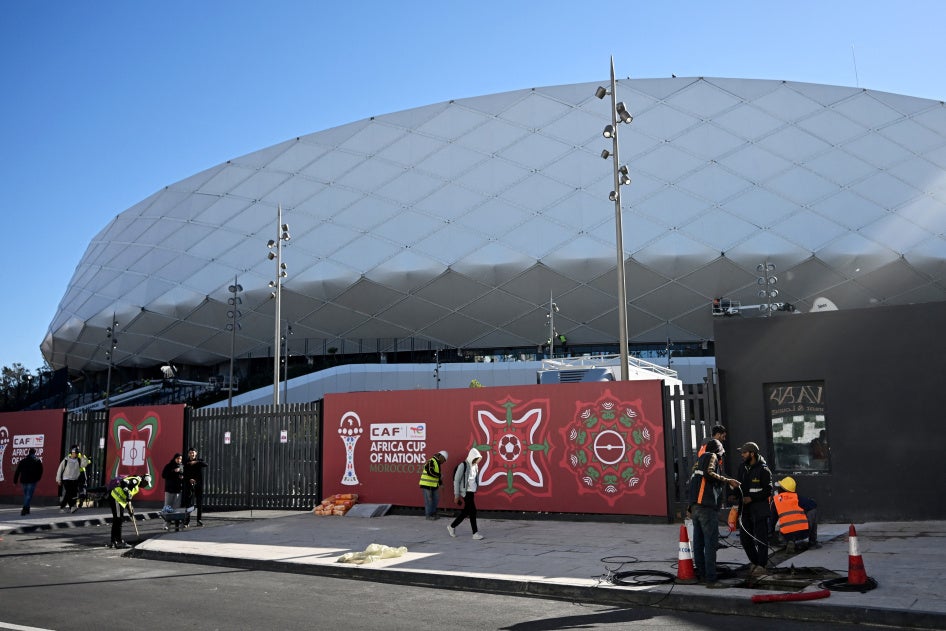
The next AFCON will start December 21, in Morocco, which has enormous sporting ambitions. As part of a strategy to diversify its economy, the country has sought to host major sporting events to attract investors and tourists. Morocco will also co-host the FIFA World Cup in 2030 alongside Spain and Portugal, hosted the Women's AFCON in July, and is reportedly bidding to host a Formula 1 Grand Prix. But Morocco needs to take health and education as seriously as it takes football.
Moroccan authorities have reportedly spent US$5 billion on infrastructure for the AFCON and 2030 FIFA World Cup and are building a new Casablanca stadium projected to be the biggest in the world.
Yet these ambitious plans have been a major subject of public debate among Moroccans.
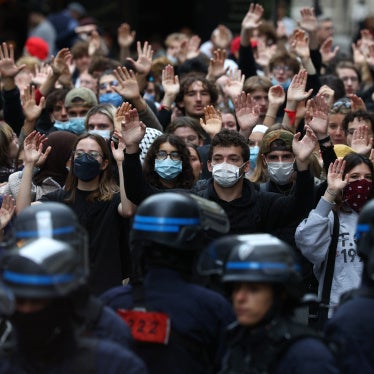
Starting on September 27, thousands of Moroccans took to the street as part of nationwide “Gen Z 212” protests, calling for better health care and education and an end to corruption. Protesters contrasted dazzling stadiums and tournament infrastructure with failing public services, reportedly chanting “We want hospitals not football stadiums," and even calling for a boycott of AFCON in some cases.
According to the World Health Organization, Morocco’s public spending on health care reached only 2.3 percent of its GDP in 2022, less than half the international benchmark of at least 5 percent.
Human Rights Watch wrote on October 23 to the African Football Confederation (Confédération Africaine de Football, CAF), which oversees AFCON, to ask if it assessed what impact the event would have on public services. We had asked the same question to FIFA, which is organizing the 2030 World Cup, October 16. Neither body has responded to the question.
The Moroccan authorities responded to the youth-led demonstrations with a heavy hand, banning and forcibly dispersing protests.
Human Rights Watch documented mass arrests and prosecutions, the killing of at least three people, including a 22-year-old student and a 25-year-old man, as well as many injuries. We also geolocated two videos showing security forces in vehicles driving into groups of people in Oujda.
The government has failed to meaningfully address protestors’ demands. Authorities have sought to justify the lethal use of force by security forces and investigations into police abuses have stalled.
As of late October, at least a thousand people remained in jail, with hundreds facing charges, including at least 330 children. The Moroccan Association for Human Rights (AMDH) reported that protesters received heavy sentences of up to 15 years. Despite some reported incidents of violence, many people were detained apparently merely for exercising their right to peaceful protest.
The African Football Confederation president, Patrice Motsepe, on October 6, reassured participants at the confederation’s General Assembly that the protests would not affect the tournament, saying the federation would work “to host the most successful AFCON in the history of this competition."
But these games won’t be the most successful with their preparations marred by abuses.
Both the African Confederation and FIFA have a responsibility to ensure that their respective tournaments do not contribute to adverse human rights impacts and to use their leverage with the Moroccan government to prevent and mitigate violations, before, during, and after the games.
The two sporting bodies should call privately and publicly for the Moroccan government to release any protesters unjustly detained, request updates on investigations into police abuses, and underscore the importance of respect for freedom of expression and peaceful assembly.
In addition, FIFA and the Moroccan government should, as part of their human rights strategy for the 2030 World Cup, ensure that the tournament strengthens Moroccans’ rights to education and health care.
The Africa Cup of Nations is a chance to celebrate the enduring love of football across the continent. The African Confederation should carry out comprehensive, inclusive human rights due diligence ahead of all future AFCON tournaments.
The upcoming AFCON and 2030 FIFA World Cup will not only be a test for Africa’s football teams, but also for the federation and FIFA to prove they can be the champions of positive change they aspire to be.
..
Vincent Sima Olé is a Global Strategy and Sport and Human Rights coordinator at Human Rights Watch.