
On May 16, Succès Masra, the Chadian opposition leader and former prime minister, was arrested in N’Djamena, Chad’s capital city. He is charged with complicity in intercommunal violence. But his arrest appears more like a political reckoning aimed at silencing one of the most prominent challengers to Mahamat Idriss Déby and at stopping Masra’s criticism of the May 2024 election that returned Déby to power.
Masra’s detention violates a political accord guaranteed by President Félix Tshisekedi of the Democratic Republic of Congo. The Kinshasa Accord, signed by the Chadian government with Masra’s political party, Les Transformateurs (The Transformers), in October 2023, was meant to end a political crisis in Chad. The crisis was triggered by the deadly violence that erupted on October 20, 2022, when Chadian security forces opened fire on protesters demanding a return to civilian rule. The crackdown, which left scores of people dead and hundreds detained, marked a turning point in the country’s fragile transition following the death of President Idriss Déby, Mahamat Idriss Déby’s father, in 2021.
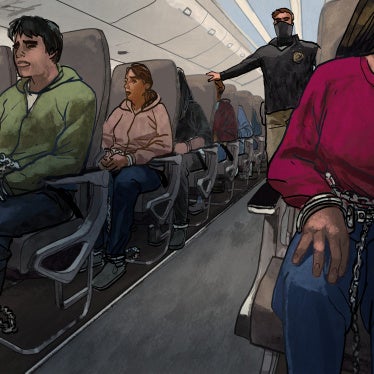
Hundreds of detainees were forcibly transferred to the remote high-security Koro Toro prison, in the desert over 600 kilometers from N’Djamena. We documented how detainees, transported in overcrowded trucks, without adequate food, water, or medical care, died along the way. The mass transfer and abuses suffered by detainees became a symbol of the government's repressive response to dissent.
Masra, fled the country after the shooting started and men and boys were shipped to Koro Toro.
In response, Tshisekedi led regional peace efforts in his role as facilitator of the Chad political transition process for the Economic Community of Central African States (Communauté économique des États de l’Afrique centrale, CEEAC). The resulting Kinshasa accord was by no means perfect.
Contrary to international norms that require governments provide victims with effective remedies, it allowed for a general amnesty law covering military personnel involved in the October 2022 killings, giving the government the pretext to ignore calls for accountability.
But it also led to meaningful concessions made by the government toward the opposition, including suspending an arrest warrant against Masra, and guaranteeing him and his supporters safe return from exile. Significantly, it also provided legal guarantees to Les Transformateurs to freely conduct political activity.
Masra returned to Chad and accepted the position of prime minister in January 2024. That decision, while controversial to some in the opposition, appeared to signal a readiness to participate in a new political order.
His run as prime minister would be short lived. He ran against Déby for president and resigned in May 2024, claiming the vote had been rigged. He is now accused of inciting violence linked to intercommunal clashes in the south that have left dozens dead, though the government has not provided any evidence that Masra is connected to them. He remains in preventative detention while investigations continue, having attempted but eventually abandoning a hunger strike.
Masra’s arrest is a breach of trust in the regional accord and Chad’s leadership. If the government is allowed to imprison political opponents after signing a reconciliation accord, what credibility will any of these agreements hold, and what does it say of their regard for human rights obligations? The message this sends to other opposition figures is clear: returning to the fold means walking into a trap.
President Tshisekedi and the CEEAC should not remain silent. As the guarantor of the Kinshasa Accord, Tshisekedi bears both moral and political responsibility to speak up when it is violated. His continued silence damages not only his reputation as a regional statesman but could also embolden and reinforce authoritarianism, and the abuse of rights that accompanies it, across Central Africa.
Chad sits at the heart of this volatile Central Africa region where broken promises and state violence have fueled cycles of rebellion for decades. The period prior to Chad’s May 2024 presidential elections was marred by violence. On February 28, 2024, security forces killed Yaya Dillo, the president of the Parti socialiste sans frontières (Socialist Party Without Borders), during an attack by security forces on the party’s headquarters. Dillo’s death was suspicious. Reuters released a report in which five forensic experts asserted Dillo had been shot in the head at close range. The authorities have not clarified the circumstances of his death.
Tshisekedi and the CEEAC should be commended for attempting to address this volatility in 2023, but if that is still to have value, they need to step up now. Tshisekedi should demand that, unless meaningful evidence can be brought forth in a trial against Masra, he should be released. Upon his release, Tshisekedi should call for the restoration of political rights and guarantees and full compliance with the Kinshasa Accord.
Tshisekedi should call out Masra’s arrest for what it is: a political maneuver that risks plunging the country back into instability. If this Kishasa accord is allowed to collapse, the fragile hope for a democratic future in Chad is plunged into jeopardy.