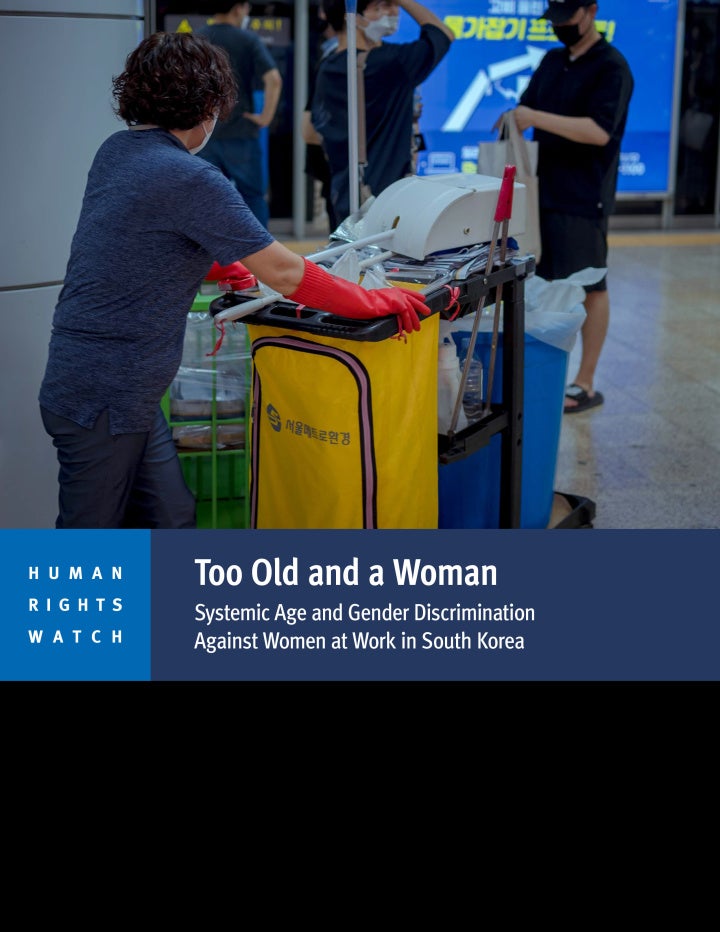
Systemic Age and Gender Discrimination Against Women at Work in South Korea
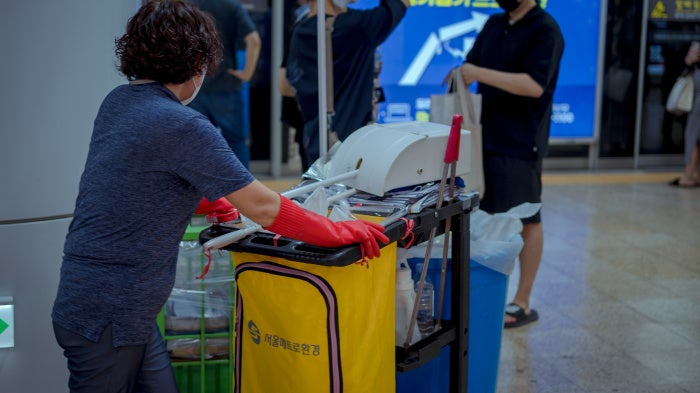
The 92-page report, “Too Old and a Woman: Systemic Age and Gender Discrimination Against Women at Work in South Korea,” documents that social attitudes toward education, unfair treatment in hiring, disrupted careers due to family responsibilities, limited promotion opportunities, glass ceilings, and sexual harassment create a disadvantage for South Korean women throughout their working lives. As women get older, their work opportunities narrow to a handful of low-paid, insecure jobs, and the gender pay gap increases. By the time they are eligible for pensions, women face a significant gender pension gap.
Discrimination Against Women Under Botswana’s Citizenship Act
Recent events indicate that the government of Botswana is continuing to enforce provisions of the Botswana Citizenship Act that discriminate on the basis of sex, in defiance of a 1992 Botswana Court of Appeal decision holding those provisions unconstitutional and contrary to international human rights standards.
An investigation of the prevalence of forcible virginity control exams and the role of the government in conducting or tolerating such exams, this report cites several separate incidents in the spring of 1992 when young females committed suicide after authorities ordered them to submit to examinations of their hymens.
Trafficking of Burmese Women and Girls into Brothels in Thailand
Thousands of Burmese women and girls are trafficked into Thai brothels every year where they work under conditions tantamount to slavery. Subject to debt bondage, illegal confinement, various forms of sexual and physical abuse, and exposure to HIV in the brothels, they then face wrongful arrest as illegal immigrants if they try to escape or if the brothels are raided by Thai police.
The Widespread Rape of Somali Women Refugees in North Eastern Kenya
While the tragedy in Somalia made daily news, the plight of thousands of refugees in neighboring Kenya remains unpublicized. Since 1992, approximately 300,000 Somalis have fled across the 800 mile Kenya-Somali border, most of them women and children. Many were the victims of violence, including rape, as they fled war-torn Somalia.
Over 70 percent of women in jail in Pakistan report sexual abuse by police officials. Despite the high incidence of rape and sexual torture of female detainees, no police official has been subjected to criminal punishment for these abuses.
The Cairo-based Arab Women's Solidarity Association (AWSA) was ordered dissolved by an administrative decree dated June 15, 1991. The action was taken pursuant to the 1964 Law of Associations which regulates private voluntary organizations in Egypt. AWSA actively promotes women's rights in Egypt and the Arab world. The founder and president of AWSA, Dr.
The Brazilian government is failing to prosecute violence against women in the home fully and fairly. Despite ever-increasing domestic violence (particularly wife-murder, battery and rap) impunity and discriminatory treatment in favor of the perpetrators of domestic violence are still the rule in the Brazilian justice system.
he Arab Women's Solidarity Association (AWSA), headed by Dr. Nawal El-Saadawi, a well-known writer and leading figure in the Arab women's movement, has been ordered dissolved by the Egyptian authorities. AWSA will contest the dissolution order in legal proceedings scheduled to begin on October 31 before the State Council Court.