
In an overdue but welcome step, Egypt’s Ministry of Finance has published data showing state owned enterprises, following 2024 tax reforms to remove their tax exemptions, contributed 67 billion pounds (US$1.4 billion) in tax revenue in FY2024/25 and is expected to raise 87 billion pounds (US$1.7 billion) in FY2025/26.
While Human Rights Watch cannot verify the government data, it shows that most of this revenue came from a small number of military businesses such as cement factories and military social and sporting clubs.
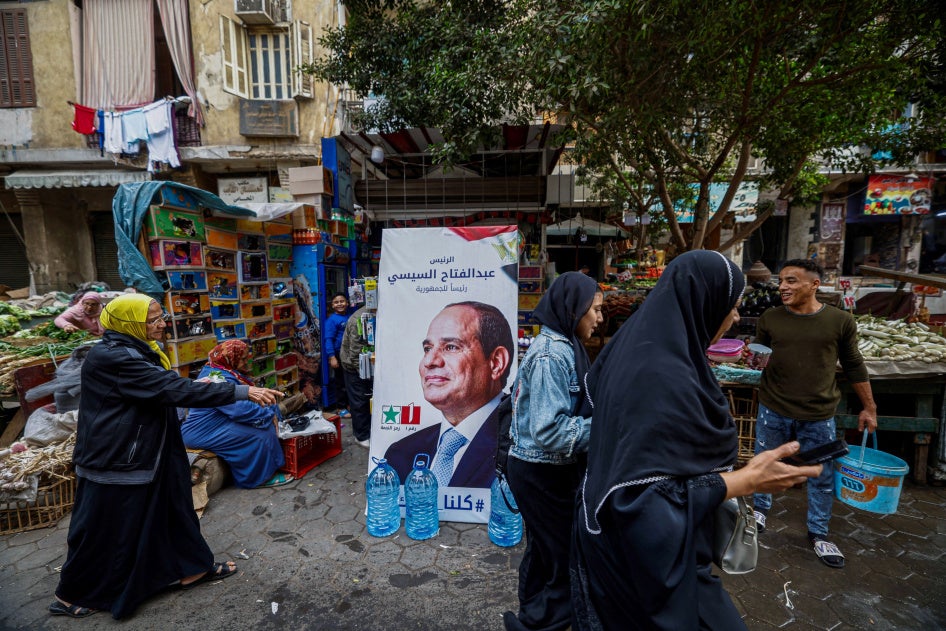
Since Egyptian President Abdel Fattah al-Sisi seized power in 2014, he has greatly expanded the reach of the military’s businesses into a massive swath of the civilian economy. These opaque businesses operate in virtually all sectors from poultry to gas stations. For decades, they have largely not been subject to civilian oversight, transparency requirements, or taxation, so their revenues have not contributed to the government’s budget or fulfilling socioeconomic and other rights. Instead, they provide the military a revenue stream outside the state budget and have helped President Sisi and military generals solidify control over civilian life through authoritarian repression. Military businesses have also been linked to abusive conduct with impunity.
For years, Human Rights Watch and other groups have advocated for transparency around Egypt’s military businesses. As part of the International Monetary Fund’s (IMF) ongoing program, the government committed to publish the cost of tax exemptions for state-owned enterprises. It also enacted legal amendments in 2023 and 2024 to remove such exemptions, albeit with overbroad defense and national security exceptions. Last week, the IMF approved the release of US$2.27 billion as part of the US$8 billion deal.
The recent disclosures are unprecedented. Although they are far from detailed, they show that taxing even a small number of military businesses in Egypt generates billions in revenue. This confirms what democracy and human rights advocates have been pointing out for years: broad tax exemptions for state-owned enterprises like military business rob the state of significant revenue that could help fulfill Egyptians’ economic, social, and cultural and other rights.
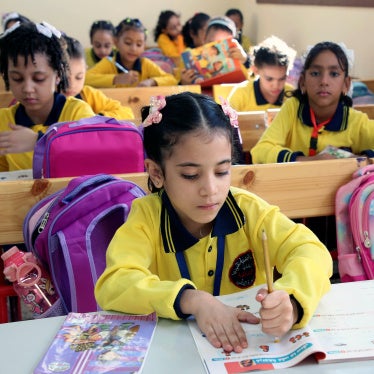
A government report published in April 2024 under the IMF program estimated that total revenue lost to tax exemptions, including for state owned enterprises amounted to between 3 and 4.5 percent of GDP. By contrast, the country’s 2025/26 education budget was only 1.5 percent of GDP. Human Rights Watch has previously found that the Egyptian government has severely undermined the rights to education and health care by failing to allocate sufficient spending.
That a seemingly obscure tax reform could generate such huge sums highlights the transformative potential of tax policy for human rights. But to unlock that potential, the revenue should support increased spending on rights, such as concrete outcomes on health, education, and social security.