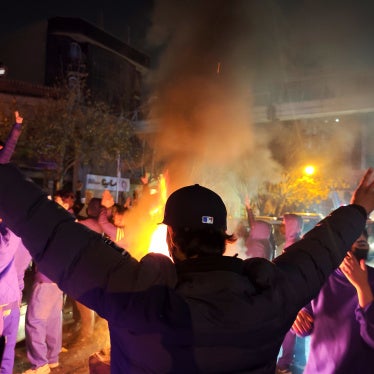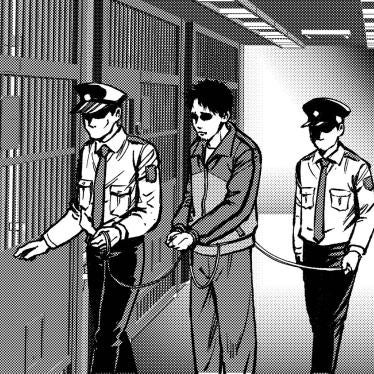
- 2025年12月28日以降、イランの情報機関および治安部隊は、子どもを含む抗議者に対して、大規模で恣意的かつ暴力的な逮捕・拘束を行ってきた。全国で数万人が逮捕されたと報告さている。2026年1月8日と9日に全国各地で起きた虐殺の後も、逮捕の波は続いている。
- 当局は拘束された人々に対し、拷問やその他の虐待を行ってきた。拘束者は、拘禁中の死亡、著しく不公正な裁判、秘密裏で略式かつ恣意的な処刑といった深刻な危険にさらされている。当局は拘束者の運命や所在についての情報提供を組織的に拒否しており、結果としてそうした人びとを強制失踪の状態に置いている。
- 国連加盟国は、イラン当局に対し、恣意的に拘束されたすべての人々を直ちに釈放し、強制失踪させられた人々の運命と所在を明らかにし、予定されている処刑を停止し、独立した国際機関および監視団―特に国連のイラン事実調査ミッション―が国内に自由にアクセスできるよう認めること(すべての刑務所および拘禁施設への立ち入りを含む)を要求すべきである。
- また、他国の司法当局は、普遍的管轄権の原則を含め、刑事捜査を開始するための行動を取るべきである。イランに大使館を置く各国政府は、死刑事件の裁判すべてに高官級のオブザーバーを派遣し、拘禁施設のすべての区画を訪問することを緊急に求めるべきである。
(ベイルート)―イラン政府当局は、2026年1月8日および9日に治安部隊が抗議者や通行人を全国各地で虐殺した後、大規模な恣意的拘束、拷問、強制失踪を通じて国民を恐怖に陥れる残忍なキャンペーンを展開していると、ヒューマン・ライツ・ウォッチは本日述べた。
ヒューマン・ライツ・ウォッチが検証した証拠によれば、政府高官、警察(FARAJAとして知られる)、イスラム革命防衛隊(IRGC)とその情報機関、情報省、さらに検察および司法当局が、さらなる反対意見を封じ込み自らの残虐行為を隠すため、協調した残忍な大規模弾圧を組織してきたことが示されている。
当局は大規模な逮捕に加え、拘束者を非公式施設を含む場所で外部との連絡を遮断したまま拘禁し、子どもを含む数百件の強制的な「自白」を放送し、大規模な強制失踪を実行してきた。また多くの都市で戒厳令に近い厳しい制限を課している。
「国全体が衝撃と恐怖、悲しみの中にあり、1月8日と9日の虐殺の後も家族が愛する人を探し続けているにもかかわらず、当局は依然として国民を恐怖に陥れ続けている。逮捕は続いており、拘束者は拷問、強制された『自白』、そして秘密裏で略式かつ恣意的な処刑に直面している」と、ヒューマン・ライツ・ウォッチのイラン担当上級調査員バハール・サバは述べた。
「拘束され強制失踪させられた人々が直面している危険の大きさを考えれば、国際的な監視団にはすべての拘禁施設と刑務所への自由なアクセスが直ちに認められるべきだ。」
ヒューマン・ライツ・ウォッチが音声記録を受け取ったある囚人は、国際的な監視を維持する重要性を強調し、「拘束者を忘れないでほしい……私たちの声になってほしい。もしあなたたちが声を上げなければ、彼らは私たちを全員消し去ってしまう」と述べた。
強制失踪させられた人々には、逮捕された人々が含まれ、抗議活動に参加したまま家に戻らなかった人々のケースも含まれている可能性がある。家族の中には、愛する人が殺害されたと電話で知らされたものの、遺体が返還されず、繰り返し問い合わせても何の情報も得られていない人もいる。
イスラム革命防衛隊の情報機関が1月26日に発表した声明によれば、その時点までに少なくとも1万1000人が情報機関および治安機関によって召喚されていた。司法当局の報道官によれば、2月17日までに1万538人が起訴のため送致され、8843件の起訴状が発付された。
ヒューマン・ライツ・ウォッチは、イラン国内外にいる23人に聞き取りを行った。これには拘束された抗議者、殺害・拘束・強制失踪させられた人々の家族、抗議活動の参加者、弁護士、人権擁護活動家、医療従事者、ジャーナリストなどが含まれる。
情報提供者は、アルボルズ州、東アゼルバイジャン州、ファールス州、ゴレスターン州、ホルモズガーン州、イーラーム州、ケルマーンシャー州、フーゼスターン州、クルディスタン州、ロレスターン州、マザンダラーン州、ラザヴィー・ホラーサーン州、テヘラン州など、全国各地の状況について情報を提供した。
ヒューマン・ライツ・ウォッチはまた、治安部隊が抗議者を暴力的に逮捕する様子や、虐殺後に街頭で大規模に展開している様子を示す動画を分析した。これには、国営放送であるイスラム共和国イラン放送(IRIB)および国家系メディアが2月6日までに放送した、強制された「自白」映像139本も含まれている。ヒューマン・ライツ・ウォッチはさらに、公式声明や報告書、独立系メディアおよび人権団体の出版物も検証した。
当局は繰り返し、「迅速な裁判」と「いかなる寛容もない厳しい対応」を約束し、抗議者を「犯罪者」「神の敵」「テロリスト」と呼んできた。2月3日、コムの刑事裁判所は、治安部隊員の死亡への関与があったとされるとして、19歳のレスリング選手サレフ・モハンマディに死刑判決を下した。モハンマディは1か月にも満たない略式の手続きの後に有罪とされ、その判断は彼が拷問によって引き出されたと述べる強制的な「自白」に依拠していた。裁判所は、モハンマディの処刑を公開の場で執行すべきだと命じている。
2月19日、アムネスティ・インターナショナルは、同団体が記録した死刑に直面している30人の中に子どもも含まれていると報告した。イラン国営放送は抗議活動に関連する罪を問われた裁判手続きの一部を放送し始めており、その中には2人の子どもに対する裁判も含まれていた。2022年に放送され、数人の男性の恣意的処刑につながった見せかけの裁判を想起させる措置である。
抗議活動の開始以来逮捕された人数の正確な数は依然として不明だが、人権団体はその数が数万人規模にのぼると報告している。2月13日時点で、イラン国外の活動家ネットワークである「拘束者の状況を追跡するボランティア委員会」は、逮捕された2800人以上の氏名と詳細を公表している。
取材に応じた人々によれば、検察官や刑務所当局は拘束者が家族や弁護士と接触することを組織的に拒否し、拘束者がどうなったかや所在に関する情報の提供を拒んでおり、その結果としてそうした人々を強制失踪の状態に置いている。強制失踪は国際法上の重大犯罪であり、当局が失踪者の運命や所在を認めることを拒み続ける限り、その犯罪は継続しているとみなされる。
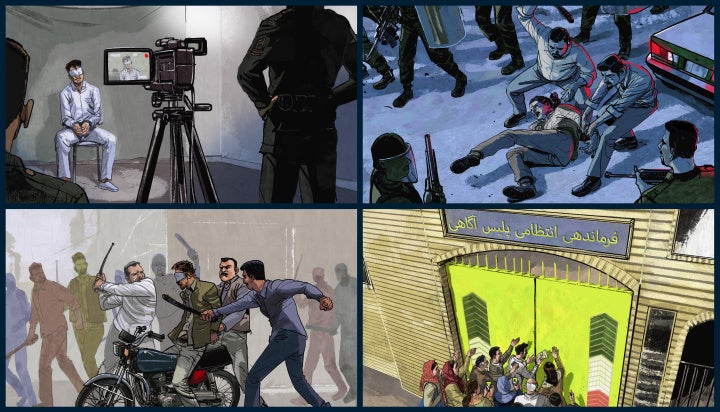
イーラーム州およびケルマーンシャー州で複数の拘束者の家族と話をした人権活動家によれば、当局者は家族からの問い合わせに対し、侮辱や罵声で応じたという。オンラインに投稿され、ヒューマン・ライツ・ウォッチが確認した動画には、愛する人を探して刑務所、検察庁、警察署の外に多くの家族が集まっている様子が映っている。
ヒューマン・ライツ・ウォッチはまた、拷問やその他の虐待の事例を認定した。これには、警棒による激しい殴打、蹴りや殴打、性的およびジェンダーに基づく暴力、食事の剥奪、処刑をほのめかす脅迫などの心理的拷問、負傷者に対する医療の拒否などが含まれる。これらは国際犯罪に該当する可能性のある深刻な行為であり、多くの人々が外部との連絡を絶たれた拘禁状態に置かれていることを考えると、記録・認定されている事例は実際の大規模な拘禁違反のごく一部にすぎないとみられている。
イラン当局は虐殺の後、多くの都市で重武装の部隊を展開し、住民に対して厳しい制限を課している。複数の証言によれば、都市内や都市間の道路に検問が設けられ、武装した当局者が日常的に車両を停止させ、車内や乗客の携帯電話を検査するなど、夜間外出禁止令や戒厳令に似た措置が取られているという。これらの状況は、ヒューマン・ライツ・ウォッチが確認した動画によって裏付けられている。
治安機関および情報機関は、反体制派及び当局がそう見なした人々の逮捕を続けている。対象には、抗議者、弁護士、医療従事者、人権活動家、学生、子ども、生徒、アスリート、ジャーナリスト、政治活動家、環境活動家、そしてバハーイー教徒などの民族的・宗教的少数者のメンバーが含まれている。
抗議活動の開始以来、イラン国営放送およびイスラム革命防衛隊に関連するメディアは、抗議者による強制的な「自白」を数百件放送してきた。これにより、そのような強制自白が放送された人々が死刑や恣意的処刑に直面するのではないかという懸念がさらに高まっている。
テレビで放送される強制的な「自白」は、拷問およびその他の虐待の絶対的禁止、無罪推定の権利、公正な裁判を受ける権利を侵害するものである。イスラム共和国には、反対意見を抑え込むために強制自白を利用し、それが著しく不公正な裁判の後の死刑判決や恣意的処刑につながるという長い歴史がある。
近年の処刑の急増や当局の発言を踏まえ、死刑判決や恣意的・略式・秘密の処刑が相次ぐのではないかという懸念が高まっている。抗議活動の開始以来、当局者は抗議者を繰り返し「犯罪者」や「モハーレブ(神に対して戦争を行う者)」と呼んで非難してきた。これは死刑に相当する罪とされている。
国連加盟国は、イラン当局に対し、恣意的に拘束されたすべての人々を直ちに釈放し、強制失踪させられた人々の運命と所在を明らかにし、予定されている処刑を停止し、イランに関する国連事実調査ミッションなどの独立した国際機関が国内に自由にアクセスできるよう認めること(刑務所や拘禁施設、病院、遺体安置所、墓地への立ち入りを含む)を要求すべきである。
イランに大使館を置く各国政府は、死刑事件の裁判すべてに高官級のオブザーバーを派遣し、拘禁施設のすべての区画を訪問することを緊急に要請すべきである。
「組織的な不処罰が、イラン当局による国際法上の犯罪の繰り返しを可能にしてきた」とサバは述べた。「他国の司法当局は、普遍的管轄権の原則および各国法に基づき、国際犯罪に関する刑事捜査を開始し、刑事責任が疑われる者を訴追することを視野に入れるべきである。」
(以下、英語原文をご参照ください)
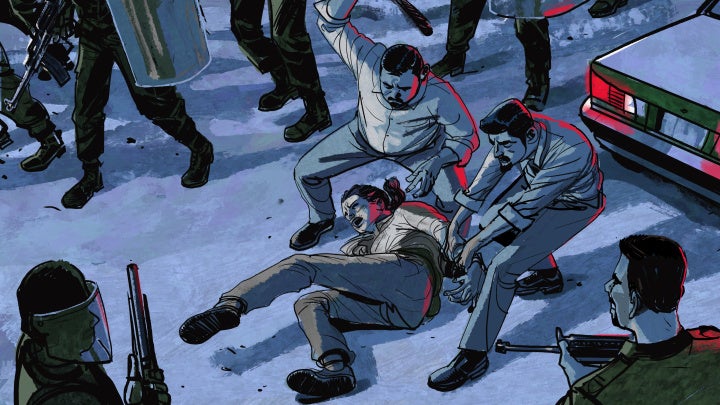
Mass Arbitrary and Violent Arrests, Unlawful Detentions
Officials and state-affiliated media in Iran have stated that authorities have arrested thousands of people across the country, but independent rights organizations have reported that there have been tens of thousands of arrests.
Several sources who had spoken to people in prisons across the country said that authorities had emptied prison wards to hold detainees together and in isolation from other prisoners, in an apparent attempt to stop the flow of information.
Protest detainees are also held in unofficial detention facilities run by security and intelligence bodies, and other unregistered and secret locations, placing them at heightened risk of torture and arbitrary, summary, and secret executions. Iranian authorities have a track record of using secret, unofficial, and makeshift detention facilities, in particular during protest crackdowns, to hold detainees without registration.
Security forces have continued to arrest protesters on the streets, at checkpoints, and in home raids. A spokesperson for the Volunteer Committee to Follow-Up on the Situation of Detainees told Human Rights Watch that many people were arrested at home, days after they had participated in protests.
In one case, based on credible information received, Revolutionary Guard forces conducted an early morning raid on the house of Milad Ebrahimi, an injured protester in Kamyaran, Kurdistan and arrested him on February 1. The source said Ebrahimi sustained a gunshot wound during the protests but did not seek medical care at a hospital fearing arrest. Security forces also arrested his brother, Hamed Ebrahimi, for objecting to the arrest.
Witness statements and state media reports indicate that security forces have used video footage from CCTV cameras, and drones to identify those participating in protests.
Relatives of detainees and lawyers interviewed said that the authorities prohibited access to lawyers during the investigation phase, consistent with authorities’ decades-long pattern of denying detainees access to legal representation, including independent lawyers of their choice.
Under Note to Article 48 of the Code of Criminal Procedure, individuals charged with certain offenses, including national security offenses, are denied the right to access an independent lawyer of their own choosing. Only lawyers approved by the head of the judiciary can be appointed to defend them. The UN Fact-Finding Mission on Iran and human rights organizations have documented a pattern of complicity by many judiciary-approved lawyers in grave human rights violations. As a result, families and detainees have said they do not trust them.
“Detainees have no access to lawyers,” a lawyer said. “Families do not want to retain Article 48 lawyers. Independent lawyers who go to officials to take on protest detainees’ cases are told by the authorities, ‘Are you an Article 48 lawyer? No? Then leave, you cannot take the case.’”
In practice, even in cases with judiciary-approved lawyers, detainees are denied access to legal counsel during the investigation phase including during interrogations.
Witnesses said that, consistent with their track record, authorities have also harassed families of detainees, warning them not to speak up or publicize the situation of their loved ones.
Incommunicado Detention; Enforced Disappearances
The authorities have held those arrested during and after the protests in incommunicado detention. In many cases those detained are forcibly disappeared, as authorities have refused to provide families with any information about their fate and whereabouts.
In one case, authorities arrested Youresh Mehrali Beiglou, an Azerbaijani Turk activist, on January 4 in or around Tabriz, East Azerbaijan province, after releasing a video in which he spoke about the protests. After the arrest and for a period of over a month, he was allowed to make only one brief phone call to his family, and they were denied information about his whereabouts.
Another Azerbaijani Turk activist, Ali Babai, was arrested on January 14. Other than one brief phone call informing his family that he was in an intelligence ministry detention facility, the authorities have denied his relatives information about his fate and whereabouts.
In Karaj, Alborz province, security forces raided Jahangir Kazemi’s home on January 14 and arrested him. His family received two brief phone calls from Kazemi, who is reportedly held in solitary confinement, but has been denied visits and information about his situation. Kazemi’s wife, Fatemeh Golmohammadi, was arrested on January 27. The couple, who have young children, have been denied access to a lawyer.
A relative of a detainee in a northern province, described the response of prosecution officials to detainees’ families:
“When we ask officials at the prosecutor’s office [about our loved one], they tell us, ‘They are criminals, if they weren’t, we would not have arrested them,’ “When we ask what their crime is, they respond, ‘You yourselves know better.’”
Families have been gathering outside prisons, police stations, and prosecutors and governors’ offices. Human Rights Watch has reviewed four videos showing such gatherings.
Researchers geolocated videos showing these scenes outside the county courthouse in Karaj, Alborz province, Qazvin Central Prison, Qazvin province, and outside the governor’s office in Yasuj, Kohgiluyeh, and Boyer-Ahmad province.
Verified videos analyzed by Human Rights Watch from the provinces of Alborz, Esfahan, Lorestan, and Razavi Khorasan corroborated these accounts. Collectively, the videos show large numbers of armed security forces patrolling cities on foot or in vehicles, including trucks mounted with heavy machine guns, discharging weapons and using megaphones to order people to stay indoors.
In one video published online on January 29, and reported to have been recorded outside a police station in Kerman, concerned families are seen speaking to an official from behind a closed door, repeatedly saying that their loved ones are missing. One man is heard saying, “Why is there no one to answer us… my child has disappeared for 24 hours, but no one answers… is there not a manager, a supervisor, someone to step outside? So many people are here worried for their children.”
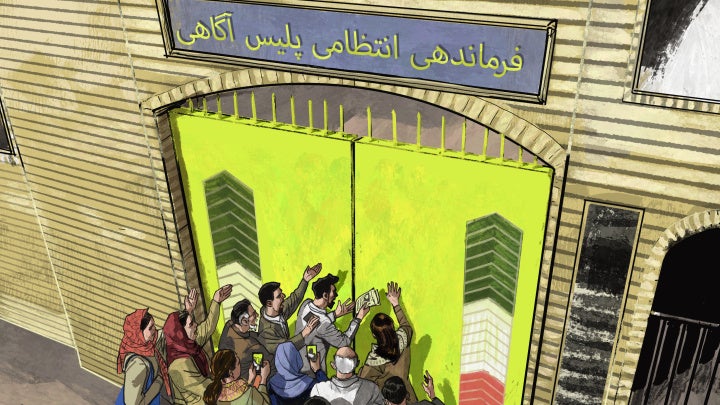
Those forcibly disappeared may also include people who participated in protests but never returned home.
An informed source said that two of their students, a young man and a young woman, had remained disappeared since January 8, when they took part in the protests in Tehran: “The family knows they were in the protests and has since been to all police stations, hospitals, and morgues, but there is no trace of them. They do not know if they are dead or alive.”
An activist outside Iran who has been in touch with relatives of detainees and the missing in the provinces of Ilam and Lorestan said that he was aware of 12 people who didn’t return from the protests. Human rights defenders and journalists provided similar accounts from other provinces.
In some cases, families have spoken publicly about their search for their loved ones. On February 1, Sekhavat Salimi, a former political prisoner, published a video online in which he said that he had searched for his son, Mohammadi Ali Salimi, for days after the family received a call informing them that he had been killed and they should collect his body: “For 10 to 15 days, I searched everywhere in Tehran and Karaj. I went to Kahrizak [morgue], and to Behest-e Zahra and Behesht-e Sakineh [cemeteries]. I searched for my son everywhere but did not find him or his body... There is no trace of him, I do not know what to do.”
Torture and Ill-Treatment
Security forces including FARAJA, Revolutionary Guards, the Ministry of Intelligence, and plainclothes agents, have tortured protesters, including on the streets during arrests and after restraining them and in detention facilities. These ongoing gross violations and crimes under international law are consistent with Iranian authorities’ decades-long record of torture.
Witnesses described violent arrests of protesters. A protester from Tehran said they had seen security forces severely beat a man they had arrested and restrained:“They had handcuffed him, covered his eyes with a medical mask, and sat him on a motorbike. There, right before everyone’s eyes, they started beating this fully defenseless man. They repeatedly struck him on the head with a baton and beat him on his back and arms.
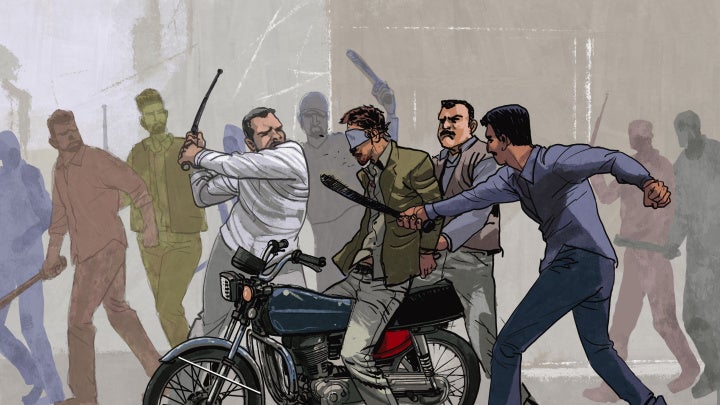
Another source said security forces severely beat their relative, a 16-year-old boy, while restrained in a city in Khuzestan province, breaking one of his ribs, then left him on the street. The child had started running when security forces ordered him to stop.
A woman who was detained in a city in Razavi Khorasan said several agents violently arrested her while subjecting her to sexualized insults and profanities: “Suddenly, around five or six members of security forces attacked me and started beating me on the back of my head and neck with batons and gunstock. I am a small sized woman and there were six of them, all men. They handcuffed me from the back and made me lie on my stomach, faced down. Then they took me to their vehicle while constantly swearing at me and put my face on the trunk of the car. When I objected to my arrest telling them that I had not done anything, they hit me in the face with a shield, and I got a bloodied nose.”
Human Rights Watch also analyzed videos depicting violent arrests. One video analyzed, published online on January 2 and said to be recorded in Neishabour, Razavi Khorasan, shows several uniformed and plainclothes security forces’ members beating a woman and pushing her into a private car.
Human Rights Watch also received credible information about violent home arrests, with security forces beating the person arrested as well as other family members. The relative of a detainee in Kermanshah province said that security forces beat his brother during the arrest, adding, “This is no exception, all arrests I know of have been violent and carried out with beatings.”
Based on witness accounts, informed sources, and reports by other human rights organizations, security and intelligence forces have committed torture and other ill-treatment in detention facilities.
A detainee who was held in solitary confinement in Razavi Khorasan province said she could hear other detainees being tortured and saw young people beaten with batons. Accounts from Kermanshah and Fars provinces described severe beatings resulting in injuries and sexual and gender-based violence.
“Everyone you see has been horribly tortured,” a prisoner in central Iran said in a voice recording. … “All [confessions] are coerced, they [authorities] would write up what they want themselves or would dictate what to write… and if you did not accept to sign, they would hit you with a shocker [electric shock weapon] on the head. You are sitting there blindfolded, shackled, and in handcuffs, encircled by several men, you would accept anything.”
An informed source said security forces arrested and beat a 16-year-old boy at his home in a northern province, then transferred him to detention facilities run by intelligence bodies where he was severely tortured and was denied food for 5 days. Security forces repeatedly beat him to the point he lost consciousness on four occasions. Relatives who were able to visit him days later saw bruises on his face but were not able to see his body as they were only allowed to speak to him behind a glass barrier.
People interviewed said that many protest detainees had wounds from metal pellets, or other injuries such as broken ribs, but were denied medical care in prison.
Human Rights Watch received credible information that the authorities pressured the Nobel Peace Laureate Narges Mohammadi, arbitrarily detained since December 12, to condemn the protests that started on December 28. According to the information, Mohammadi was tortured and otherwise ill-treated at the time of her arrest, including being severely beaten with sticks and batons causing injury to her head and her genital area.
Security forces also dragged her by her hair and threatened her with further violence. On February 7, a revolutionary court in Mashhad sentenced Mohammadi to seven years and six months in prison for vaguely worded national security offenses and supplementary punishments, including a two-year travel ban.
Forced Televised Confessions; Death Penalty Risk
Since January, the IRIB and state-affiliated media have aired hundreds of coerced “confessions” by protest detainees. Human Rights Watch reviewed 139 clips aired as of February 6.
These videos systematically label detainees “rioters,” “terrorists,” and “agents” of foreign intelligence services, prior to any judicial proceedings and when detainees are denied access to lawyers. Some were taken during arrests, on the streets, in buses or vehicles used to transfer detainees, and in police stations. They depict women, men, and children, often blindfolded and in handcuffs, “confessing” to “collaboration with enemies” and various offenses including some that carry the death penalty.
In at least two videos reviewed, two girls aged 16 are coerced into making self-incriminating statements, including that they had received foreign support and instructions. Another video shows a 16-year-old boy, introduced as a “leader of riots” making a coerced “confession.”
Several other videos also depict people who appear to be under the age of 18 and therefore likely children. In one video, two men interrogate a visibly terrified young person in handcuffs on the street, accusing him of carrying stones in his cross-body bag with the intention of throwing them at security forces.
In some videos, detained protesters make statements about engaging in conduct that falls under the exercise of human rights, including chanting slogans, inviting others to take to the streets to protest, writing slogans on the walls, filming the security forces’ use of force against protesters, and sharing footage and images of protests with Persian speaking media outside Iran.
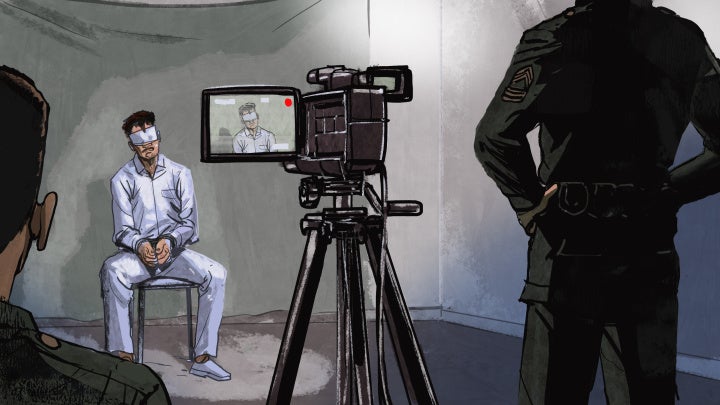
In one video, a man, identified as Rasoul Salehi, is accused of having committed a “grave crime” by attending a peaceful gathering outside a government building in Yazdanshahr in Esfahan province and inviting people to protest if authorities did not release the detainees. A video of the gathering, in which Salehi is seen giving a speech and demanding the release of detainees, widely circulated online in early January.
Amid a surge in acts of persecution against members of the Baha’is religious minority, including an increase in arrests and detentions, on February 1, the IRIB aired coerced “confessions” of three young adults, including two members of the Baha’i community, Venus Hosseininejad, arrested on January 8, and Peyvand Niami, arrested on January 15 in Kerman.
Consistent with the authorities' long-standing campaign of spreading disinformation and inciting hatred and discrimination against Baha’is, the video clip sought to portray them, among other youth, as members of an “organized, violent, and foreign-backed network” with links to “Zionist networks” and “Satanism.”
According to information the Baha’i International Community provided to Human Rights Watch, at least 50 members of the Baha’i religious minority have been arrested between January 8 and February 13.
On February 4, in a letter published by media outlets outside Iran, Hosseininejad’s parents wrote that they were refused information about the intelligence body that had arrested their daughter for 15 days and had only received three brief phone calls from her. In one of the calls, they wrote, Hosseininejad said that she had agreed to “cooperate” under “severe physical and mental pressures” by giving false confessions because she was “promised” that she would be released.
Human Rights Watch also reviewed footage in which Gholamhossein Mohseni Eje’i, the judiciary head, interrogated detainees, including a woman, in front of a camera. The interrogations were reported by state media to have been carried out during a five-hour visit he made to a detention facility. Two other officials, including the Tehran prosecutor, are shown in these videos.
Iran’s laws criminalize a wide range of conduct that fall under the exercise of human rights, including some that are subject to the death penalty. Capital offenses also include acts that do not meet the threshold of the “most serious crimes,” limited only to intentional killing, as well as vaguely worded charges that contravene the principle of legality, such as “waging war on God” and “corruption on earth”.
A new law to “Intensify the Punishment of Spies and Collaborators with the Zionist Regime and Hostile States,” adopted in 2025, has further expanded the scope of the death penalty. The law imposes capital punishment for a range of vaguely worded offenses pertaining to collaboration and cooperation with “hostile states” and further criminalizes and subjects to long prison terms acts such as “sending footage, images or information to [media] networks, citizen journalists or online foreign [social media] pages where [such acts] contravene national security.”
The sheer number of coerced “confessions” that have been aired, official statements that routinely describe protesters as “those waging war on God,” and the authorities’ increasing use of the death penalty as a tool of political repressiongive rise to growing concerns about a wave of death sentences and arbitrary executions against protest detainees in the coming weeks and months. These include child detainees, some of whom have already been charged with capital offenses. In flagrant violation of the absolute prohibition on the use of the death penalty against people under age 18, Iran’s authorities continue to impose and implement death sentences against children.
De Facto Martial Law and Militarized Clampdown
In the days that followed the massacres, the authorities imposed curfews and enforced martial law-like restrictions across many cities while carrying out waves of arrests of real and perceived dissidents.
One protester from Tehran told Human Rights Watch that, “from 8 p.m., there was effective martial law. You could not really go out.”
Interviewees said that security forces had set up and maintained checkpoints in cities and intra-city roads including the in provinces of Kermanshah, Ilam, Lorestan, and Khouzestan.
Human Rights Watch has analyzed videos from several provinces corroborating these accounts.
In one video published online on January 15, 11 armed members of the security forces both in uniforms and plain clothes are seen along with a vehicle passing through a residential alley. The person who posted the video online said it was taken in Karaj, Alborz province. Due to the lack of geographic information, Human Rights Watch could not confirm the location. The forces are heard repeatedly warning through a megaphone that “no one should be near the windows,” ordering residents to “go inside” and “part ways with the rioters.”
Another video published online on January 20, and geolocated by Human Rights Watch to a city in Esfahan province, shows dozens of armed forces in uniforms and plain clothes with their faces covered patrolling a large street. The video shows four tan vehicles consistent with those used by the Islamic Revolutionary Guard Corps mounted with heavy machine guns and four white Toyota pickup trucks carrying at least four armed men in each vehicle. The forces repeatedly shout “go inside” then chant slogans vowing obedience to the Supreme Leader. A burst of automatic gunfire and other solo gunshots can be heard. One uniformed man in the back of a white pickup truck fires five shots into the air.
A third video, initially geolocated by a GeoConfirmed member, AndyNovy, and analyzed by Human Rights Watch shows more than 40 members of the security forces in vehicles, motorbikes, and on foot in several locations along the Hashemiye Boulevard, Kowsar Boulevard, and Vakil Abad Highway, in Mashhad, Razavi Khorasan. The video was filmed at night from a moving car. No pedestrians could be clearly seen in the video.
Another video from Boroujerd, Lorestan province, published online on January 17, and geolocated by Zaryon OSINT, shows a row of at least 15 military vehicles, including six-wheeled green trucks, trucks with pedestal-mounted heavy machine guns, and at least 22 members of the security forces armed with rifles along Takhti Boulevard. Riot police at an assembly point with vans nearby appear prepared to detain or arrest people. The number of vehicles and personnel indicates that the police action was deliberately planned and organized.
In the ongoing clampdown, authorities have targeted lawyers and medical professionals and other groups such as journalists, medical, students, human rights defenders, and members of ethnic and religious minorities.
On January 31, the domestic newspaper Shargh reported cases of eight detained lawyers, six of them arrested in the city of Shiraz, Fars province alone. As of February 16, the Volunteer Committee to Follow-Up on the Situation of Detainees had recorded the names of 20 lawyers arrested across the country since January 16.
Lawyers have also been held incommunicado and without access to their families and legal counsel. In an interview with a domestic newspaper, the lawyer for Shima Ghousheh, one of the first lawyers arrested, stated that he did not have access to his client and was not given any information about the charges against her.
Two lawyers who spoke with Human Rights Watch said that the real number of lawyers arrested across the country was higher and that each was aware of other arrested lawyers whose cases had not become public.
Authorities have also targeted medical professionals including doctors and nurses who have provided medical care to injured protesters in hospitals and private clinics, arbitrarily arresting them and subjecting them to enforced disappearances. As of February 16, the Volunteer Committee to Follow-Up on the Situation of Detainees had published the names of 39 medical professionals arrested across the country in connection with the protests.
A lawyer and a journalist interviewed by Human Rights Watch said that, in addition to large-scale arrests, intelligence bodies have been routinely summoning real and perceived dissidents, including student activists and lawyers, and coercing them to sign statements that they would not engage in any forms of activism.