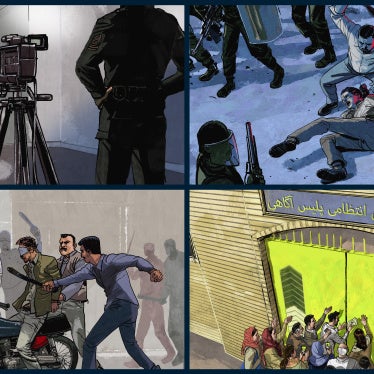
- イランの治安部隊は、2026年1月8日に全国規模の抗議行動が激化した後、抗議者の大量殺害を行った。
- イラン治安部隊による大量殺害は、自国民を虐殺する支配者は責任(アカウンタビリティ)を問われるまで残虐行為を続けるという厳しい現実を改めて示している。
- 国連加盟国は、イランにおける人権と責任追及を国際対応の中心に据えるため、国連人権理事会の特別会合を緊急に開催すべきである。
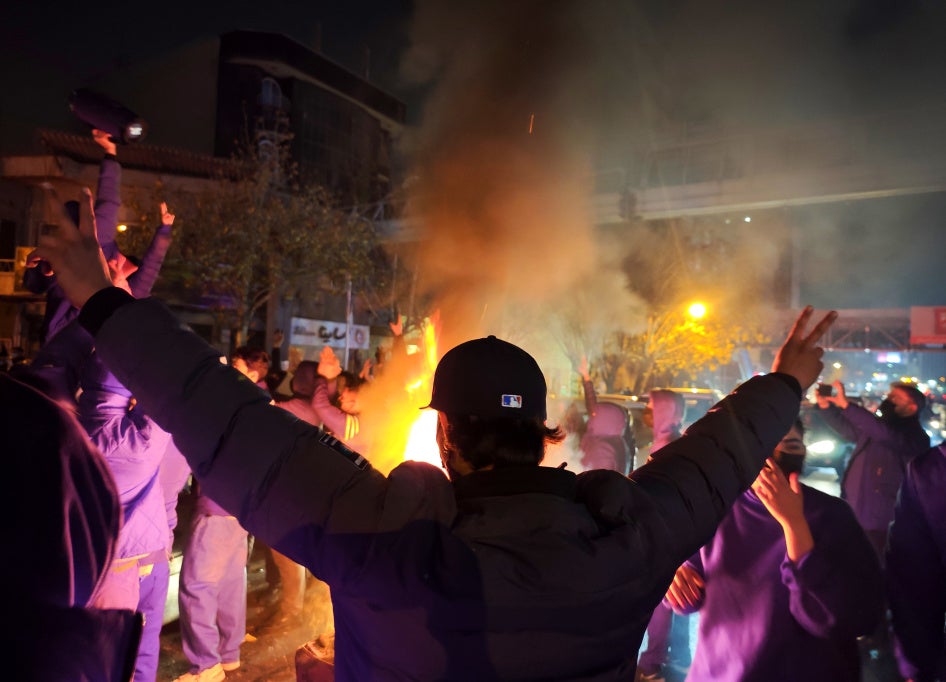
- (ベイルート)―2026年1月8日に全国規模の抗議行動が激化した後、イランの治安部隊が抗議者の大量殺害を行ったと、ヒューマン・ライツ・ウォッチは本日述べた。数千人の抗議者や通行人が殺害されたとみられるが、政府による厳しい通信規制によって、残虐行為の実際の規模は隠されている。
- 治安部隊は1月8日以降、組織的に致命的な弾圧を強化し、全国各地で抗議者や通行人の大規模な殺害と負傷を引き起こした。ヒューマン・ライツ・ウォッチは、多くの抗議者が頭部や胴体への銃撃によって殺害または負傷したことを示す証拠を確認した。メディアに引用されたイラン当局者は、死亡者数が数千人に達したことを認めている。
- 「1月8日以降のイラン治安部隊による大量殺害は、この国では前例がなく、自国民を虐殺する支配者は責任を問われるまで残虐行為を続けるという現実を強く示している」と、ヒューマン・ライツ・ウォッチのプログラムディレクターのラマ・ファキーフ(Lama Fakih)は述べた。「国連加盟国は、イランにおける人権と責任追及を国際対応の中心に据えるため、国連人権理事会の特別会合を緊急に開催すべきである。」
- 1月12日から14日にかけて、ヒューマン・ライツ・ウォッチは、目撃者、被害者の家族、ジャーナリスト、人権活動家、医療従事者などを含む21人に聞き取りを行った。証言のスクリーンショット、音声メッセージ、画像を共有した人もいた。また、ソーシャルメディアに投稿された、または調査員に直接送られた51点の写真や動画を分析し、拷問被害者のための国際リハビリテーション評議会の独立法医学専門家グループ(Independent Forensic Expert Group of the International Rehabilitation Council for Torture Victims)にも協力を求め、負傷の画像を検証した。
- 厳しい通信規制にもかかわらず、ヒューマン・ライツ・ウォッチは、テヘラン、アルボルズ、ケルマーンシャー、ラザヴィー・ホラーサーン、ギーラーン、コフギールイェ・ボイェルアフマド、マルカズィー、マザンダラーンなどの州で抗議者が殺害された証拠を入手し分析することができた。
- 「最近は、誰に話を聞いても、殺されたか負傷した親戚や友人、知人がいる」と、インタビューを受けた一人は語った。ほかの人々も同様の経験を共有した。
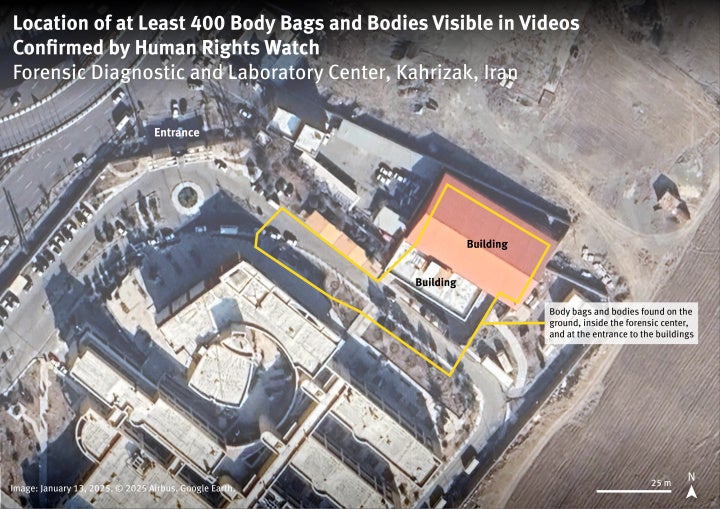
- 首都テヘランでは、抗議が拡大するにつれて、強く軍事化された対応が取られている様子が動画で示されている。ヒューマン・ライツ・ウォッチは、1月11日頃から出回り始めた動画を検証し、首都南部カフリザクにある法医学診断・研究センター(Forensic Diagnostic and Laboratory Center)の周辺に遺体袋や遺体が積み重ねられている様子を確認した。遺体は家族が身元確認できるよう、そこに置かれていた。ヒューマン・ライツ・ウォッチは、その場所から撮影された複数の動画だけでも少なくとも400体の遺体が見えることを確認した。この数字は過小である。遺体が互いの上に積み重なっており、正確な数を数えることが困難だからである。
イラン西部の大都市ケルマンシャーでは、治安部隊が抗議者に発砲した。目撃者は1月8日、音声記録をヒューマン・ライツ・ウォッチに送り、次のようなメッセージを添えた。「彼ら(治安部隊)がここで撃っている。催涙ガスも大量だ。仕事から帰る途中で通りに足止めされている。あちこちで抗議が起きていて、試した通りはすべて封鎖されているし、彼らは撃っている。」
抗議は2025年12月28日に始まり、悪化する経済状況と生活環境をきっかけに急速に全国へ広がった。抗議者たちは人権、尊厳、自由を求め、イスラム共和国体制の打倒を訴えた。政府当局者は抗議者を「暴徒」や「テロリスト」と呼び、悪魔化してきた。
政府系メディアは、少なくとも121人の治安部隊員が死亡したと報じており、検証された映像には一部の抗議者が暴力行為に及んでいる様子も映っている。ヒューマン・ライツ・ウォッチはこれらの数字の信頼性を独自に評価することはできなかった。しかし、ヒューマン・ライツ・ウォッチが確認した情報によると、いくつかのケースでは、長年の慣行と同様に、当局が被害者の家族に対し、遺体を引き渡す条件として「亡くなった家族がバシジ(一般に私服で活動するイスラム革命防衛隊傘下の部隊)のメンバーだった」と虚偽の主張をするよう圧力をかけていたという。
ヒューマン・ライツ・ウォッチはまた、複数の州で治安部隊が武器を持たない抗議者に対して致死的な武力を使用したと証言する目撃者らにもインタビューした。抗議者や通行人の大量殺害につながった、広範囲で正当化されない致死的武力の使用は、当局が国家政策として意図的かつ違法に銃器を使用してきたことを示している。
当局はまた、メディアに干渉し、通信へのアクセスを大幅に制限し、インターネットを遮断した。これは表現の自由の権利に違反している。ヒューマン・ライツ・ウォッチは、アクセスを直ちに回復すべきだと述べた。
国連加盟国は、国連人権理事会の特別会合を直ちに招集すべきだとヒューマン・ライツ・ウォッチは述べた。特別会合において各国は、重大な人権侵害の責任者が責任を問われることになると明確にすべきである。また、イランに関する国際独立事実調査ミッションに対し、これら最新の残虐行為について特別調査を行い、責任追及を進めるための具体的な提言を示すよう求めるべきである。
国連の指導部と加盟国は、事実調査ミッションがその重要な任務を遂行するための資源を確保すべきである。その任務には、将来の司法手続きで責任者を裁くための証拠保全を含む、人権侵害の証拠の保存が含まれている。
「屋外の遺体安置所で、何百もの遺体袋の中から家族が必死に身元を探しているという恐ろしい光景は、世界の良心を揺さぶり、最高レベルの責任者を含め、責任を問う行動を取らせるべきだ」とファキーフは述べた。
(以下、英語原文をご参照ください)
Large-Scale Killings Across Iran
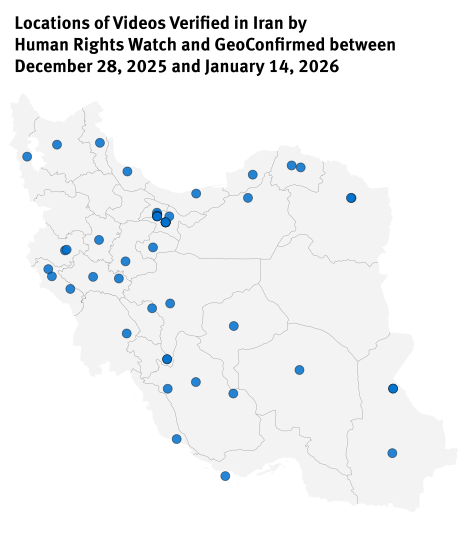
Human Rights Watch verified photographs and videos showing anti-government protests in 27 of Iran’s 31 provinces. Many were geolocated by GeoConfirmed, a volunteer-driven visual verification platform. While this limited information does not show the full extent of the protests, it indicates how widespread they have been.
Tehran Province
Witness accounts and verified footage, including from morgues and cemeteries, show evidence of mass killings by the security forces across Tehran province.
Kahrizak Morgue
At the Forensic Diagnostic and Laboratory Center in Kahrizak—commonly referred to as the Kahrizak morgue—which is 18 kilometers south of central Tehran, photographs and videos posted online and verified and geolocated by Human Rights Watch show hundreds of body bags as people search among them, crying and screaming. Large commercial trucks and mortuary vehicles transported bodies there for several days. Reports suggest there is an area specifically for women’s bodies.
Human Rights Watch counted at least 400 body bags or bodies in three videos shared on social media between January 11 and 13. This is an undercount, as bodies were piled on top of each other, making counting difficult.
All visible bodies appeared to be in civilian attire. Some were covered in blood; others had gunshot wounds; some bodies had wounds consistent with the spray pattern of metal pellets fired from shotguns; and other corpses had open wounds. Many had EKG sticky pads on their chests, and one man still had an intubation tube in his mouth.
Other Accounts from Tehran
Witnesses also said that many bodies were at Tehran’s Behesht-e Zahra Cemetery Complex, 600 meters from the Kahrizak morgue. One person who went to identify the body of a loved one on January 10 said: “When we got close to the [large] halls, we saw bodies piled on top of bodies. They were in body bags, and some had tags with identification details. From the size of the halls, I could estimate that between 1,500 to 2,000 bodies were held there.” The witness said that more bodies were arriving by refrigerated trucks in the late afternoon when they were leaving the cemetery.
A human rights defender said that a relative who had gone to the cemetery on January 9 to identify the body of a loved one reported that relatives identified 300 bodies, shown on video screens, on that day alone.
A relative of a young protester in Tehran said that the family searched for their loved one “among a pile of hundreds of bodies” in a Tehran hospital on the evening of January 8.
Relatives of victims, other informed sources, and verified videos describe the state’s heavily militarized response to the protests in Tehran on January 8, 9, and 10. One person said that on the evening of January 8, her sister was protesting in central Tehran when a friend of hers who was also protesting was shot in the head from behind.
A person interviewed who knew Robina Aminian, a 23-year-old student, said that she was also shot in the head from behind while protesting in Tehran on January 8. Aminian’s family later identified her body among a large number of bodies in a Tehran hospital. Human Rights Watch also obtained information that a woman was shot in the throat on the evening of January 8 in Tehran as she was marching in front of her husband during the protests.
A witness said that security forces “began a massacre” as crowds dispersed at protests they attended, and that they pointed their weapons at protesters as they left, including at their torsos, on at least two occasions, ordering them to “return home.”
Human Rights Watch also reviewed two accounts sent to medical professionals outside Iran by staff in two hospitals in eastern Tehran. In one account, the source refers to a large number of people brought to the hospital with no vital signs. The other reported that nearly 40 bodies had been brought to their hospital on January 8. An activist outside Iran said that medical staff in two hospitals in Tehran had reported that about 500 dead bodies had been brought in by the evening of January 8.
One geolocated video recorded at night from a building overlooking Police Station 126 in the Tehranpars neighborhood of the capital shows a security force member on a police station roof firing an automatic weapon, as well as other security force members shooting other firearms at protesters and, apparently, toward the person filming the scene. Throughout the 6-minute video, hundreds of shots were fired.
Alborz Province
Human Rights Watch received a 21-second video reportedly taken in Fardis, Alborz province. The Guardian reported on the same video it received from activists in Iran after crackdowns were reported in Fardis on January 8. The video shows two people lying on the ground; one has an injury just above his right eye and is bleeding profusely from his mouth. Someone helping him says: “He’s not breathing. Please hold on, for God’s sake, please hold on.”
Kermanshah Province
Human Rights Watch reviewed 12 short accounts by witnesses in Kermanshah sent to a journalist on the evening of January 8, who shared them with the organization, shortly before the internet shutdown, who shared them with the organization. The accounts draw a harrowing picture of security forces’ use of lethal force in several areas, including in Shahrak-e Moallem, Maskan, and Darrah Derejh neighborhoods, as well as in Gilan-e Gharb and Eslamabad-e Gharb cities.
In one account, a witness said: “Kermanshah is a war zone with nonstop gunfire.” Two others described sounds of gunfire continuing for hours. One described a member of the security forces leaving a vehicle and “riddling protesters, mostly women and girls chanting at a crossroad, with bullets.” Another said that “security forces are massacring everyone.”
Human Rights Watch also spoke with three people who had spoken with witnesses in Kermanshah. One said that, based on credible accounts from one hospital in Kermanshah city, nearly 300 people had been admitted on January 8 with no vital signs, most with signs of gunshot wounds to the head and chest, and 41 people still alive with gunshot wounds.
A video filmed in the morning and posted to X on January 8 and geolocated by GeoConfirmed shows large numbers of armed security forces rushing toward protesters in Maskan town, a neighborhood in Kermanshah city. One man holding a shotgun fires repeatedly toward cars in traffic as a vehicle swerves to avoid him.
Razavi Khorasan Province
Witness accounts and verified videos indicate similar unlawful use of lethal force by security forces in the Razavi Khorasan province, including in Mashhad, Iran’s second largest city, resulting in large-scale killings.
Human Rights Watch reviewed three short accounts by witnesses in Razavi Khorasan, sent to a medical professional on the evening of January 8, shortly before the internet shutdown. In one account, a medical professional in Mashhad reported direct knowledge of at least 15 deaths, including a woman as well as 5 men whose killings by gunfire he witnessed on one street alone on January 8. Another account reported that dozens of bodies had been taken to two hospitals in Mashhad in the afternoon of January 8.
A third account revealed the scale of killings in the city of Mashhad: “They have killed so many, as if lambs have been slaughtered on the streets, the ground is drenched in blood. … [T]here were no more [shotgun] pellets after Thursday [January 8]; security forces only fired rifles.”
An account by a medical professional, obtained by a human rights organization and shared with Human Rights Watch, said that between about 7 p.m. on January 9 and 2 a.m. on January 10, about 150 bodies of killed protesters and bystanders were taken to one hospital alone in Mashhad.
Human Rights Watch reviewed a video said to be taken in Mashhad that showed two men in black uniforms on a second-floor balcony. Researchers were not able to independently identify where it was filmed. One of the men in the video fires three times in the direction of protesters gathered outside the building, as seen by three flashes and loud bangs.
Human Rights Watch consulted media forensic experts from Deepfakes Rapid Response Force, an initiative of the nongovernmental organization WITNESS, who found no significant indicators of artificial intelligence manipulation. But due to the slowdown effect that had already been added to the video, the results were inconclusive as to whether the video was otherwise modified.
Other Provinces
Human Rights Watch obtained information pointing to similar large-scale killings in Gilan, Mazandaran, Kohgiluyeh and Boyer-Ahmad, and Markazi provinces.
Two people from Gilan province said that their relatives reported that dozens had been killed during protests in small towns there, including around the town of Fuman. One person who had spoken to his family in Gilan province said: “My father knew between 15 to 20 people who were killed only in a small town in Gilan.” An account received by a medical professional and shared with Human Rights Watch stated that “security forces shot many dead in Rasht,” Gilan’s provincial capital.
A witness described a heavy presence of security forces in Amol, Mazandaran province, on January 8 and hearing continuous gunfire in the evening. Two other accounts described a lethal response to protests in Amol as well as Sari and Babol, other towns in Mazandaran, with one reporting: “They have killed many [in Amol] but the news is not getting out.”
A person Human Rights Watch interviewed who spoke with a witness in Kohgiluyeh and Boyer-Ahmad province said that the security forces were using heavy machine guns, shotguns, and rifles against protesters. The witness said they saw 25 bodies at the governor’s compound in the provincial capital, Yasuj, on January 10, and many people with eye injuries from metal pellets.
A witness said that the security forces cracked down on protesters in Mahallat, Markazi province on January 8 with tear gas and shotguns. She saw three people bleeding, including a boy under 18, who had been shot with pellets in their faces. The witness reported that two people killed that night included a 15 or 16-year-old boy who was shot three times while trying to climb the wall of the intelligence office. The other man was shot in the head.
Authorities’ Harassment of Victims’ Families
The Iranian authorities have withheld bodies of victims, denied families the right to bury and mourn their loved ones in a dignified manner, and in some cases buried the bodies without the families’ knowledge or consent at locations demanded by officials.
In one case, the relative of a young protester killed in Tehran on January 8 said that security forces coerced the family to bury their loved one in a cemetery far from her hometown to prevent a crowd from gathering at her funeral.
Authorities have also coerced families to either make statements that their loved ones were members of the Basij forces and killed by protesters or to pay significant fees to receive the remains.