Article 312 has frequently been used to prosecute politicians, journalists and writers for their non-violent expression of their beliefs and opinions. The article provides for prison sentences of up to three years for "incitement to hatred on the basis of ... class, religion or race." Turkish courts have shown an eccentric understanding of what constitutes "incitement to hatred." The former mayor of Istanbul Recep Tayyip Erdogan was stripped of political rights and sentenced to a year's imprisonment for reading lines from a poem, written by a celebrated republican poet, that not only contained no advocacy of violence or hatred but had actually been approved by the Ministry of Education for use in schools. The former president of the Turkish Human Rights Association (HRA), Akin Birdal served a one year sentence under Article 312 for calling for "peace and understanding" of the problems of the Kurdish minority. In addition to the substantial prison sentences, the convictions under Article 312 resulted in Recep Tayyip Erdogan and Akin Birdal being banned from participation in politics or civil society that are triggered by convictions under Article 312. Recep Tayyip Erdogan was removed from his elected post as mayor and Akin Birdal was forced to resign his leadership and membership of the HRA.
Human Rights Watch recommends that this section contain a clear commitment that Article 312 (and other relevant articles of the Turkish Criminal Code such as those which impose prison sentences for insulting state institutions, and Article 8 of the Anti-Terror Law which is concerned with "separatist propaganda") will be revised to ensure that no person shall be prosecuted or imprisoned for their non-violent expression.
The E.U. document calls upon the Turkish government to "address" the situation of those persons in prison sentenced for their non-violent expression. This provision is omitted from the National Program. Four Kurdish deputies, Hatip Dicle, Orhan Dogan, Selim Sadak and Leyla Zana have been imprisoned since 1994 for supporting an armed illegal organization. The indictment and judgment in their grossly unfair trial indicate that they were imprisoned for their legitimate activities as parliamentary deputies for the largely Kurdish Democracy Party (DEP). Many prosecutions are proceeding against writers and politicians which may end in their imprisonment. In June the writer Fikret Baskaya will begin a sixteen-month sentence imprisonment under Article 8 of the Anti-Terror Law for "disseminating separatist propaganda" in a newspaper article about the trial of Abdullah Ocalan, leader of the Kurdish Workers' Party (PKK). In January the Supreme Court confirmed a two-year sentence imposed on Mehmet Kutlular, owner of the newspaper Yeni Asya (New Asia) under Article 312 for a speech he made on the anniversary of the death of a religious leader.
The preamble to the section in question states that further development of freedom of thought and expression is a "priority" for the Turkish government. Human Rights Watch believes that, in light of this priority, the Turkish government should release all prisoners held for their non-violent expression, and drop all proceedings against those threatened with imprisonment for their non-violent expression. The Justice Minister, in his capacity as president of the High Council of Judges and Prosecutors, should immediately issue a circular explaining to judges and prosecutors that sentences imposed for the expression of non-violent opinionCno matter how unpalatable that opinion may beCare in contravention of Article 10 of the European Convention on Human Rights, which supersedes domestic law under the Turkish Constitution.
The National Plan - like the E.U. Accession Partnership agreement - omitted all mention of the prosecution and imprisonment of conscientious objectors and those who criticize the institution of military service.
Human Rights watch recommends that the National Program include provisions to abolish Article 155 of the Turkish Criminal Code and revise Article 377 of the draft criminal code in line with international standards. An option for civilian service, which is not of punitive length, should be established for conscientious objectors.
Freedom of Association, Peaceful Assembly, and Civil Society
The National Program's phrasing in article 1.2.2 on Freedom of Association and Peaceful Assembly and Civil Society reflects that of the E.U. document, but neither document mentions the Law on Associations, a particularly repressive piece of legislation that loads non-governmental organizations with cumbersome rules and is unquestionably the main obstacle to the further development of civil society in Turkey. The law imposes, for example, stringent restrictions on membership of associations and requirements to submit all publications and public meetings for approval by the local governor. Associations are required to pay the fees and traveling expenses for an indefinite number of government commissioners to attend their meetings and record proceedings on paper, audiotape or video. Local governors frequently exercise their considerable powers to halt meetings, suppress publications and posters, and close down associations. Funding for civil society from foreign sources is subject to approval of the Interior Ministry which has in practice proven almost impossible to obtain for some organizations. In 1996, for example, EU money sent to the HRA for a program of human rights education was frozen by the Interior Ministry and eventually had to be returned.
The preamble to this section states "Encouraging the further development of civil society is a priority for the Turkish Government." Human Rights Watch recommends that, in light of this priority, the Turkish government should re-open the three branches of the Human Rights Association (HRA) which have been shut down by local governors, lift obstacles to E.U. and other foreign funding for the HRA, and drop the numerous criminal charges brought against HRA officials for their non-violent activities that would be protected under international standards.
Human Rights Watch also recommends that the Law on Associations be thoroughly overhauled so that it forms a basis for the healthy development of civil society rather than an obstacle to it. In revising this law, careful attention should be given to the standards developed in the jurisprudence of the European Court of Human Rights on those articles of the European Convention on Human Rights that deal with freedom of thought, expression, assembly, and association.
Fight against Torture
National Program article 1.2.3 on the Fight against Torture begins by mentioning recent measures by the government to combat torture, but includes among these the December 1999 Law on the Prosecution of Civil Servants and other Public Employees. This law was not a reform. On the contrary, it serves primarily as an obstacle to criminal prosecutions of alleged torturers. It gives the local governor the power to block prosecutions of security force members for torture, sexual assault, and unlawful killings - and has already been used for this purpose.
Human Rights Watch believes that the commitment to fight torture will not be credible or effective until the Law on the Prosecution of Civil Servants and other Administrative Officials is abolished or amended to ensure that it cannot be used to delay or suppress complaints against police officers, gendarmes, or soldiers for offenses of ill-treatment, torture, abuse of detention procedures, death in custody, extrajudicial execution, or "disappearance."
The E.U.'s Accession Partnership agreement requires the Turkish government "to strengthen legal provisions and undertake all necessary measures to reinforce the fight against torture practices, and ensure compliance with the European Convention for the Prevention of Torture ... further align legal procedures concerning pre-trial detention with the Provisions of the European Convention on Human Rights and with recommendations of the Committee for the Prevention of Torture."
The European Committee for the Prevention of Torture (CPT) has (in common with the U.N. Special Rapporteur on torture and the U.N. Committee against Torture) consistently urged Turkey to abolish incommunicado detention. Most observers agree that this is the single most significant step that could be taken to prevent torture.
Unfortunately, the National Program makes no undertaking to abolish incommunicado detention - and thus fails to fulfill the Accession Partnership's requirement. The Turkish government may well argue that its promise to enact the new Criminal Procedure Code will result in the abolition of incommunicado detention - but this is not a foregone conclusion. We do not know in what form the new code will emerge from the Turkish parliament or whether its detention provisions will supervene those of the Anti-Terror Law which currently provide for incommunicado detention.
Worst of all, where the Accession Partnership required that "all necessary measures to reinforce the fight against torture practices" should be implemented in the short term (within one year), the National Plan postpones its plans to reform detention procedures until the medium term. On March 21, 2001 the Anatolia Agency reported Deputy Prime Minister Mesut Yilmaz (responsible for relations with the E.U.) as saying that he interpreted the medium term as five years (rather than the generally accepted guideline of three years). This leisurely timetable set for implementing safeguards against torture will fail to protect tens of thousands of people from humiliation, pain and injury at the hands of police and gendarmes. In 1998 the Turkish Human Rights Foundation succeeded in documenting 3,853 cases of torture through medical reports, formal petitions of complaint, or personal accounts, but reports that the total number of allegations of torture and ill-treatment which emerged in that year alone was more than 40,000.
Human Rights Watch recommends that a commitment be made to end incommunicado detention in law and practice immediately.
Abolition of the Death Penalty
National Program article 1.2.8 deals with Abolition of the Death Penalty. The E.U. document requires the moratorium on the death penalty be maintained in the short term. In the medium term, the death penalty should be abolished, with signature and ratification of the Protocol 6 of the European Convention on Human Rights. The National Program expresses a government intention to maintain the moratorium but undertakes only to "consider" abolition in the medium term.
Human Rights Watch recognizes that leading members of the Turkish government have publicly expressed their personal opposition to the death penalty. However, since abolition was a clear requirement of the Accession Partnership agreement, we can see no reason why an explicit commitment to abolish the death penalty was not included. Abolition will be an important milepost for human rights in Turkey, a further step towards confirming Europe as an execution-free zone, and a powerful contribution to worldwide abolition.
Human Rights Watch recommends that the government should give a clear commitment to abolish the death penalty at least within the accepted medium term of three years.
Cultural Life and Individual Freedoms
National Program article 1.2.9 deals with Cultural Life and Individual Freedoms - and in particular, the language issue. The E.U. document clearly requires removal, in the short term, of restrictions that prevent broadcasting in the languages of Turkey's minorities, and in the medium term, of restrictions on education in minority languages. The National Program generously states that Turkish citizens may use languages other than the official language "in their daily lives," but otherwise ignores the Accession Partnership goals. This hardly accords with the Copenhagen Criterion of "respect for and protection of minorities," and reflects the attitude which resulted in the banning of celebrations of the Kurdish new year in Istanbul in March for fear that banners might appear showing the Kurdish rather than Turkish spelling of the festival.
The section concludes with the proviso that "this freedom [to use languages other than Turkish] may not be abused for the purposes of separatism and division." Turkey's own recent history demonstrates that it is repression, not recognition, of cultural and linguistic diversity that creates division. As the Council of Europe's European Commission against Racism and Intolerance stated in its November 1999 report on Turkey: "a more open attitude towards cultural and linguistic plurality within Turkey might contribute to resolving some of the problems faced by the country today, by allowing more space for a non-violent public as well as private expression of cultural and ethnic identity."
Human Rights Watch recommends that the Turkish government make an unambiguous commitment to remove language restrictions on television and radio broadcasting, and obstacles to the foundation of private language courses in minority languages.
Alleviating Regional Disparities to Increase Economic, Social, and Cultural Opportunities for All Citizens
National Program article 1.2.10 deals with Alleviating Regional Disparities to Increase Economic, Social, and Cultural Opportunities for All Citizens. The National Program -- like the E.U. document, regrettably -- makes no provision for the resettlement of those hundreds of thousands of people displaced from the southeast as a result of the armed conflict fought there. Most of those displaced during the conflict were forced from their homes by members of the security forces. Gendarmes emptied villages with threats of violence and set fire to them all over the southeast. In some cases they extrajudicially executed or "disappeared" villagers who refused to move. Livestock were often shot, fruit trees cut down, beehives burned and produce spoiled. The widespread house destruction and enforced displacement has been corroborated by a succession of judgments against Turkey at the European Court of Human Rights.
Those who have attempted to return have frequently encountered difficulty and danger. Gendarmeries and local governors often refuse permission for return outright. In other cases, permission to return has been granted only when villagers agreed to sign away their right to financial assistance or compensation for the original displacement. In other villages, village guards (paid and armed by the government) have taken advantage of the absence of the population to occupy the vacated land and the owners are now either too afraid to return to their property or are officially obstructed from returning to it.
Villagers from Akcapinar, Diyarbakir province, who returned in May 2000, reported that they were burned out of their homes by gendarmes in October. In the same month, three villagers who had returned to collect their walnut harvest at the village of Yoncali in Hakkari province, destroyed in 1993, were found with their wrists bound and shot through the head. The government's own scheme for resettling villagers in centralized "village-towns" (sometimes far from their own home villages and family lands) has not proved popular. However, according to the U.S. State Department's report on Turkey from the Country Reports on Human Rights Practices 2000, the gendarmerie claim that 28,000 villagers returned to the state of emergency region and adjacent provinces during the year.
Human Rights Watch recommends that the Turkish government commit to a program that will create the necessary conditions to allow villagers to return to their original homes and property, or place of former habitual residence, throughout the southeast, in safety and security and with full protection of their human rights. The program of return should be fully resourced and access to those resources should not be conditional on service in the village guard. Villagers should be fully compensated for their displacement and the destruction of their houses, goods, and livestock. In preparing the return program, the Turkish government should consult bodies and persons with experience in this field, including the Special Representative of the Secretary-General of the United Nations on Internally Displaced Persons, the U.N. High Commissioner for Refugees, and the World Bank, and make public the recommendations of such bodies.
Detention Conditions in Prisons
National Program article 1.2.14 deals with detention conditions in prisons and includes one of the very small number of specific commitments contained in the Program: to "enact the Draft Law Amending the Act on Terrorism which would render possible the extension of open visits and workshop activities to the prisoners convicted of such crimes."
On December 19, 2000, more than a thousand prisoners were transferred from twenty prisons based on the traditional large-scale wards to the new cell-based F-type prisons. The transfers were violent - thirty prisoners and two gendarmes were killed -- and many prisoners were beaten, sexually assaulted, and tortured during and after the transfer.
The undertaking to provide out-of-cell activities for prisoners is welcome, but it comes months after the prisons were opened. Since July 1999, Human Rights Watch has publicly and persistently urged the Turkish government not to impose an isolation regime in the new F-type prisons and to ensure that the regime in place complies with international standards. Three hundred prisoners and a number of their relatives have been conducting a death-fast in protest against the isolation regime currently in place at the F-type prisons. Fourteen prisoners and three relatives have died since mid-March 2001.
The Justice Ministry claims that the isolation cannot be lifted until Article 16 of the Anti-Terror Law is revised - but it ignored the requirements of Article 16 for a full decade up to the date of the December transfers. Since it has publicly acknowledged that the system of isolation currently imposed is wrong, the Justice Ministry has a duty to lift it immediately. As the European Committee for the Prevention of Torture stated in its press release of April 24, 2001 on its recent visit to Turkey's F-type prisons, "when lives are at stake, some degree of flexibility within the framework of existing legislation and legal principles is surely possible."
Human Rights Watch recommends that the Justice Ministry immediately lift the small-group isolation regime in F-type prisons.
Protection of Refugees
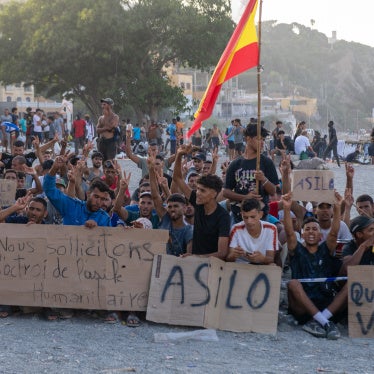
Turkey retains a geographic limitation to its ratification of the 1951 U.N. Convention on the Status of Refugees ("Refugee Convention"), which means that only those fleeing as a consequence of "events occurring in Europe" can be given refugee status. In its October 1999 Regular Report on Turkey, the E.U. Commission stated that the geographical reservation renders the asylum machinery "largely . . . ineffective." The report goes on to recommend that "a department specifically intended to handle asylum cases also needs to be set up. It would also have to be able to gather and evaluate figures on the number and origin of asylum seekers and on the reasons for refusal of asylum."
Certainly life is extremely hazardous for those passing Turkey's borders in search of asylum. Recently arrived asylum seekers have been ill-treated in police custody, or even killed by security forces as they tried to cross the border. Many asylum seekers fail to access the procedures because they are apprehended at the borders and are summarily deported. Turkish officials on the Iran border have the discretion to summarily send back any foreigner apprehended in the two-kilometer zone separating Iran and Turkey, according to the World Refugee Survey 1999 published by the US Committee for Refugees.
On arrival asylum seekers have to overcome the formidable hurdle of Turkey's own regulations on the treatment of asylum seekers before they can submit their claim for consideration by UNHCR. The Turkish Interior Ministry regulations impose preconditions such as the presentation of valid identity documents, which can be difficult or impossible to fulfill. Asylum seekers who fail to meet those preconditions have been refouled. The Turkish government's system for examining asylum applications does not meet the minimum safeguards required by international law for fair and accurate refugee determination. Local police officers record the substance of claims with the assistance of interpreters who are often incompetent, and case decisions are made by officials of Interior and Foreign Affairs' Ministries who lack expertise and independence. There are no provisions for oral hearings or legal assistance. Applicants are not provided with a written notification of the reasons for their denial and appeal rights are ineffective or inaccessible.
Moreover if, at the end of this unsatisfactory process, an applicant is recognized by the Turkish authorities to fit the Convention's definition of refugee, they will not be classified as a refugee, but only as an "asylum-seeker" who only qualifies for a temporary residence permit so that they can submit their case to the UNHCR. The asylum regulations authorize, in direct violation of the principle of non-refoulement, deportation of recognized "asylum seekers" who after "reasonable time" have not been resettled to a third country.
The National Program article 4.25.2 deals with the Protection of Refugees. The E.U. Accession Partnership agreement only calls on Turkey to lift its geographical reservation to the 1951 Refugee Convention, although lifting the geographical reservation alone will not give asylum-seekers the protection they are owed. The National Program, however, does not even undertake to lift the geographical reservation, but only to "evaluate" this step.
Human Rights Watch recommends that the Turkish government make a public undertaking to respect the principle of non-refoulement regardless of the geographical restriction. It should also establish without delay an independent advisory committee, composed of independent experts and representatives of the UNHCR and relevant non-governmental organizations, in order comprehensively to review refugee protection in Turkey and make recommendations on how the government can better discharge its international obligations toward refugees. Particular urgency should be given to amendments to asylum laws and refugee status determination procedures in order to ensure that they do not result in refoulement.
Access to higher education
Neither the problem of women denied access to higher education because they wear the Islamic headscarf, nor that of elected representatives denied access to their seats in parliament, are explicitly addressed in the E.U.'s Accession Partnership document. When questioned about this omission, an E.U. Commission official told Human Rights Watch that these concerns were addressed by the medium term call on the government to "Guarantee full enjoyment by all individuals without any discrimination and irrespective of their language, race, color, sex, political opinion, philosophical belief or religion of all human rights and fundamental freedoms. Further develop conditions for the enjoyment of freedom of thought, conscience and religion." This language is also reflected in article 1.2.11 of the National Program, but the relevant section contains no specific commitment to end discrimination against women who wear Islamic headcovering.
Human Rights Watch recommends that the Turkish government make a commitment to lift the ban on the wearing of head scarves or other religious head-covering by students in higher education, and be encouraged to reconsider the dress restriction imposed on civil servants. There can be no grounds for dress restrictions imposed on elected representatives in the Turkish parliament.