
ALSO IN THIS ISSUE
Donate

 
Ending Grave Abuses Perpetrated in
the Gold Industry:
 
World’s largest gold producer reins in abuses at a mine in Papua New Guinea 

 
READ MORE >>

 
Putting an End to Excessive Force
Border Guards Ordered to Stop Killing Bangladeshi Civilians

 
READ MORE >>

Selected Op-eds from HRW Staff

The Case for Intervention in the Ivory Coast
By Corinne Dufka 
Senior Africa Researcher
In Foreign Policy
 
What will the Uzbeks Say About us in Their Tahrir Square?
By Steve Swerdlow 
Uzbekistan Researcher
In EU Observer
 
Wake Up and Smell the Jasmine
By Nicholas Bequelin 
Senior Asia Researcher
In Foreign Policy
 
 
spacer spacer
Fighting Repression in the
Middle East
Securing the Release of Detained Human Rights Activists in Egypt
spacer
spacer spacer spacer
 

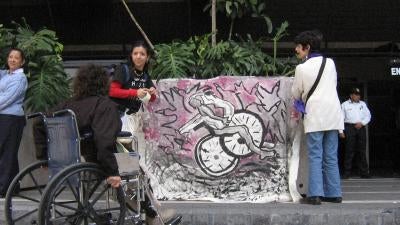
At the height of Egypt’s 18-day revolution, Human Rights Watch Senior Researcher Daniel Williams was detained during a military-led raid on Cairo’s Hisham Mubarak Law Center, a pioneering Egyptian human rights organization. Human Rights Watch immediately condemned the crackdown and called for Daniel’s release and that of several international and local colleagues. Within 2 days, all 28 activists and journalists had been freed.

On the afternoon of February 3 a mob gathered to block the Mubarak Center’s exit, and Daniel immediately called Human Rights Watch Emergencies Director Peter Bouckaert, who was also in Cairo. Peter stayed on the line while Daniel hid the phone in his pocket. As military police stormed the building, Peter monitored the raid with an Arabic translator. They listened as everyone inside the center was ordered to sit on the floor with their hands above their heads while military forces broke windows and hurled insults at the captives.

Soldiers bound everyone’s hands with white plastic handcuffs. In addition to Daniel and two researchers from Amnesty International, 25 other Egyptian and international activists and journalists were detained. They looked on as the military confiscated bags containing computers, wallets, money, passports, and other documents. One of his captors accused Daniel of being an Israeli spy, and another slapped him repeatedly on the back of the head after noticing that Daniel was chewing gum.

READ MORE >>   
audio   

FBShare


  A collaborative, rapid response from Human Rights Watch and our partners on the ground helped secure the release of human rights defenders detained in Cairo during Egypt's revolution.
spacer


spacer spacer
Ending Grave Abuses Perpetrated in the Gold Industry:
World’s largest gold producer reins in abuses at a mine in Papua New Guinea 
spacer


Women searching for gold ore-bearing rocks on waste dumps outside the Porgera Joint Venture mine in Papua New Guinea. A ton of ore-bearing rock yields only a tiny amount of gold. © 2010 Brent Stirton/Getty Images  

spacer spacer spacer
 

Human Rights Watch Senior Researcher Chris Albin-Lackey investigated and documented reports of horrific abuse taking place at a gold mine in Porgera, a remote part of Papua New Guinea’s central highlands. On the mine’s sprawling dumps of waste rock, security personnel were alleged to have carried out a wide range of crimes, including brutal gang rapes and beatings. While rumors of abuses had long been associated with the mine, Barrick Gold—the Canadian corporation that owns the mine and is the world’s largest gold mining company—had denied these claims as unfounded. When confronted with our findings, Barrick acknowledged for the first time that the allegations had substance and has since taken steps to rein in the abuses we uncovered.

Joined by Human Rights Watch’s Business and Human Rights director, Arvind Ganesan, Chris presented his findings to Barrick during a full-day meeting at Barrick’s Toronto headquarters. As a result of the meeting, Barrick’s vice-president of corporate social responsibility launched a thorough internal investigation at the mine in Porgera, which echoed and confirmed our findings.

READ MORE  >>
video 

FBShare


  When Human Rights Watch exposed rapes and beatings by security personnel of the world's largest gold producer, the company had no choice but to take action.
spacer


spacer

spacer
Putting an End to Excessive Force  
Border Guards Ordered to Stop Killing Bangladeshi Civilians
spacer


Nazim Mondal holds a picture of his dead son. Sixteen-year-old Peparul Sheikh was killed by the Indian Border Security Force. Chakmathura village. © 2010 Prashant Panjiar

spacer spacer spacer
 

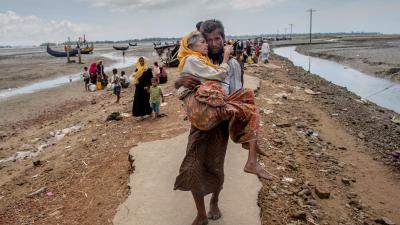
Just weeks after Human Rights Watch released a report on India’s Border Security Force’s (BSF) use of excessive and frequently lethal force, the Indian government ordered that BSF guards be issued non-lethal weapons. More than 900 Bangladeshi and Indian nationals were killed in border areas in the last decade when troops used lethal force in an apparent effort to contain smuggling and other illegal activities.

Last year Human Rights Watch teams worked in Bangladesh and India to document a pattern of grave abuses involving unprovoked beatings, torture, and indiscriminate killings. We partnered with two local human rights organizations—Kolkata-based Banglar Manabadhikar Suraksha Mancha (MASUM) and Dhaka-based Odhikar—to interview more than 100 individuals including victims, witnesses, human rights defenders, journalists, law enforcement officials, members of the BSF, and members of the Bangladeshi security forces known as the Bangladesh Rifles.

READ MORE  >>

FBShare


spacer In an effort to curb indiscriminate killings by its security forces along the border with Bangladesh, the Indian government is providing border security with non-lethal weapons.
spacer
spacer