
• Feb 20, 2013
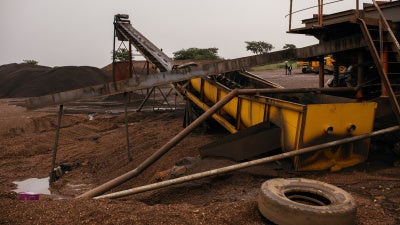
    Workers in the copper mining sector in Zambia remain vulnerable to abuse. New Human Rights Watch research found that the government of President Michael Sata, who promised to prioritize labor rights when he took office in September 2011, has made some improvements in supporting the oversight of the mines, but there remains inadequate enforcement of national labor laws designed to protect workers’ rights.
  • Apr 22, 2012
    Prospective investors in China Non-Ferrous Metals Mining Corporation’s (CNMC) upcoming initial public offering (IPO) in Hong Kong should be aware of the company’s disturbing labor rights practices in Zambia. CNMC’s inability or unwillingness to respect worker’s rights in their Zambia operations raises critical questions about corporate behavior that potential investors should direct to the company.

Reports

Zambia

  • Feb 20, 2013
    Workers in the copper mining sector in Zambia remain vulnerable to abuse. New Human Rights Watch research found that the government of President Michael Sata, who promised to prioritize labor rights when he took office in September 2011, has made some improvements in supporting the oversight of the mines, but there remains inadequate enforcement of national labor laws designed to protect workers’ rights.
  • Dec 1, 2012
    Over a billion people — 15 percent of the world’s population — live with a disability. These numbers should confer power and authority in decision making about all aspects of their lives, including to HIV and AIDS. Yet people with disabilities have been largely ignored in the global response to HIV.
  • Sep 4, 2012
    JURIST Guest Columnist Katherine Todrys of the Health and Human Rights Division of Human Rights Watch recounts her experiences researching disease transmission and living standards in African prisons. She calls for sweeping criminal justice reforms to address the systemic problems of overcrowding, human rights abuses and wrongful imprisonment.
  • Jul 20, 2012

    It is often assumed that people with disabilities face lower risk of HIV than their non-disabled peers – because they are asexual, because they are less likely to use drugs or alcohol, and because they face lower risks of violence or sexual assault than others. A growing body of research shows that these assumptions are wrong: persons with disabilities have the same rates of sexual activity and substance abuse as persons without disabilities. In fact, persons with disabilities may be more vulnerable to HIV because they are more likely to be abused, marginalized, discriminated against, illiterate, and poorer than the non-disabled population.

  • Apr 22, 2012
    Prospective investors in China Non-Ferrous Metals Mining Corporation’s (CNMC) upcoming initial public offering (IPO) in Hong Kong should be aware of the company’s disturbing labor rights practices in Zambia. CNMC’s inability or unwillingness to respect worker’s rights in their Zambia operations raises critical questions about corporate behavior that potential investors should direct to the company.
  • Dec 1, 2011
  • Nov 21, 2011
    “If someone dies, he can be replaced tomorrow, and if you report the problem, you’ll lose your job.” This, in the words of a Zambian copper miner, describes the downside of the growing investment of Chinese companies in Africa over the last decade.
  • Nov 3, 2011
    Chinese-run copper mining companies in Zambia routinely flout labor laws and regulations designed to protect workers’ safety and the right to organize. Zambia’s newly elected president, Michael Sata, a longtime critic of the Chinese labor practices, should act on his campaign promises to end the abuse and improve government regulation of the mining industry to ensure that all companies respect Zambia’s labor laws.
  • Jun 22, 2011
    The healthcare needs and general experience of women in detention in sub-Saharan Africa are rarely studied and poorly understood. A mixed-methods study was conducted including in-depth interviews with 38 adult female prisoners and 21 prison officers in four Zambian prisons to assess the health and human rights concerns of female detainees. Key informant interviews with 46 officials from government and non-governmental organizations and a legal and policy review were also conducted.
  • Dec 13, 2010
    The Zambian government should make clear that President Omar al-Bashir of Sudan will be arrested if he travels to Zambia. News reports indicate that al-Bashir may attend the special summit of the International Conference on the Great Lakes Region to be held on December 15, 2010, in Lusaka.