• In recent years, public protests against large-scale mining projects, as well as other government policies and private sector initiatives, have led to numerous confrontations between police and protesters, and resulted in the shooting deaths of civilians by state security forces. Efforts to prosecute those responsible for the many egregious abuses committed during Peru’s internal armed conflict (1980-2000) have had mixed results. The conviction of former President Alberto Fujimori, his advisor Vladimiro Montesinos, several army generals, and members of a government death squad were notable advances in accountability. However, progress on cases involving abuses committed under earlier administrations has been limited. 

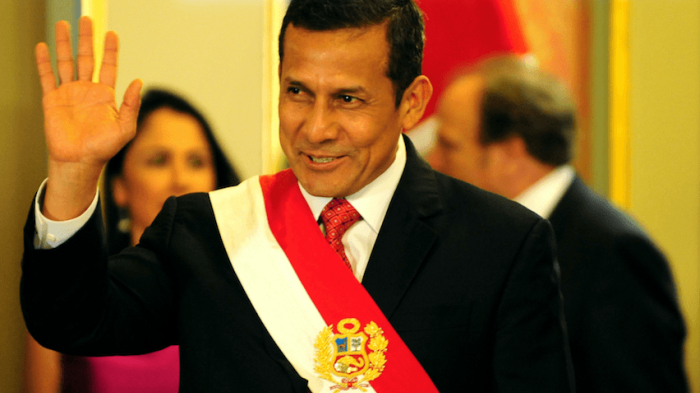
  • In the June 2011 elections, Ollanta Humala, a former army colonel, won a narrow victory over Keiko Fujimori, daughter of former President Alberto Fujimori. Fujimori is serving a 25-year prison sentence for human rights violations during his first presidency.

Reports

Peru

  • Apr 9, 2013
    The Peruvian Congress should reject a legislative proposal that includes overly broad language to criminalize the denial of terrorist crimes, Human Rights Watch said today.
  • Oct 11, 2012

    Arbitrarily releasing former President Alberto Fujimori from serving his full prison sentence for human rights crimes would be incompatible with Peru’s obligations under international law, Human Rights Watch said today. Fujimori has been receiving medical treatment for cancer of the tongue, and his family presented a request for pardon to President Ollanta Humala on October 10, 2012.

  • Sep 20, 2012
    The Peruvian government should act to prevent the unlawful use of lethal force by security forces during crowd-control operations, Human Rights Watch said today in a letter to President Ollanta Humala. Fifteen civilians were killed during protests, allegedly by security forces, in the first year of Humala’s presidency.
  • Sep 20, 2012
  • Jul 6, 2012
    The Peruvian authorities should carry out a prompt, thorough, and impartial investigation into the killing of five civilians during violent protests against mining activities in the Cajamarca region, Human Rights Watch said today. The authorities should also investigate the circumstances surrounding the arrest of an environmental activist, Marco Arana, and his treatment in detention.
  • Jul 3, 2012
    In our research in Peru, we documented the legacy of a policy, changed only last October, that arbitrarily denied thousands of people with intellectual and psychosocial disabilities labeled “mentally disabled” their right to vote. This June, Congress passed a new disability rights law to update its national laws to conform to the Convention on the Rights of Persons with Disabilities – which Peru ratified in 2008, one of the first countries to do so. The new law makes clear that people with disabilities can act in their own interest, and when necessary, should be supported to exercise their rights. But for many Peruvians with intellectual or psychosocial disabilities, these rights are not yet realized.
  • May 15, 2012

    Peru should remove significant barriers preventing people with disabilities from exercising their right to vote and other civil rights. The failure to dismantle the obstacles is undermining Peru’s leadership as one of the first countries to ratify, in 2008, the Convention on the Rights of Persons with Disabilities.

  • Apr 12, 2012
    This memorandum, submitted to the United Nations Committee on the Rights of Persons with Disabilities ahead of its upcoming review of Peru highlights areas of concern that Human Rights Watch hopes will inform the Committee’s consideration of the Peruvian government’s compliance with the Convention on the Rights of Persons with Disabilities.
  • Apr 2, 2012
    Human Rights Watch expresses its concern about Law No. 29737 and related provisions in Peruvian law that permit involuntary detention for treatment of people with psychosocial or mental disabilities and those who suffer from addiction, in circumstances that do not comply with international human rights law.
  • Feb 9, 2012
    On Jan. 28 in Lima, Peru, 27 people were killed and at least five others critically injured by a fire that swept through Christ is Love, a privately run drug rehabilitation facility. Witnesses said patients started the fire in an effort to escape, after a caretaker refused to release them.Firemen on the scene reported terrible overcrowding -- up to 70 people, 18 to a room, in a facility equipped for 12. Who would blame them for trying to escape?