• January 23, 2013
    The conviction of a prominent Thai magazine editor and his harsh 11-year sentence for “insulting the monarchy” will further chill freedom of expression in Thailand.
  • January 23, 2013
    Armed opposition groups appeared to have deliberately destroyed religious sites in mixed areas of Northern Syria, in November and December 2012.An armed opposition group destroyed a Shia place of worship in Idlib governorate, and two Christian churches in Latakia governorate were looted.
  • January 23, 2013
    The Tunisian National Constituent Assembly (NCA) should modify articles in the new draft constitution that threaten human rights, Human Rights Watch said today in a letter to the assembly members. The provisions that cause concern relate to the status of international conventions ratified by Tunisia, judicial immunity for the head of state, lack of sufficient guarantees for the independence of the judiciary, and ambiguous formulations that could threaten rights and freedoms.
  • January 22, 2013
    Somali authorities should immediately release a journalist and three others linked to the case of a woman who reported being raped by state security forces, Amnesty International, the Committee to Protect Journalists (CPJ), and Human Rights Watch said today. The detainees have now been held for more than a week – one for 12 days – without charge.
  • January 22, 2013
    A draft law being prepared in Libya to bar Gaddafi-era officials from holding public office and senior posts should exclude only those who held carefully defined senior positions, or who are alleged to have committed specific acts. Anyone accused of past wrongdoing should be allowed a fair chance to rebut the charges
  • January 22, 2013
    Yesterday’s Istanbul court decision to order the pre-trial detention of nine human rights lawyers highlights the arbitrary and abusive use of anti-terrorism laws in Turkey. The 9 were among 12 lawyers arrested, 11 during early morning raids on January 18, and 1 on January 20.
  • January 22, 2013
    Italy is summarily returning unaccompanied migrant children and adult asylum seekers to Greece, where they face a dysfunctional asylum system and abusive detention conditions, Human Rights Watch said in a report published today. Stowaways on ferries from Greece, including children as young as 13, are sent back by Italian authorities within hours without adequate consideration of their particular needs as children or their desire to apply for asylum.
  • January 21, 2013
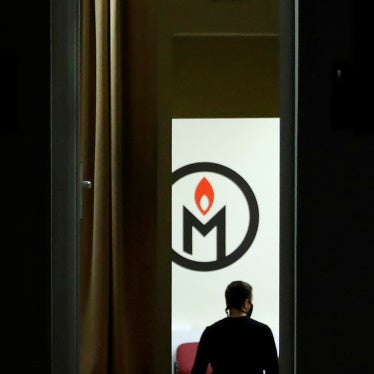
    Russian authorities should investigate death threats against Vitalii Ponomarev, the lead Central Asia expert with Memorial Human Rights Center. The investigation should be prompt and comprehensive, and Russia should seek cooperation from Uzbek authorities to ensure its thoroughness.
  • January 21, 2013
    The Kenyan authorities should halt their plan to forcibly move 55,000 registered refugees and asylum seekers from cities to overcrowded and underserviced refugee camps. Citing a number of grenade attacks in 2012, the authorities contend the move will improve Kenyan national security and lead to the return of Somali refugees to Somalia.
  • January 21, 2013
    The French National Assembly should approve a bill for marriage equality. Supporters of the government’s plans for marriage equality will hold a demonstration on January 27, 2013, in Paris. More than 300,000 people opposing the measure held a protest on January 13.
  • January 21, 2013
  • January 21, 2013
    Members of the United Nations Human Rights Council (UNHRC) should vote to establish a commission of inquiry into human rights abuses in North Korea when the matter comes up before the February-March session of the council, said Human Rights Watch today. A detailed memo released by Human Rights Watch, Q&A on a United Nations Commission of Inquiry on North Korea, explains why a commission is urgently needed, how it could be established, what it should examine, and how it will support the efforts of the UNHRC to press for Pyongyang’s compliance with international human rights standards.
  • January 21, 2013
    The African Union (AU) should make human rights central to its discussions about crises situations in Africa at its summit meeting this week in Ethiopia, Human Rights Watch said today in an open letter to the AU chairperson, Dr. Nkosazana Dlamini-Zuma. The Ordinary Summit begins on January 21, 2013, and AU heads of state are due to meet on January 27 and 28 in Addis Ababa.
  • January 18, 2013
    Two Palestinians being held at the Cairo airport, apparently refused entry to Egypt, are at risk of deportation to Syria. The man and his son would face indiscriminate violence and possible persecution if returned to Syria.
  • January 18, 2013
    Ghanaian authorities should ensure fair, credible justice for an Ivorian militia leader arrested on January 17, 2013. The former leader of the Young Patriots militia, Charles Blé Goudé, is accused of serious crimes allegedly committed under his command during Côte d’Ivoire’s 2010-2011 violent post-election crisis.
  • January 17, 2013

    The Burmese army appears to have indiscriminately shelled the town of Laiza in northern Burma’s Kachin State in violation of the laws of war.

  • January 17, 2013
    The Kenyan government has discriminated based on ethnicity in assisting displaced people from the Rift Valley. The discriminatory practices are stoking inter-ethnic tensions ahead of the March 2013 elections.
  • January 16, 2013
    (New York, January 17, 2013) – The Bangladeshi authorities should immediately explain what actions they have taken to locate Shukho Ranjan Bali, a witness who defense lawyers and witnesses say was abducted from the gates of the war crimes courthouse in Dhaka on November 5, 2012, Human Rights Watch said today. More than two months after his disappearance, there is no news about Bali’s whereabouts or condition. The witnesses say he was last seen in police custody.
  • January 15, 2013
    Islamist armed groups occupying northern Mali should immediately release all child soldiers within their ranks and end the military conscription and use of those under 18. With France carrying out aerial bombardment since January 11, 2013, to block the Islamists from advancing farther south, rebel groups should remove children immediately from training bases in or near Islamist military installations.
  • January 15, 2013
    International mining firms rushing to invest in Eritrea’s burgeoning minerals sector risk involvement in serious abuses unless they take strong preventive measures. The failure of the Vancouver-based company Nevsun Resources to ensure that forced labor would not be used during construction of its Eritrea mine, and its limited ability to deal with forced labor allegations when they arose, highlight the risk.
  • January 14, 2013

    A letter sent to the United Nations Security Council on behalf of 57 states calling for a referral of the situation in Syria to the International Criminal Court (ICC) gives momentum to international efforts to stop grave abuses committed there. More countries should join the call and impress on reluctant Council members the urgency of taking up the issue of accountability.


  • January 14, 2013

    Syrian forces are using notoriously indiscriminate rockets that contain explosive submunitions. Evidence indicates that Syrian forces used BM-21 Grad multi-barrel rocket launchers to deliver cluster munitions in attacks near the city of Idlib in December 2012 and in Latamneh, a town northwest of Hama, on January 3, 2013.

  • January 13, 2013

    Authorities in Burma should drop charges against activists who participated in peaceful protests against government policiesAuthorities in Burma should drop charges against activists who participated in peaceful protests against government policies.

  • January 13, 2013
    Sudan should immediately rescind its decision to shut down four civil society organizations in Khartoum in December 2012. The government should allow independent groups to operate freely and conduct peaceful protests.
  • January 12, 2013
  • January 12, 2013
    The Somali authorities should release a journalist and two other people linked to a woman who alleged being raped by state security forces. Police in Mogadishu have detained freelance journalist Abdiaziz Abdinur Ibrahim without charge for prolonged interrogations since January 10, 2013.
  • January 12, 2013
    Venezuela should end censorship and intimidation of media that challenge the official line regarding President Hugo Chávez’s health and inauguration, Human Rights Watch said today.
  • January 12, 2013
    President François Hollande of France should publicly and privately convey concerns about deteriorating human rights conditions in the United Arab Emirates (UAE) on his visit there. Hollande is scheduled to arrive for his first official visit to the UAE on January 15, 2013.
  • January 11, 2013
    The movie Zero Dark Thirty, which depicts the hunt for Osama bin Laden, wrongly suggests that torture was an ugly but useful tactic in the fight against terrorism.
  • January 10, 2013
    Irish legislators should take decisive action to safeguard in law the right of women and girls to terminate a life-threatening pregnancy, and explore further reforms to the countries’ near total ban on abortion. The Irish Human Rights Commission should advise the law makers on how current restrictive laws violate women’s human rights and put the lives and health of women and adolescent girls at risk.
  • January 10, 2013
    Zimbabwe’s “unity government” is failing to carry out reforms in the country’s Global Political Agreement that are vital for the country to hold credible, free, and fair elections in 2013, Human Rights Watch said in a report released today.
  • January 10, 2013
    A proposed international treaty to address the damaging effects of mercury should include specific provisions to protect the health of children and other vulnerable populations, Human Rights Watch said today. Governments are to meet in Geneva beginning January 13, 2013, for a fifth and final round of talks for the treaty. Mercury is a toxic metal that attacks the central nervous system and is particularly harmful to children.
  • January 9, 2013
    The conviction and prison sentences of 14 activists by the People’s Court of Nghe An province on January ­­­9, 2012, marks a sharp escalation of government attacks on critics
  • January 9, 2013
    A resolution by the São Paulo government on the handling of shooting victims is an important step to safeguard against unlawful killings by state police, Human Rights Watch said today.
  • January 8, 2013
    On January 9, 2013, the Saudi Ministry of Interior announced the execution of Rizana Nafeek, a Sri Lankan domestic worker convicted of killing a baby in her care in 2005 when she was 17 years old. Human Rights Watch strongly condemns the execution.
  • January 8, 2013

    The Chinese government’s announcement today that it will sometime this year “stop using” the notorious Re-Education Through Labor (RTL) system is a rare positive response to the system’s growing unpopularity, Human Rights Watch said today. While suspending use of RTL would be an important step, the government should aspire to fully abolish the RTL system.

  • January 7, 2013
    Bahrain’s Court of Cassation ruling on January 7, 2013, upholding lengthy prison terms of 13 prominent dissidents appears to confirm the inability of Bahrain’s judicial system to protect basic rights. A military court had convicted the dissidents solely for exercising their rights to free expression and peaceful assembly.
  • January 4, 2013

    The Chinese government’s further tightening of internet controls and mandating real name registration threaten security and privacy of internet users. On December 28, 2012, the Standing Committee of the National People’s Congress, China’s legislative body, passed the “Decision to Strengthen the Protection of Online Information.” The Decision contains troubling provisions that require internet access and telecommunications providers to collect personal information about users when they sign up for internet access, landline, or mobile phone service.

  • January 4, 2013
    The arrest in the United Kingdom on January 3, 2013, of a Nepali army colonel suspected of torture sends a warning to those accused of serious crimes in Nepal and elsewhere that they cannot hide from the law forever. Nepal failed to prosecute anyone for torture during the decade-long civil war in the nearly seven years since it ended.
  • January 3, 2013
    Bahraini authorities should provisionally release a human rights activist who faces charges over his tweet reporting about a wounded demonstrator. The activist, Sayed Yusuf al-Muhafadha, has been charged with “willfully disseminating false news” amounting to “incitement to violence.”
  • January 3, 2013
    US President Barack Obama’s refusal to veto a defense spending bill restricting detainee transfers from Guantanamo undercuts his pledge to close the prison. Obama signed the 2013 National Defense Authorization Act (NDAA), even though his advisers had said they would recommend a veto if it contained detainee transfer restrictions.
  • January 2, 2013

    The Thai government should immediately halt its plan to deport 73 ethnic Rohingya back to Burma.

  • January 2, 2013
    For many years, Human Rights Watch has investigated situations where companies have had serious human rights problems. Whether it is an oil company that relies on abusive state forces or have abusive private security forces, a construction company that mistreats its workers or a technology company that censors or spies on users at the behest of an abusive government, there are many situations where companies can directly impact human rights.