

• Oct 10, 2011
    Press release
    Governments around the world should intensify efforts to bring to justice those responsible for grave abuses documented in the United Nations’ October 2010 “mapping report,” Human Rights Watch said today. One year after the UN Office of the High Commissioner for Human Rights published the report, there has been insufficient follow-up by governments in Africa’s Great Lakes region and by the UN itself.
  • Aug 17, 2011
    Press release

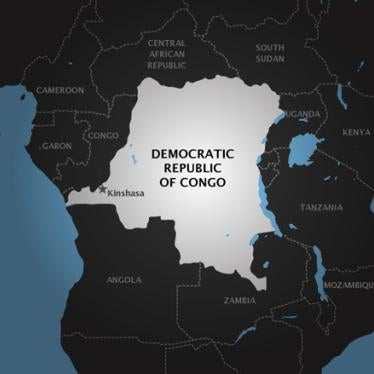
    The Congolese parliament should adopt draft legislation for a specialized mixed court to try those responsible for the worst human rights violations in the Democratic Republic of Congo, but first it should modify the draft law’s articles prescribing the death penalty as the only applicable punishment.

  • Jul 18, 2011
    Letter

    Human Rights Watch wrote to the Prime Minister of the Democratic Republic of Congo urging him to immediately call for inclusion on the agenda of the extraordinary session of parliament, which will stand in the coming weeks, of the revised version of the draft law for the creation of a specialized mixed court within the Congolese judicial system.

  • May 23, 2011
    Press release
    The United States government should step up efforts to protect civilians in central Africa from abuses by the rebel Lord’s Resistance Army (LRA), a coalition of 39 human rights and humanitarian organizations said today. The organizations urged the Obama administration to appoint a special envoy for the African Great Lakes region with a mandate extending to LRA-affected areas, to support stronger United Nations peacekeeping and to intensify efforts to arrest three LRA leaders being sought by the International Criminal Court (ICC).
  • May 23, 2011
    Backgrounder Briefing
    The rebel Lord's Resistance Army (LRA) continues to kill civilians and abduct children in remote regions of central Africa at an alarming rate with no end in sight. Nearly three years after the LRA began its most current campaign of attacking villages and towns in the Democratic Republic of Congo, Southern Sudan, and the Central African Republic (CAR), an immense protection gap remains for hundreds of thousands of civilians who live in LRA-affected areas.
  • May 2, 2011
    Q & A
    On Wednesday, May 4, 2011, judges in a local court in Stuttgart, Germany, will start hearing evidence against two Rwandan rebel leaders, Ignace Murwanashyaka and Straton Musoni, for war crimes and crimes against humanity carried out thousands of kilometers away, in the Democratic Republic of the Congo (DRC).
  • May 2, 2011
    Press release
    On May 4, 2011, judges in Stuttgart, Germany, will begin hearing evidence against Ignace Murwanashyaka and Straton Musoni, respectively president and vice president of the Democratic Forces for the Liberation of Rwanda (Forces Démocratiques de Libération du Rwanda, FDLR).
  • Apr 14, 2011
    Written statement
    Civil society will be watching closely to ensure that the specialized mixed court as established is truly independent, effective, and credible. To achieve this goal, a number of improvements must urgently be made to the current version of the government’s draft legislation for the creation of this court.
  • Apr 14, 2011
    Press release
    Congo’s government should revise and strengthen proposed legislation for a mixed national/international court to hold perpetrators of serious human rights abuses to account. The recommendations for improvements and a plan for supporting the court’s work grew out of a joint effort on April 6-8, 2011, in Goma, North Kivu, by Congolese and international officials and civil society.
  • Mar 18, 2011
    Backgrounder Briefing
    In Afghanistan, the Democratic Republic of the Congo, Burundi, and Indonesia there has been at least some recognition that impunity is a serious problem that needs to be addressed. Yet in each place, efforts at accountability have been sidelined, ostensibly in the interest of peace, with unfortunate consequences. Neglecting accountability for egregious crimes in the aftermath of concluding a peace agreement can be and often is detrimental to long-term stability.