

April 4, 2024
Gaza: Israeli Strike Killing 106 Civilians an Apparent War Crime
Governments Should Suspend Arms to Israel, Support ICC Probe

The International Criminal Court (ICC) is a court of last resort for the prosecution of serious international crimes, including genocide, war crimes, and crimes against humanity. Impetus for the court came from the ad hoc international tribunals set up in the 1990s to address the atrocity crimes committed in the former Yugoslavia and Rwanda. The court’s founding treaty, the Rome Statute, was adopted in July 1998, and the court began work in 2003. Since then, the ICC has made headway in bringing global attention to the need for accountability in prosecuting cases arising out of investigations in Central African Republic, Darfur, Sudan, Democratic Republic of Congo, and Uganda. But the court has had performance shortcomings including the prosecution’s inability to submit sufficient evidence for convictions. The ICC has also faced intense political attacks and judicial setbacks, including lack of support in making arrests, and too-limited resources from ICC member countries to match its growing workload. As human rights crises marked by international crimes proliferate, the court’s mandate has proven to be both more needed and more challenging to implement than its founders envisioned.
Governments Should Suspend Arms to Israel, Support ICC Probe
Detainees Unlawfully Transferred to Russia, Possibly Held as Hostages
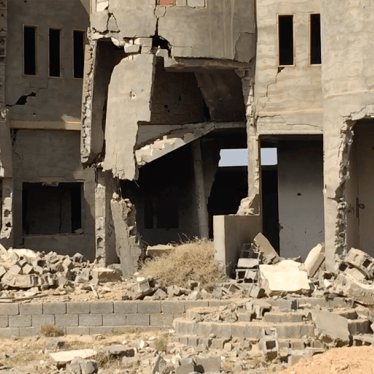
Despite Pact, Deliberate Damage, Security Concerns Prevent Return to Tawergha
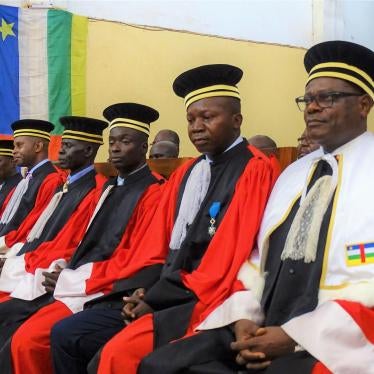
The Special Criminal Court, a New Opportunity for Victims in the Central African Republic
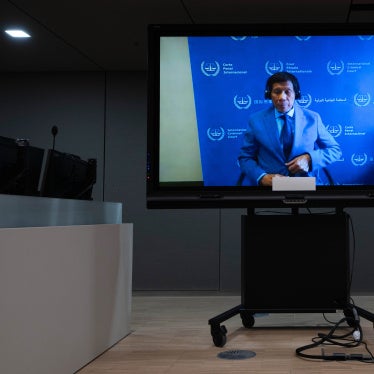
Ex-Philippines President to Be Tried on Crimes Against Humanity Charges
EU Should Condemn Continued Disregard for Rule of Law

Ensure Full Cooperation for Long Wanted Suspects

Joint Oral Statement - Item 3 General Debate - HRC61
Hearing Offers Long-Denied Accountability, but Ending Impunity Must Begin in the Philippines
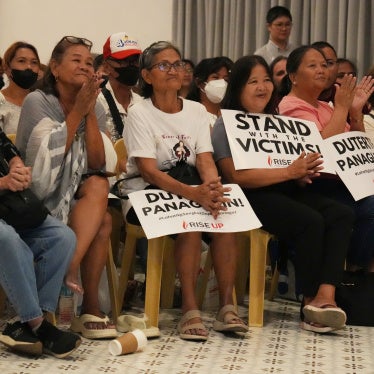
Q&A on Proceedings to Confirm Charges Against Former President
Regarding the Arrest of Osama Elmasry Njeem
Failure to Turn Over Suspects Risks International Justice Credibility
Prosecutor Briefs UN Security Council Amid US Attacks on the Court