Mohammad Nazeer Paktiawal—an Afghan asylum seeker who had worked alongside the US military in Afghanistan—died on March 14, 2026, from an alleged allergic reaction less than 24 hours after being detained by US Immigration and Customs Enforcement (ICE) in Texas.
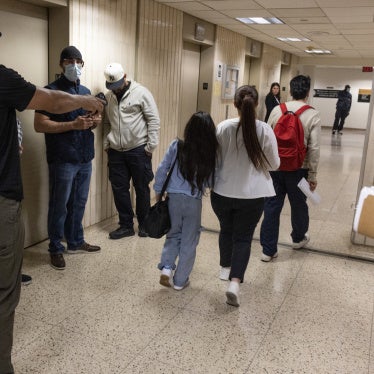
Human Rights Watch, the Alliance of Immigrant Survivors, Americans for Immigrant Justice, and other partners, submitted a statement of record to Congress on July 10 as the Trump administration continues to use state and local police via the 287(g) agreements that allow these agencies to participate in federal immigration enforcement.
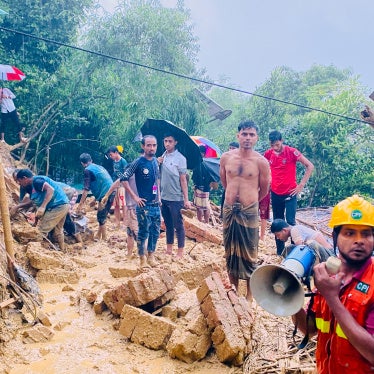
The deadly risks facing Rohingya refugees in Bangladesh were evident from landslides in July 2026 that killed at least 17 people and displaced more than 3,000.
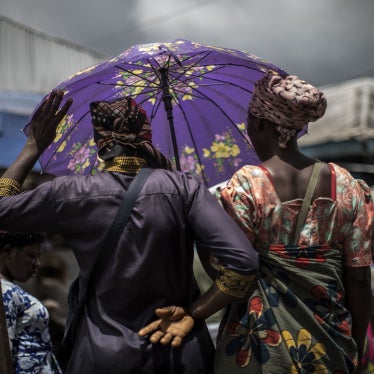
In Cameroon’s Far North region, Adiza, a 57-year-old woman had spent nearly three decades confined to her home by her husband. She was not allowed to leave, receive visitors, or speak with non-family members. When she disobeyed, he beat her.
The French government announced a new national plan last week aimed at combating racism, antisemitism, and discrimination. Unfortunately, the plan fails to tackle the systemic and institutional nature of racism in France.
In June, a working group at Japan's Internal Affairs Ministry declined to endorse a blanket age-based social media ban for children, saying it was "not desirable." Its rejection of a blanket ban suggests a willingness to consider alternative approaches to protecting children online.
Five years ago, on July 11, 2021, Cuba experienced its largest nationwide demonstrations since the 1959 Revolution, as thousands took to the streets amid severe shortages and calls for greater rights and freedoms.
The European Parliament adopted a milestone resolution on July 8 that addresses the armed conflict in Sudan and the Rapid Support Forces (RSF) attacks in El Obeid, capital of North Kordofan.
The French government is expected at any moment to unveil troubling draft legislation to address so-called entryism: the idea that certain groups seek to infiltrate state institutions to influence and promote an ideological agenda. If adopted, the bill would further erode the country’s already shrinking civic space.