Iranian Society under Crackdown
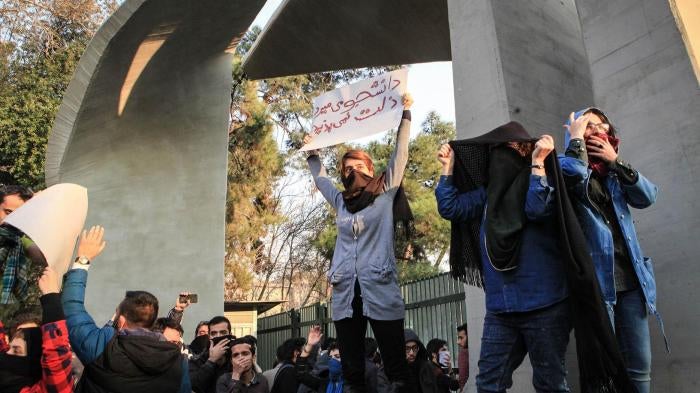
In September 2022, Iranians took to the streets to protest the death of a 22-year-old Kurdish Iranian woman in the custody of the abusive “morality police,” as well as the autocratic government’s long track record of repression and impunity. The protest movement’s leading slogan of “woman, life, freedom” connects Iranians’ struggles for social and political freedoms across generations against an unaccountable and deeply repressive state. The authorities’ brutal repression of popular demands for fundamental change has included lethal and excessive force against protesters, arbitrary arrests of activists, journalists, and rights defenders, the torture and sexual assault of detainees, and executions of people after sham trials. Human Rights Watch’s Iran blog highlights the government’s vicious crackdown and civil society activists’ attempts to confront this oppression and achieve societal demands for fundamental improvements in human rights.
Execution of a Victim of Child Marriage in Iran
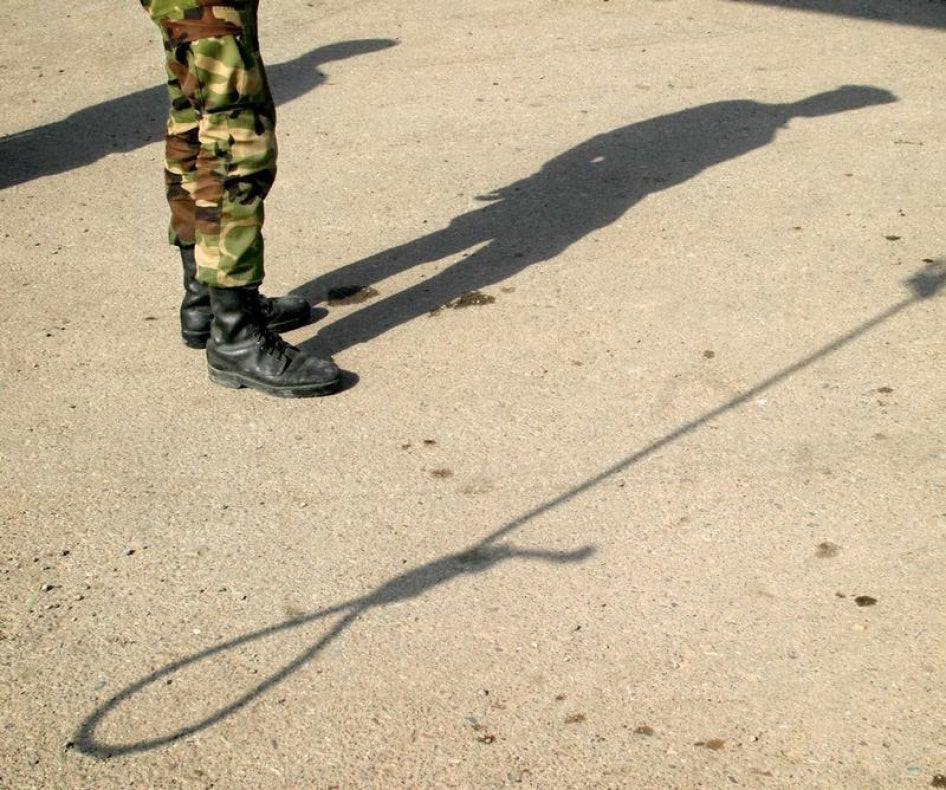
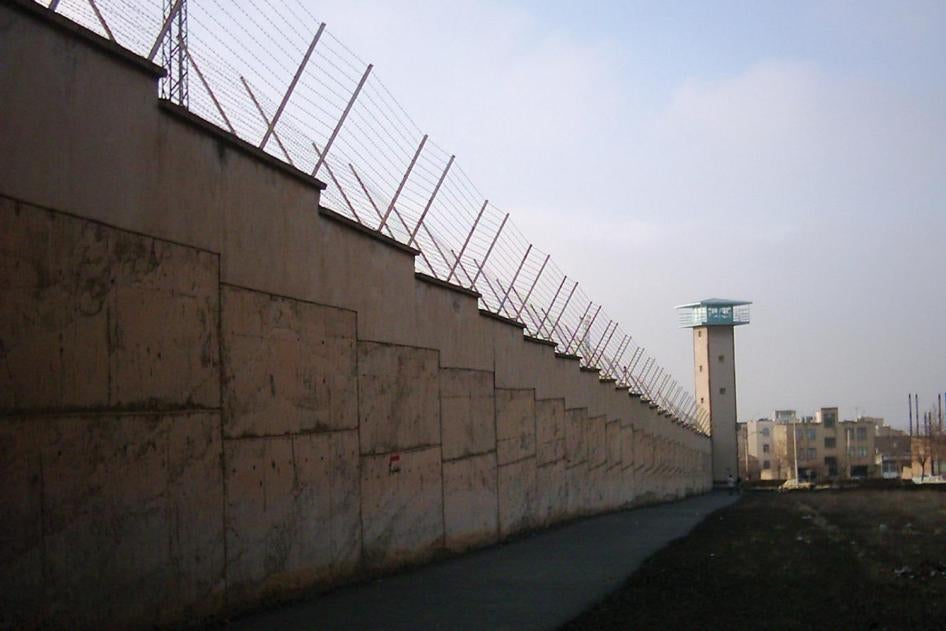
On December 20, Iranian authorities executed Samira Sabzian, 32, who was detained in Gharchak prison in Tehran province. Sabzian, the mother of two, was convicted in 2016 of murdering her husband.
According to Iran Human Rights, an Oslo-based human rights organization, Sabzian was a 15-year-old girl when she was married to her husband, and suffered domestic violence. She was only 19 at the time of the alleged crime. Iranian law allows girls to marry at 13 and boys at age 15, as well as at younger ages if authorized by a judge. Attempts by parliamentarians to increase the age of marriage have been unsuccessful.
Since the beginning of 2023, the rate of executions has risen dramatically, with Iranian authorities executing at least 707 people including 17 women across the country. Iranian law lacks adequate protections for victims of domestic violence, and all intentional homicide cases are punishable under the Islamic law principle qisas, by which a victim’s heirs can seek the death penalty or forgive the perpetrator, sometimes seeking payment of “blood money”, after which the judge can sentence the accused to up to ten years in prison.
Human Rights Watch opposes the death penalty in all circumstances because it is inherently cruel and irreversible. Iran is one of the only countries that continues to implement the child death penalty.
Alarming Rise of Executions in Iran
Executions in Iran have significantly increased. According to Iran Human Rights, a Norway-based human rights group, the number of executions has surged to 707 individuals from the beginning of the current calendar year until the end of November, marking an unparalleled increase over the past eight years.
Among those who were executed, 390 were sentenced to death on charges related to "drug offenses," and 238 faced capital punishment on charges of "intentional murder," as reported by the Iran Human Rights organization. Authorities executed at least one child offender and 17 women.The implementation of death sentences has intensified since October, with at least 200 individuals executed in Iran.
In the first ten days of December alone, at least 25 more individuals were executed in prisons in Yasuj, Qazvin, Jiroft, Birjand, Karaj, Dehdasht, Sanandaj, Saqqez, Rafsanjan, Urmia, Zahedan, and Qom.
Under article 6(2) of the International Covenant on Civil and Political Rights, which Iran has ratified, in countries that still retain capital punishment, the death penalty may be applied only for the “most serious crimes.” The United Nations Human Rights Committee, which interprets the covenant, has said that drug offenses are not among the “most serious crimes,” and that the use of the death penalty for such crimes violates international law. Human Rights Watch opposes capital punishment in all circumstances because it is inherently irreversible and inhumane.
Mahsa (Jina) Amini's Lawyer Sentenced to Prison; No Credible Investigation into Amini’s Death in Custody
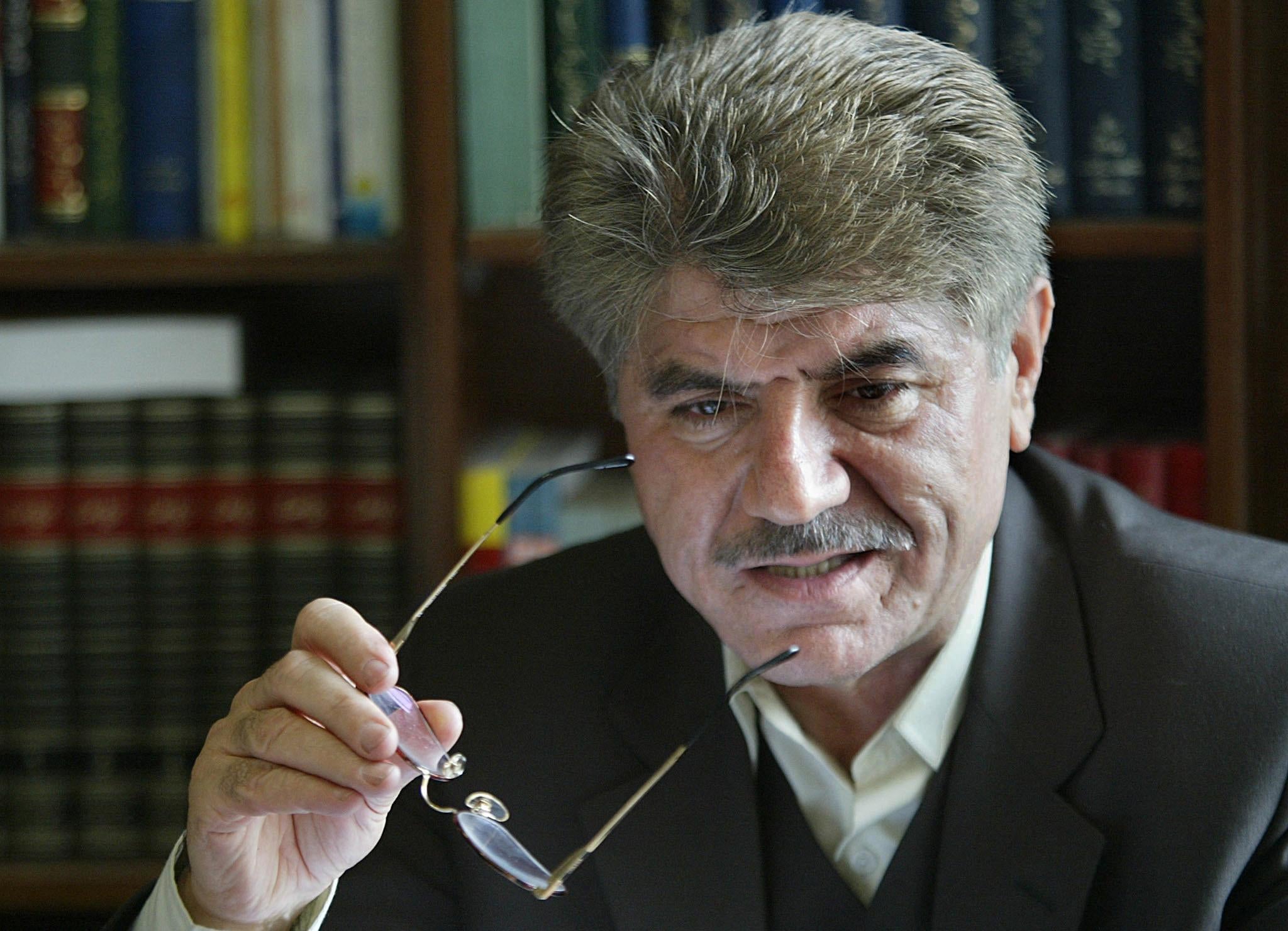
On October 17, the Kurdistan Human Rights Network reported that Branch 28 of the Islamic Revolutionary Courts in Tehran sentenced Saleh Nikbakht, the attorney representing Mahsa (Jina) Amini’s family in the case of her death in custody, to one year of imprisonment and an additional 2 years of “prohibition of online activities” on charges of “propaganda against the state.”
On March 11, Nikbakht was charged at the 2nd branch of the Public Prosecutor’s Office in Tehran, and subsequently released on bail awaiting his court hearing. Although his trial was initially slated for August 1, it was purportedly postponed due to administrative reasons.
Ali Rezai, the lawyer for Nikbakht, stated that unfortunately, the court disregarded our defenses and handed down the maximum penalty for the charge. Nikbakht… urged a re-examination of Amini's death by a different commission, with renowned doctors present. However, Iranian officials have failed to credibly investigate Amini’s death in the custody of the morality police, nor the numerous serious abuses by security forces, including torture and sexual assault in detention.
Amini Family Lawyer Summoned to Court Ahead of Death Anniversary

On August 21, the Kurdistan Human Rights Network reported that Saleh Nikbakht, the lawyer who represents Mahsa (Jina) Amini’s family in the case of her death in custody, was ordered to appear before Branch 28 of Tehran's Islamic Revolutionary Court, presided over by Judge Mohammad Reza Amoozad, on August 29.
On March 11, Nikbakht had been charged with "propaganda against the state" at the 2nd branch of the Public Prosecutor's Office in Tehran and was released on bail pending his court hearing. His trial was originally scheduled for August 1 but was reportedly delayed for administrative reasons.
A source familiar with the case who spoke with the Kurdistan Human Rights Network said that the charge against Nikbakht stems from his interviews with domestic and foreign media. He also has publicly disputed the Forensic Medicine Commission's finding that Amini's death was caused by a "heart attack" attributed to an "underlying illness."
Ahead of the anniversary of the start of the nationwide protests in response to Amini’s death in custody, Iranian authorities have intensified their crackdown, arresting over a dozen activists and increasing their repression of a wide range of dissidents, including lawyers.
Dadban, a counseling and legal education center for activists, reported that on August 22 security forces arrested Amir Hossein Kohkan, the lawyer for the family of Mohammad Mahdi Karmi who was executed after an unfair trial linked to the death of a Basij militiaman during protests.
Iranian Authorities Send 90-year-old Baha’i Citizen and His Daughter to Evin Prison
Iranian authorities are once again targeting the Baha’i community. On August 13, security forces arrested 90-year-old Jamaloddin Khanjani, a former leader of the Baha'i community in Iran, along with his daughter, Maria Khanjani. Both father and daughter were sent to Evin prison according to Baha’i International Community.
According to Human Rights Activists News Agency (HRANA), security forces arrested the Khanjanis after searching their house. Jamaloddin Khanjani previously served 10 years in prison due to his belonging to an informal Baha’i leadership group in Iran known as the “Yaran.” In 2008, all seven members of the Yaran, including Khanjani, were arrested and sentenced to 20 years in prison (later reduced to 10). All completed their sentences and were released in 2018.
On 16 August, the Baha’i International Community (BIC) reported an increase of arrests of Baha’i citizens. According to BIC, almost 60 Baha’i people were arrested in recent weeks.
Bahais are the largest unrecognized religious minority in Iran. They have been the target of severe persecution by Iranian authorities, which has impacted every aspect of their lives and severely deprived them of their fundamental rights.
This is not the first time Iranian authorities have arrested elderly members of the Baha’i community. In 2022, security forces arrested Mahvash Sabet, then-70-years-old, and Fariba Kamalabadi, then 60-years old, both former Yaran members. In 2022, they received 10-year-prison sentences, according to Human Rights in Iran.
Iranian Judiciary Requires Actresses to Undergo Psychological Treatment
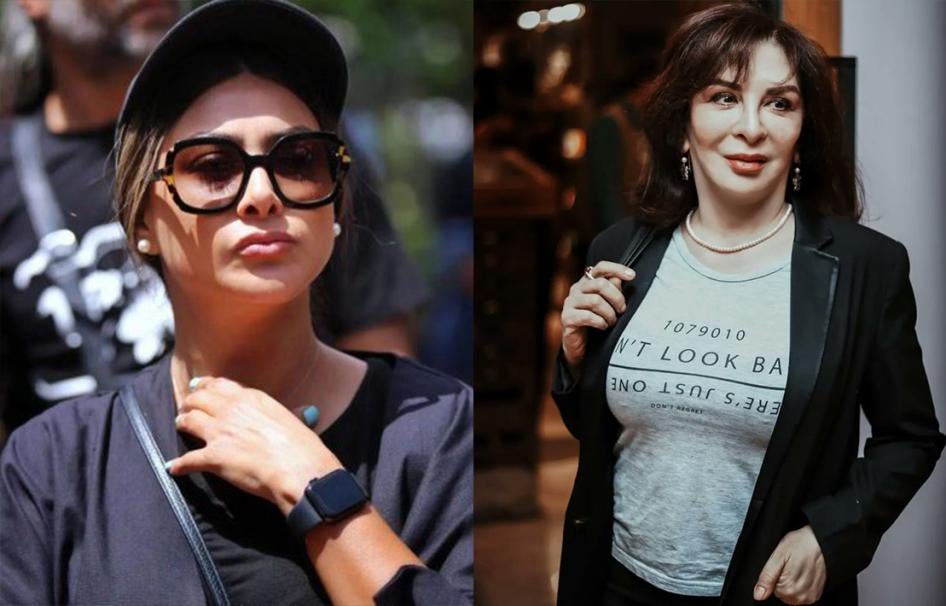
In recent cases, Iran’s judiciary has ordered actresses to undergo psychological treatment, as part of their sentencing after being convicted for not complying with compulsory hijab laws. Iranian mental health associations have protested the orders. In a letter to the head of the judiciary, four mental health associations called the orders an “abuse of psychology.” The diagnoses that the judges were including in their convictions, such as “antisocial” or “antifamily personality disorder”, are non-scientific, and psychiatrists should be diagnosing mental health conditions, not judges, the letter said. No person should be subjected to coercive, involuntary treatment, including on the basis of a real or perceived disability.
On July 14, HRANA reported that, actress Azadeh Samadi was referred for psychological treatment for “antisocial personality disorder,” and required to submit her health certification when she had completed treatment. Samadi was prosecuted for refusing to comply with compulsory hijab laws; summoned in January on the charge of “injuring public morals and modesty through unveiling.”
On July 19, Fars news reported that well-known actress Afsaneh Bayegan was convicted for wearing a hat and not complying with hijab rules. In addition to two years imprisonment and a travel and social media ban, Bayegan has been ordered to visit an official psychology center once a week for treatment for “mental illness of anti-family personality.”
55 Lawyers Summoned in Bukan
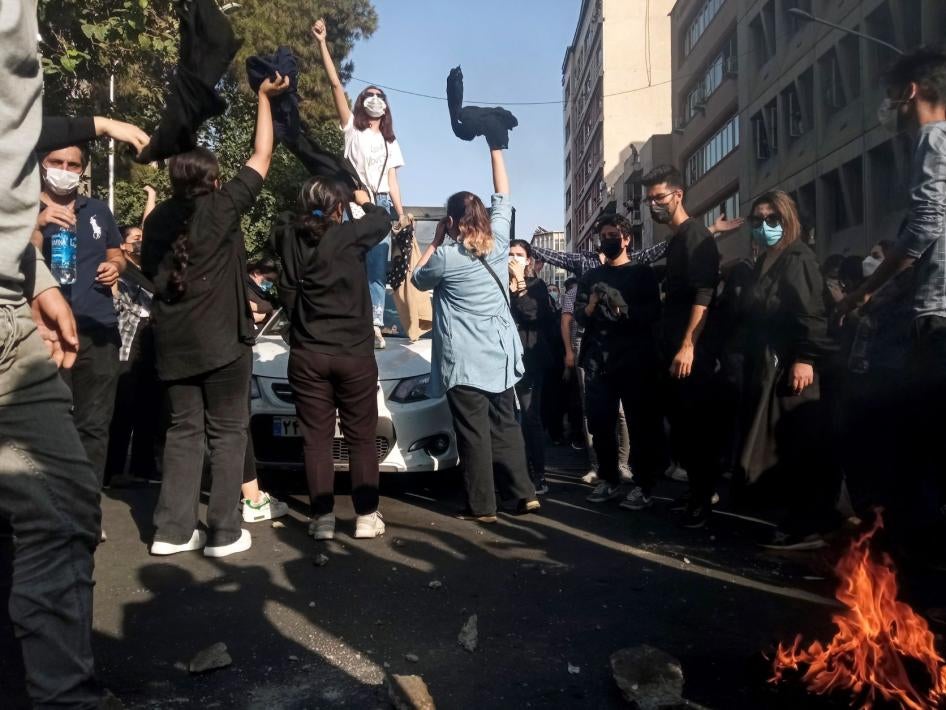
According to the Kurdistan Human Rights Network, an independent news website, judicial authorities summoned 55 lawyers to Branch 2 of the General and Revolutionary Prosecutor’s office in Bukan, in the Kurdistan province in Iran. According to the Kurdistan Human Rights Network, the Bukan prosecutor filed a complaint against these lawyers for signing a statement announcing their willingness to provide legal assistance to Mahsa (Jina) Amini’s family in pursuing justice for her case.
Authorities responded to the nationwide protests sparked by Amini’s death in custody of Iran’s abusive morality police on September 16, 2022, with brutal force, killing hundreds and arresting thousands of protesters and dissidents.
According to Kurdistan Human Rights Network, Bukan’s prosecutor, Ali Zahed, summoned the lawyers who signed the statement and pressured them to deny issuing it. After the lawyers refused to do so, the prosecutor reportedly proceeded with filing charges against them, and on July 11, the lawyers were notified that they had five days to appear in the prosecutor’s office.
Student Protestors on Trial
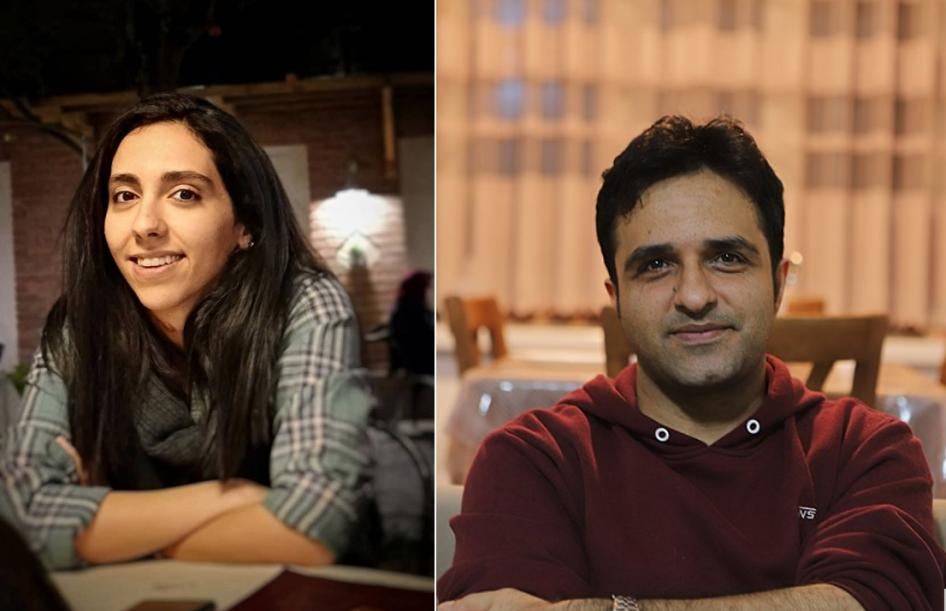
On Monday, July 10, Hasti Amiri and Zia Nabavi, students and activists from Tehran’s Allameh Tabatabai University, appeared before Branch 26 of Tehran’s Revolutionary Court, according to United Students Union Telegram channel, a news channel related to the Islamic student association in Iran.
Amiri and Nabavi are being charged with “propaganda against the state,” according to Harasswatch, based on their participation in a March 7 protest. The protest, which involved a gathering at Allameh University, came in response to what is alleged to be widespread poisoning of students at schools. Iran’s reformist Etemad news agency reported on March 1 that over the past three months, hundreds of schoolgirls had been poisoned in at least 58 schools in 10 provinces across the country. The authorities have failed to credibly investigate the alleged poisoning, causing significant stress among parents.
Nabavi, a former member of Students’ Islamic Association at Babol Noshirvani University, previously served nine years in prison due to his peaceful activism, according to Human Rights Activists News Agency (HRANA). HRANA reported that Nabavi was arrested in June 2009, then sentenced to a 10-year prison term in exile.
Amiri was previously arrested on July 31, 2022, and detained in Evin Prison in Tehran for six months, according to HRANA. She was released on February 7, after the government issued an amnesty. Iranian authorities have recently been summoning, arresting, and sentencing activists and journalists, including those who were released from detention and granted amnesty only months ago.
Security Forces Arrest Family Members of Human Rights Defender Fariba Molazehi
On June 18, 2023, Fariba Molazehi (Balouch), a Balouchi human rights defender based in London, reported that security forces in Iranshahr in the Sistan and Baluchistan province arrested her 18-year-old son, Amer Daad Afarin, and her 25-year-old brother, Mohammad Molazehi.
In an interview with BBC News, Fariba Molazehi said that authorities arrested her son upon his return to Iran from the UK. He had been visiting her. Authorities also arrested her brother, she said, who was at the airport to welcome her son home. She told BBC News that she believed both her son and brother were arrested because of her activities. The security forces told some of her other family members, she said, that they would only release her son and brother if she stopped her activities.
According to Haal Vash human rights group, the authorities have not released information about the reasons for the two men’s arrest nor the possible charges against them.
The Iranian authorities have previously arrested family members of activists and journalists to pressure them to stop their activism or reporting. In 2019, for example, the authorities arrested three family members of Masih Alinejad, a US-based Iranian journalist and activist, as retribution for her women’s rights activism, Amnesty International reported.
Iranian Authorities Summoning and Re-arresting Activists and Protesters
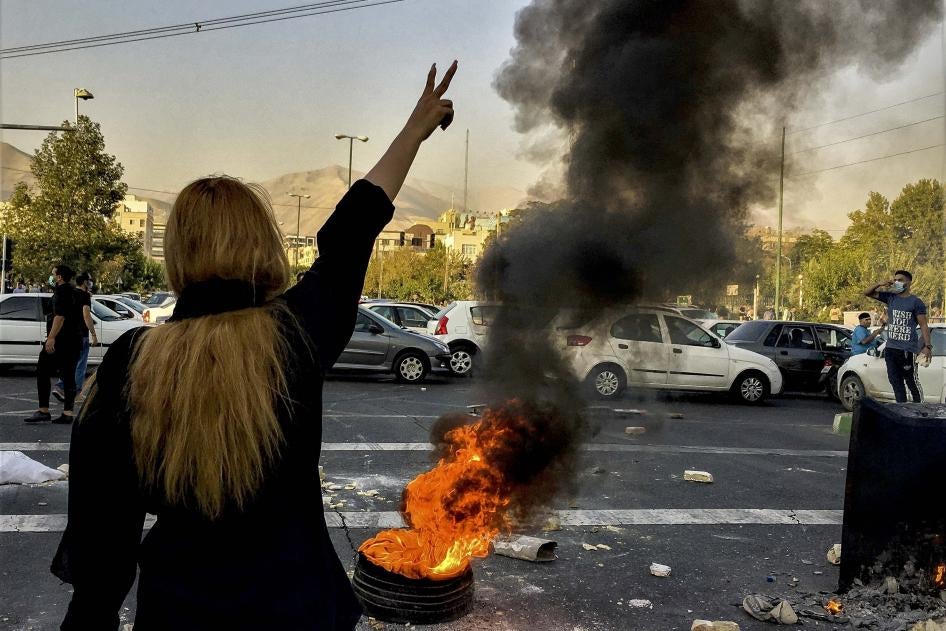
Iranian authorities are summoning, arresting, and sentencing activists who were released from detention and granted amnesty only months ago.
In February 2023, Iranian authorities announced a broad amnesty, which included releases, pardons, or reduced sentences for those arrested, charged, or detained during Iran’s widespread protests. Iranian authorities brutally cracked down on the protest movement. Following the amnesty announcement, Iranian authorities released many of those who had been detained.
Now, according to media reports, Iranian authorities are summoning, arresting, and sentencing several activists and protestors just recently released. It is unclear whether these people are being picked up on old or new charges.
Human Rights Activists News Agency reported that activist Kamiyar Fakour was granted amnesty and released from detention in February. Yet, in March, Branch 26 of Tehran’s appeal court sentenced Fakour to three and a half years in prison. Alireza Ramezani was reportedly granted amnesty in February, but in May, the Qazvin revolutionary court sentenced him to one year of imprisonment and two years of exile to Barazjan for "propaganda against the state."
Abbas Sharifi, Reza Mohammad Hosseini, Farhad Sheikhi, Hamideh Zarai, who were all granted amnesty and released in February, were arrested once again in April and May 2023. Armita Abbasi and Alireza Fazeli, both arrested during the protests and released following the February amnesty, have recently been summoned to the revolutionary court in Tehran. According to Committee Follow up Iran, in May, Branch 28 of Tehran's revolutionary court sentenced Ruhollah Nakhai, a journalist, who was released in January, to two years and 7 months in prison. Saeid Khalili, Nakhai’s lawyer, tweeted that he was sentenced even though he satisfied the conditions of the amnesty.