

• May 14, 2012

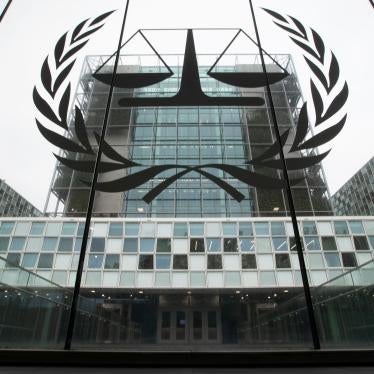
    The opening of the trial of Ratko Mladic, the Bosnian Serb wartime military commander, is a salient reminder that justice catches up with those accused of atrocity crimes. Mladic’s trial for war crimes, crimes against humanity, and genocide is scheduled to begin on May 16, 2012, before the International Criminal Tribunal for the former Yugoslavia (ICTY) in The Hague.

  • May 11, 2012
    Libya’s National Transitional Council (NTC) should immediately amend a new law that protects from prosecution people who committed crimes if their actions were aimed at “promoting or protecting the revolution” against Muammar Gaddafi. The law also allows authorities to detain people for up to two months if they are considered “threats to security.”

Reports

War Crimes/Crimes Against Humanity

  • May 15, 2012

    Liberia's "big man" surely thought he'd enjoy a comfortable retirement when he left power back in 2003. But on April 26 the Special Court for Sierra Leone convicted Charles Taylor for war crimes and crimes against humanity, proving that even the most powerful aren't immune from justice

  • May 14, 2012

    The opening of the trial of Ratko Mladic, the Bosnian Serb wartime military commander, is a salient reminder that justice catches up with those accused of atrocity crimes. Mladic’s trial for war crimes, crimes against humanity, and genocide is scheduled to begin on May 16, 2012, before the International Criminal Tribunal for the former Yugoslavia (ICTY) in The Hague.

  • May 11, 2012
    Libya’s National Transitional Council (NTC) should immediately amend a new law that protects from prosecution people who committed crimes if their actions were aimed at “promoting or protecting the revolution” against Muammar Gaddafi. The law also allows authorities to detain people for up to two months if they are considered “threats to security.”
  • May 10, 2012

    Should Vladimir Putin be studying the conviction of Charles Taylor, the former Liberian president? What about Henry Kissinger? The verdict marked the first time since the post–World War II Nuremberg trials that a former head of state has been convicted by an international tribunal of war crimes and crimes against humanity. What may be of more lasting significance, however, is that Taylor was not convicted for oppressing his own people—though he did that as well—but for his material support to abusive forces in another country. In that respect, the decision speaks not just to tinpot dictators but to leaders of countries who fight proxy wars by knowingly giving client states or rebel allies the means to commit atrocities. 

  • May 3, 2012
  • May 2, 2012
    Syrian government forces killed at least 95 civilians and burned or destroyed hundreds of houses during a two-week offensive in northern Idlib governorate shortly before the ceasefire. The attacks happened in late March and early April, as United Nations special envoy Kofi Annan was negotiating with the Syrian government to end the fighting.
  • Apr 26, 2012

    The conviction on April 26, 2012, of Charles Taylor, the former president of Liberia, for serious international crimes during Sierra Leone’s brutal armed conflict provides justice for victims and shows that no one is above the law. Taylor was convicted of war crimes and crimes against humanity before the United Nations-backed Special Court for Sierra Leone on charges that stemmed from his support for rebel groups there.

  • Apr 20, 2012

    Last week's shutdown of Sanaa's airport by security forces seeking to reverse President Abed Rabbo Mansour al-Hadi's dismissal of top brass loyal to the ancien regime exemplified exactly where Yemen is stuck.

  • Apr 13, 2012

    President Joseph Kabila of the Democratic Republic of Congo should immediately order the arrest of Gen. Bosco Ntaganda and promptly transfer him to The Hague for a fair trial. Ntaganda is wanted by the International Criminal Court (ICC) for war crimes.
     

  • Apr 11, 2012

    The Misrata Local Council received with great interest the letter from Human Rights Watch to the city’s local council and military council. The letter explicitly accused the revolutionaries of Misrata of perpetrating several violations and crimes that may amount to crimes against humanity. The letter concluded by threatening to hold officials on the city’s local council and military council responsible for these abuses and the failure to stop and prevent them.