1990
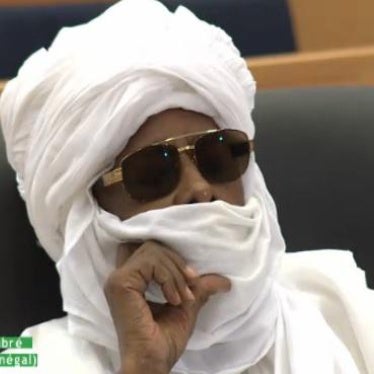
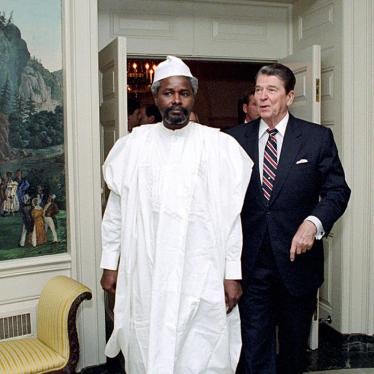
December 1–Hissène Habré is overthrown by Idriss Déby Itno after eight years in power and takes refuge in Senegal.
1991
The Chadian Association of Victims of Crimes and Political Repression (AVCRP) is created to pursue national and international legal proceedings against the perpetrators of the crimes and other acts of repression committed under Habré’s regime and to demand compensation for the victims.
1992
May– A National Truth Commission publishes its report accusing Habré’s regime of 40,000 victims and of systematic torture. The Commission calls for the prosecution of Hissène Habré and his accomplices and for moral and symbolic reparations to his victims.
1999
In the wake of the Pinochet case, the Chadian Association for the Promotion and Defense of Human Rights (ATPDH) asks Human Rights Watch to assist Habré’s victims in bringing him to justice in Senegal. Researchers from Human Rights Watch and the Dakar-based African Assembly for the Defense of Human Rights (RADDHO) carry out two missions to Chad. A coalition is created made up of the AVCRP, the FIDH, Agir ensemble pour les droits de l’Homme, the LTDH and ONDH.
2000
January 26– Seven Chadian victims and the AVCRP file a criminal complaint in Dakar, Senegal, accusing Habré of torture, barbaric acts and crimes against humanity.
February 3 –Senegalese judge Demba Kandji, after hearing the victims, indicts Habré for torture, crimes against humanity, and barbaric acts and places him under house arrest. The prosecutor, who was previously consulted, supports Habré’s prosecution.
February 18 – Habré’s lawyers file a motion with the Appeals Court asking for dismissal of the indictment.
June 30 –The Superior Council of Magistrates, presided over by the new Senegalese President Abdoulaye Wade, transfers Judge Kandji, removing him from the Habré investigation. The president of the Appeals Court in charge of the Habré case is promoted.
July 4 – The Appeals Court dismisses the indictment, ruling that Senegalese courts have no jurisdiction to pursue the case because the crimes were not committed in Senegal. In a reversal, the public prosecutor also called for dismissal. The decision and the surrounding circumstances are criticized by the UN Special Rapporteur on the Independence of Judges and Lawyers and the Special Rapporteur on Torture. The victims appeal the decision to the Cour de Cassation, Senegal’s highest court.
October 26 – In Chad, 17 victims file criminal complaints for torture, murder, and “disappearance” against Habré’s accomplices, including former directors, heads of department, and other agents of the Directorate of Documentation and Security (DDS), Habré’s political police.
November 30 – Three Chadian victims who had acquired Belgian nationality file a criminal complaint against Habré with Judge Daniel Fransen of the District Court of Brussels under Belgium’s universal jurisdiction law for crimes against humanity, torture, arbitrary arrests, and abduction. Since then, about 20 other victims have joined the case.
2001
March 20– Senegal’s Cour de Cassation rules that it lacks jurisdiction to hear the case because the crimes alleged against Habré were not committed in Senegal. Habré’s victims announce that they will seek his extradition to Belgium.
April 17 – President Wade asks Hissène Habré to leave Senegal.
April 18 – The victim-plaintiffs file a complaint against Senegal with the UN Committee against Torture (CAT) for violations of the Convention against Tortureand Other Cruel, Inhuman or Degrading Treatment or Punishment.
April 23 – The Committee against Torture, responding to the victims’ request for interim protective measures, calls on Senegal not to expel Hissène Habré and to take all necessary measures to prevent him from leaving Senegalese territory, unless pursuant to an extradition request.
May – Human Rights Watch recovers the abandoned files of Habré’s dreaded political police force, the DDS in N’Djamena. These documents reveal the names of 1,208 people who were executed or who died in prison as well as 12,321 victims of gross human rights violations.
June 11 – Jacqueline Moudeïna, the lawyer representing victims in the cases filed in Chad, is injured by a grenade while participating in a peaceful demonstration in N’Djaména. The grenade was thrown by security forces led by a Habré-era police chief named as a defendant in one of the cases.
September 27 – After an intervention by UN Secretary-General Kofi Annan, President Wade, agrees to hold Habré in Senegal pending a request for his extradition. “If a country capable of organizing a fair trial wants him – Belgium has been mentioned– I would not see any problems,” Wade declares.
2002
February 26 to March 7– Belgian investigating judge Daniel Fransen visits Chad along with a Belgian State prosecutor and four policemen. They interview victims and former accomplices of Habré and visit detention centers and mass graves. They take custody of the DDS documents.
October 7 – The Chadian Minister of Justice writes to Judge Fransen to state that “Mr. Hissène Habré cannot claim to enjoy any form of immunity from the Chadian authorities.”
2005
July 12– AHuman Rights Watch report reveals that 41 alleged accomplices of Hissène Habré still hold positions of power in the Chadian government.
August 12 – Six of Habré’s alleged accomplices are removed from state security positions. The Chadian government writes to Human Rights Watch committing to remove all alleged accomplices of Hissène Habré from government positions, to quickly consider a draft law to compensate Habré’s victims, and to construct a monument in honor of the victims as soon as funding is available.
September 19 – Judge Fransen’s four-year investigation results in an international arrest warrant for Habré, charging him with crimes against humanity, war crimes, torture, and serious violations of international humanitarian law. The same day, Belgium makes an extradition request to Senegal.
November 15 – In accordance with the extradition request, Senegalese authorities arrest Habré and place him in detention.
November 24 – The public prosecutor recommends that the Dakar Appeals Court find it lacks jurisdiction to rule on the extradition request.
November 25 – The Dakar Appeals Court rules that it has no jurisdiction to rule on the extradition request. Hissène Habré is released.
November 26 – The Senegalese Minister of the Interior, Ousmane Ngom, issues an order placing Hissène Habré “at the disposal of the President of the African Union,” at the time Olusegun Obasanjo, President of Nigeria, and implies that in 48 hours Hissène Habré will be expelled to Nigeria.
November 27 – The Senegalese Foreign Minister, Cheikh Tidiane Gadio, states that Habré will remain in Senegal pending a decision by the African Union on “the competent jurisdiction to try this case” at its next summit scheduled for January 2006.
2006
January 24 – The African Union, meeting in Khartoum, sets up a “Committee of Eminent African Jurists” in order “to consider all aspects and implications of the Hissène Habré case as well as the options available for his trial” and to submit a report at its next session in July 2006.
March 16 – The European Parliament calls on Senegal to bring Habré to trial in Africa or extradite him to Belgium.
May 18– The UN Committee against Torture rules that Senegal has violated the Convention against Torture by failing to prosecute or extradite Habré. The Committee calls on the Senegalese authorities “to submit the present case to its competent authorities for the purpose of prosecution or, failing that, since Belgium has made an extradition request, to comply with that request, or, should the case arise, with any other extradition request made by another State, in accordance with the Convention.”
July 2– The African Union, after hearing the report of the Committee of Eminent African Jurists, asks Senegal to prosecute Habré “on behalf of Africa.” President Wade of Senegal accepts the request.
2007
January 31 – The Senegalese National Assembly adopts a law allowing Senegalese courts to prosecute cases of genocide, crimes against humanity, war crimes and torture, even when they are committed outside of Senegal, thereby eliminating any legal obstacles to Habré’s trial in Senegal.
April 26– The European Parliament invites the European Union (EU)“to encourage and assist the government of Senegal in preparing for the prompt and fair trial of Hissène Habré, in order to answer accusations of mass violations of human rights.”
July– The presidents of France and Switzerland announce that they will give financial assistance to Senegal in order to facilitate investigations and a trial.
July 13– The Senegalese Minister of Justice, Cheikh Tidiane Sy, announces that the Hissene Habré’s trial will be held at the “Cour d’Assises” (Senegalese criminal court) but refuses to give a specific timeline for the trial.
2008
January 20 – An EU delegation, headed by Bruno Cathala, the Registrar of the International Criminal Court, arrives in Dakar to evaluate Senegal’s needs and to propose technical and financial assistance.
April 14– Madické Niang, the former coordinator of Habré’s legal team, is appointed Minister of Justice in Senegal, a key position for bringing about the trial.
July 23– Senegal’s Parliament adopts a constitutional amendment making clear that Senegalese courts have jurisdiction over crimes against humanity committed in the past.
September 16– Fourteen victims file complaints with a Senegalese prosecutor accusing Habré of crimes against humanity and torture.
From 2008 until 2010,Senegal conditions progress in the Habré case on full payment of the necessary funds to conduct the trial and President Wade threatens to expel Habré. The European Union and the African Union send several delegations to negotiate with Senegal. Senegal asks for € 66 million, then € 27 million, but finally agrees to a budget of € 8, 6 million.
2009
February 19– Belgium asks the International Court of Justice (ICJ) to order Senegal to try Habré or to extradite him.
May 28– The ICJ accepts Senegal’s solemn pledge to prevent Habré from leaving its territory until the ICJ renders its decision.
August 4to 7– The President of the Committee against Torture and another of its members travel to Senegal to seek application of its 2006 decision. It is the first in situ visit following a CAT decision in the committee’s history.
2010
November 18– The Court of Justice of the Economic Community of the West African States (ECOWAS) rules that Senegal must prosecute Habré before an extraordinary or ad hoc international tribunal.
November 24– At the conclusion of an international round table to fund the trial, € 8, 6 million in assistance are promised, covering the complete budget projection. The Senegalese Minister of Justice calls the meeting the crowning of a long process which will lead to a fair trial for Habré.
December 10– President Wade says that the AU "must take its case back... Otherwise I will send Hissène Habré elsewhere...I've had enough of it at this point...I am going to get rid of him."
2011
January 12– The Committee against Torture replies to Wade’s declaration by pointing out that Senegal has an obligation to prosecute or extradite Habré.
January 13– President Wade rejects the African Union plan to try Habré by a tribunal composed of Senegalese and international judges, along the lines of the Extraordinary Chambers in the Courts of Cambodia.
January 31– The African Union, gathered at a summit in Addis Ababa, calls on Senegal to quickly begin the trial in accordance with the ECOWAS decision.
February 4– President Wade says that he refuses to create another court as requested by ECOWAS and that he will place Habré at the disposal of the African Union.
March 15– Belgium sends a second extradition request.
March 24– Senegal and the African Union announce an agreement to create an ad hoc international court to prosecute Habré and agree to meet in April to finalize the statute and rules of procedure for the court.
May 30– Senegal withdraws from the meeting aimed at finalizing the court’s statute and rules of procedure.
July 1– The African Union, gathered in Malabo, asks Senegal to prosecute Habré quickly or to extradite him.
July 8 – The Chadian government says that it received a letter from President Wade announcing the immediate expulsion of Habré to Chad. Two days later, after concerns raised by the UN High Commissioner for Human Rights and civil society groups for an unfair trial for Habré and his physical safety, Wade reverses his decision.
July 22– The Chadian Minister of Foreign Affairs asks that Senegalextradite Habré to Belgium.
August 18– The Dakar Court of Appeals rules the second Belgian extradition request inadmissible on procedural grounds.
September 5– Belgium files a third extradition request.
October 12– The Chadian government organizes a first ceremony for Habré’s victims at Hamral-Goz (known as the “Plain of the Dead”), the biggest mass grave of the Habré era.
November 14 – The Committee against Torture once again reminds Senegal of its obligation to prosecute or extradite Habré.
2012
January 5–President Wade states that the Court of Appeals is dealing with the third Belgian request and that Habré will most likely be extradited to Belgium.
January 10– The Dakar Court of Appeals declares the third extradition request inadmissible on procedural grounds.
January 17– Belgium delivers a fourth extradition request to the Senegalese embassy in Brussels.
March 26 – Macky Sall wins the presidential election against incumbent President Wade.
June 2– The Senegalese government announces the creation of a working group tasked with studying the practicalities of organizing Habré’s trial in accordance with Senegal’s international obligations and with the support of the African Union.
June 27 – During a cabinet meeting, Macky Sall states that Hissène Habré will be tried in Senegal and orders proceedings to begin by the end of the year.
July 15 – During the opening ceremony of the 19th Summit of the African Union in Addis, Macky Sall states that Hissène Habré will be tried in Senegal.
July 20 – The International Court of Justice issues its ruling in the case Questions relating to the Obligation to Prosecute or Extradite (Belgium v. Senegal) with the majority of judges finding Senegal in violation of its obligations under Articles 6(2) and 7(1) of the Convention against Torture by failing to make an immediate preliminary inquiry into the facts relating to Habré’s crimes and by failing to submit the case to its competent authorities for the purpose of prosecution. Finally, the court unanimously finds “that the Republic of Senegal must, without further delay, submit the case of Mr. Hissène Habré to its competent authorities for the purpose of prosecution, if it does not extradite him.”
July 24– After four days of negotiations in Dakar, Senegal and the African Union agree to establish a special court in the Senegalese justice system with African judges appointed by the African Union presiding over his trial.
August 22 – Senegal and the African Union sign an agreement creating “Extraordinary African Chambers” to try Hissène Habré, with a timetable that would have the court operational by the end of 2012.
December 19 – The Senegalese National Assembly adopts the laws establishing the Extraordinary African Chambers within the Senegalese court structure.
2013
February 8 – The Extraordinary African Chambers are inaugurated in Dakar with speeches by the Administrator of the Chambers, Mr. Ciré Aly Ba, and the Prosecutor of the Chambers, Mr. Mbacké Fall.
May 3– The Senegalese Justice Minister and her Chadian counterpart sign a judicial cooperation agreement regarding matters related to the Extraordinary African Chambers.
June 9-16 - The EAC Prosecutor spends a week in Chad meeting with the authorities, victims’ associations, and human rights groups and visiting symbolic sites of Habré’s rule.
June 30– Hissène Habré is taken into police custody under order of the Prosecutor.
July 2– Hissène Habré is charged with crimes against humanity, torture and war crimes by the Chambers’ investigating judges and placed in pre-trial detention.
July 15– 1015 victims register as civil parties with the Chambers. Five of them give their testimony to the judges on July 16 and 17.
August 20 – September 2- The investigative judges and prosecutors of the Extraordinary African Chambers conduct a first investigatory mission to Chad, accompanied by Senegalese judicial police officers. With the cooperation of the Chadian authorities, the mission hears the statements of 1,097 direct and indirect victims and some thirty potential witnesses. They also meet with the representatives of victims associations and conduct site visits to former detention centers. The archives of the DDS are moved from the former DDS headquarters to a special building in N’djamena which has been set aside by the Ministry of Justice for use by the Chambers.
November 5– The ECOWAS Court of Justicerebuffs Habré’s attempt to suspend the proceedings against him by the Extraordinary African Chambers. The Court held that it did not have jurisdiction to rule on the application because the Extraordinary African Chambers were established pursuant to a treaty between Senegal and the African Union.
November 30 – December 22- The investigative judges and prosecutors of the Extraordinary African Chambers conduct a second investigatory mission to Chad, accompanied by Senegalese judicial police officers. With the cooperation of the Chadian authorities, the mission hears the statements of 797 direct and indirect victims and 14 witnesses. The judges are accompanied by experts to scout the mass graves that still litter Chad.
2014
February 25 – Chadian government files to be admitted as a civil party before the Chambers “only as regards the financial chapter”. Chadian minister of justice adds that pillage is a war crime.
March 15 - 30 – A third investigatory mission is conducted to Chad, 522 civil parties and 28 witnesses are heard. Examination of the DDS archives continue and the investigative judges scout mass graves that still litter Chad in the North-East, in Iriba and Tiné.
May 21 – The investigative judges rule that the Chadian government cannot be a party to the court proceedings. According to the Judges, Chad cannot be a victim of the crimes over which the Chambers have jurisdiction.
May 25 - June 8 – A fourth investigatory mission is organized in Chad and 24 civil parties and 2 witnesses are heard. The investigative judges finish examining the DDS archives of the DDS and, with forensic anthropologists, scout other mass graves in the the North-East (Abéché, Mongo) and in the South (Déli, Koumra) and conduct exhumations.
August 27 - The Indicting Chamber of the Extraordinary African Chambers confirms the decision rejecting civil party status for the Chadian Government.
September 4 – In Chad, Investigative Judge Amir Abdoulaye Issa of the High Court of N'Djamena, issues an order holding over for trial 21 Habré-era officers.
October 3 –The Investigating Chamber A requests a fifth investigatory mission to the Chadian authorities. It aims to hear and charge Saleh Younous and Mahamat Djibrine known as “El Djonto”. Both in preventive detention in N’Djamena, they are accused of crime against humanity and torture by the Extraordinary African Chambers.
October 14– Chadian Government rejects the fifth investigatory mission.
October 23 – The Indicting Chamber of the Court of Appeals of N’Djamena indicts 29 former agents of Habré’s dictatorship.
November 2 – 141 African human rights groups from 32 countries issued an open letter expressing support for the efforts by Senegal and the African Union to prosecute crimes committed during Habré’s rule .
November 14 – The trial of 21 former security agents begins before the Criminal Court in N’Djamena. They are accused of murder, torture, kidnapping, arbitrary detention, and assault and battery.
2015
February 5 – The chief prosecutor of the Extraordinary African Chambers requests, as a final indictment, that the investigative judges commit Habré to stand trial on charges of crimes against humanity, war crimes, and torture.
February 13 – The investigative judges of the Extraordinary African Chambers find that there is sufficient evidence for Hissène Habré to face charges of crimes against humanity, war crimes, and torture and bring the defendant to judgment.
March 4 – The Constitutional Court of Senegal rejects Habré’s appeal calling into question the constitutionality of the decree establishing the Extraordinary African Chambers.
March 4 – The chief prosecutor of N’Djamena requests 16 convictions and 7 acquittals against Habré’s alleged accomplices.
March 25 – The verdict of the trial of Hissène Habré’s alleged accomplices is pronounced. The criminal court upheld the sentence of forced labour for 20 defendants, acquitted 4, and withdraw the charges against 4 persons presumed dead.
April 6 - The Chairperson of the African Union Commission, Nkosazana Dlamini-Zuma, appoints the Judges of the Trial Chamber of the African Extraordinary Chambers. She appoints Gberdao Gustave Kam, a former judge at the International Criminal Tribuanl for Rwanda (ICTR), from Burkina Faso as Presiding Judge. Moustapha Ba and Amady Diouf, both from Senegal, are appointed Judges, and Pape Ousmane Diallo, also from Senegal, Alternate Judge.