The Dangers of Mercury
|
On January 19, 2013, governments around the world agreed to a new treaty on mercury, a highly toxic substance that attacks the central nervous system and is particularly harmful to children. Despite some flaws, this global treaty could be a huge step forward in protecting the right to health. |
|
  |
|
|
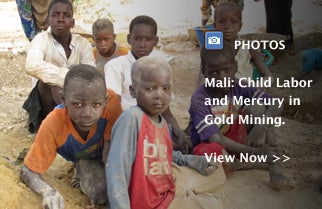
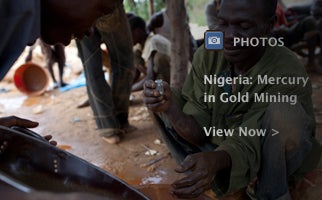
More information on: Children's RightsNews: Ghana: Mine Accident Highlights Risk to ChildrenEnforce Safety Standards, Prevent Child Labor in Artisanal Gold Mining A recent mining accident killed 16 people at an unlicensed artisanal gold mine in Ghana, underscoring the need for tougher measures to end child labor and protect the safety of adult artisanal miners. Read More>> Tanzania's Children and the Toxic Lure of Gold by Janine Morna Think Africa Press Tanzania needs to act on child labour in the hazardous gold mining industry, fast. Read More >> The Global Mercury Treaty: Japan’s Chance or Shame by Kanae Doi Webronza Mercury is an ancient metal rich in history, cloaked with mystery and power. Read More >> Mercury Convention "Must Be Brought to Life" by Juliane Kippenberg Public Service Europe This weekend, more than 140 governments agreed on the text for a new legally binding convention on mercury, a highly toxic metal. Read More >> Governments Should Sign, Ratify Mercury Treaty Address Global Threat of Poisonous, Polluting Substance Mercury is a highly toxic liquid metal that attacks the central nervous system and remains in the environment for long periods of time. Read More>> Mercury Treaty Will Help Protect Right to Health This is the first time that an environmental treaty contains explicit action on prevention and treatment of mercury poisoning. Read More >> Take mercury out of children’s hands by Juliane Kippenberg Public Service Europe Mercury is present in many areas - such as gold mining, industrial production, coal burning and dental medicine – and therefore needs to be regulated across the globe. Read More >> Mercury Treaty: Last Chance to Address Health Effects Millions of people around the globe are exposed to mercury on a daily basis, in artisanal mining and elsewhere. There is a dire need for stronger prevention and treatment of mercury poisoning. Read More >> Take mercury out of children’s hands by Juliane Kippenberg Global Post Mercury, the silvery liquid metal, known to many from old thermometers, is one of the most toxic substances on earth. Read More >>
Publications: A Poisonous Mix: Child Labor, Mercury, and Artisanal Gold Mining in Mali“I started gold mining at a small age,” said a 15-year-old girl. “I pan for gold, I also work with mercury... I also burn it. I have never heard that this is unhealthy. I work with mercury every day.” Download the 108-Page Report Now >> Toxic Toil: Child Labor and Mercury Exposure in Tanzania’s Small-Scale Gold Mines Children risk injury from pit collapses and accidents with tools, as well as long-term health damage from exposure to mercury, breathing dust, and carrying heavy loads. Download the 96-Page Report Now >> Gold's Costly Dividend Many of Papua New Guinea’s most intractable problems are inextricably bound up with the country’s most promising sources of wealth- mining, gas, timber, and other extractive industries. Download the Report Now >> |
|
|
FACTS What is Mercury? Mining Gold With Mercury Endangering Children Polluting the Environment The Role of Governments  THE TREATY About the Treaty The Minamata Convention – named after a mercury poisoning disaster that killed more than 1,700 people in Japan in the 1950s – will be adopted at a diplomatic conference in Japan in October. It will take effect once 50 countries have ratified it. Human Rights Watch calls upon governments to sign the convention at the conference, and start the ratification process as soon as possible. Funding The treaty will use international funding earmarked for environmental issues to assist countries with implementation, and to help them address the threat of mercury in artisanal and small-scale gold mining. Mining Without Mercury Under the new treaty, governments are obligated to draw up action plans on artisanal and small-scale gold mining. Under these plans, governments must eliminate the most harmful forms of mercury use, such as burning amalgam – the combination of mercury and gold – in residential areas, which endangers people living there. Governments also have to promote methods of mining without mercury. Protecting Children The new treaty recognizes children’s particular vulnerability to mercury, and it obliges governments to develop strategies that prevent the exposure of children and women of child-bearing age to mercury when it’s used in artisanal and small-scale gold mining. This requirement lays the groundwork for specific measures designed to protect children, like reducing child labor. Improving Health Care The treaty obliges governments to help affected mining communities by taking specific health measures, such as gathering health data, raising awareness about mercury through health facilities, and training healthcare workers.
|
|