• Jan 31, 2013
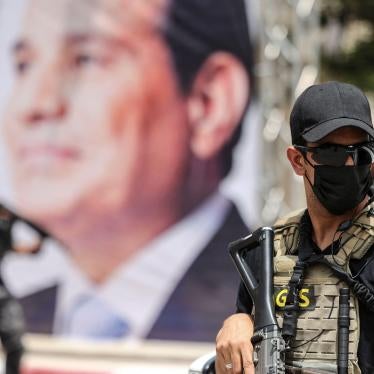
    New laws adopted in January 2012, and the announcement in 2011 of an end to the 19-year-old state of emergency and of major constitutional and electoral reforms, did little to give Algerians more freedom to associate, form political parties, or express their opinions. Authorities relied on other repressive laws and regulations to stifle dissent and human rights activities, such as the 1991 law governing assembly that requires prior authorization for public demonstrations.
  • Jan 31, 2013
    Reforms in Lebanon were stagnant in 2012 as draft laws to stop torture, improve the treatment of migrant domestic workers, and protect women from domestic violence, remained stalled in parliament. Women face discrimination under personal status laws, and vulnerable groups report being mistreated or tortured by security force members during arrest and in custody. Lebanese authorities and humanitarian organizations have provided material assistance to the influx of Syrians fleeing their country’s fighting, but needs are increasing. Approximately 300,000 Palestinian refugees in Lebanon live in appalling social and economic conditions.
  • Jan 31, 2013
    Recurring political disputes between the government and parliament paralyzed political institutions.In February, the Islamist-led opposition made significant gains in parliamentary elections.In June, the Constitutional Court voided the February elections and reinstated the previous parliament, originally elected in 2009. In October, Emir Sabah al-Ahmed al-Sabahdissolved the reinstated parliament and set December 1 to hold a new parliamentary election. However opposition groups, consisting of Islamists, liberals, and nationalists, boycotted the elections.
  • Jan 15, 2013
    Jordanian authorities increasingly resorted to force, arrests, and politicized charges to respond to continuing demonstrations for political and economic reform. The fifth prime minister to serve since the protests started in January 2011, Abdullah Ensour, took over in October 2012.King Abdullah II has called for early parliamentary elections in January 2013 under a 2012 electoral law that opposition groups complain favors loyalist candidates.
  • Jan 10, 2013
    Serious violations of international human rights and humanitarian law continued in 2012 in Israel and in the West Bank and Gaza. Renewed armed conflict between Israel and Hamas and armed groups in Gaza from November 14-21 involved unlawful attacks on civilians by both sides. At least 103 Palestinian civilians and 4 Israeli civilians died during the fighting, which ended after a ceasefire brokered by Egypt and the United States. Israeli forces killed at least four Palestinian civilians during the year off Gaza’s coast and in the “no-go” zone on the Gaza side of the boundary fence. Israeli authorities destroyed homes and other property under discriminatory practices, forcibly displacing Palestinian residents of the West Bank, as well as Bedouin citizens of Israel.
  • Jan 10, 2013
    Human rights conditions in Iraq remain poor, particularly for detainees, journalists, activists, and women and girls. Security forces continued to arbitrarily detain and torture detainees, holding some of them outside the custody of the Justice Ministry. The Justice Ministry announced a record number of executions in 2012, but provided little information about the identities of those executed.
  • Jan 10, 2013
    In 2012, Iranian authorities prohibited opposition candidates from participating in parliamentary elections. They have held prominent opposition leaders under house arrest for more than a year-and-a-half. Executions, especially for drug-related offenses, continued at high rates. The government targeted civil society activists, especially lawyers, rights defenders, students, and journalists, and announced plans for the first phase of a halal (legitimate) internet. Authorities continued to block access to the United Nations special rapporteur on Iran.
  • Jan 10, 2013
    The rocky transition from autocratic and military rule continued following the 2011 ouster of President Hosni Mubarak. Egypt held democratic parliamentary and presidential elections, and ended 31 years of rule under emergency laws. However, serious human rights problems remain, including police abuse and impunity; restrictions on freedom of expression, association, and religion; and limits on the rights of women and workers.
  • Jan 10, 2013
    The Bahrain Independent Commission of Inquiry (BICI), which King Hamad bin Isa al-Khalifa appointed to investigate the government’s response to pro-democracy demonstrations in February and March 2011, issued its findings in late November 2011. The BICI concluded that security forces had used excessive force against peaceful protesters, and had arbitrarily arrested, tortured, ill-treated, and denied them fair trials.
  • Jan 9, 2013
    The fragile transition government that succeeded President Ali Abdullah Saleh in 2012 following mass protests faces multiple challenges in ending human rights violations such as arbitrary detention, attacks on free speech and assembly, and child-soldier deployment. Fighting linked to the political upheaval decreased, but sectarian clashes continued in the north, and government forces fought with the Yemen branch of al Qaeda in the south. The country faces a growing humanitarian crisis, with nearly half the population lacking sufficient food.