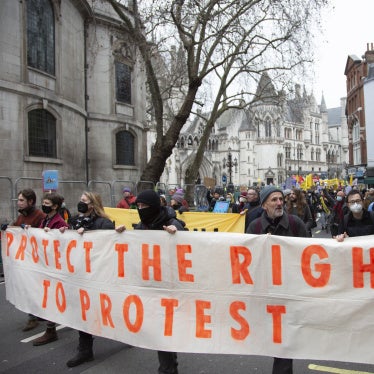
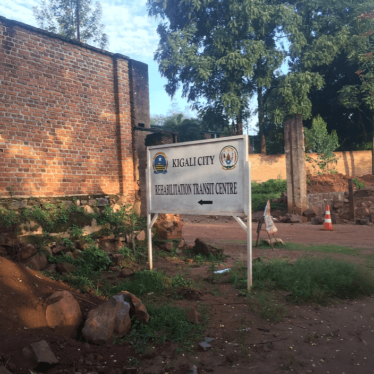
“The police [are] working within the parameters of the law,” Uganda’s information minister, Mary Karooro Okurut, told journalists on Monday in Kampala, hours after police had forced two newspapers and two radio stations to shut down while they conducted a search – and kept them shut. After years of documenting human rights abuses in Uganda, including threats to free expression, I was not impressed by her words. Her claim that the day’s events were grounded in law only further illustrated the government’s emerging practice of citing laws to justify repression.
The Extractive Industries Transparency Initiative (EITI) was founded in 2003 with the goal of strengthening governance by increasing transparency over revenues from the oil, gas, and mining sectors. EITI has contributed to much greater disclosures of information and helped spur dialogue in many countries. But EITI has not made progress toward its ultimate purpose of enhancing accountability in resource-rich countries. An independent evaluation commissioned by EITI in 2011 concluded, “EITI has not been a significant driver of change. While transparency has improved, accountability does not appear to have changed much.” The evaluation attributed this problem to the absence of a coherent strategic vision, explaining that without clarity on how publicizing credible data on natural resource revenues would lead to better governance, EITI would not be able to direct its efforts to where they would be most likely to deliver results.
The Arab uprisings have been a poignant reminder of how the Internet can promote free expression and assembly, but also how governments can try abuse it. The medium used by demonstrators to organize protests and bring medical supplies to Tahrir Square, for example, was also used by the government to pinpoint human rights defenders for arrest, harassment, and even torture.