• Apr 24, 2012
    Some valuable truths underlie Oplan Bayanihan, the Armed Forces of the Philippines’ 16-month-old internal peace and security plan. Chief among them are that the various insurgent groups in the Philippines are unlikely to be beaten by force alone, that better standards of living can curb the roots of the rebellions, and that the military could do more to “win the sentiment” of the general population. But in translating these truths into practice, something seems to have gotten warped along the way. The AFP’s practice of mixing soldiers with schools amply illustrates this misguidedness.
  • Jan 31, 2012

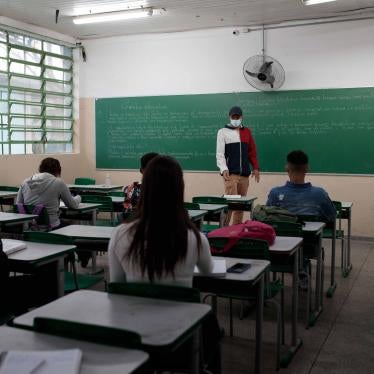
    The Philippine government is engaged in a long-running armed conflict with the insurgent New People’s Army (NPA), the armed wing of the Communist Party of the Philippines. While the NPA maintains a presence in the mountains of northern Luzon, there has only been limited military action in the Cordillera region since the 1990s. Despite the low levels of conflict, the military continues to place troops and guns in local communities. And in some cases these troops and their guns establish a home on school grounds.

  • Dec 30, 2010

    Ali Dayan Hasan, Senior Asia Researcher for Human Rights Watch, spoke with The Friday Times about violence in Balochistan.

  • Sep 29, 2010
    An increasingly brutal separatist insurgency in Thailand’s southern border provinces of Pattani, Yala, and Narathiwat has claimed more than 4,100 lives since it resumed in January 2004. The militants have committed widespread abuses, including targeted killings and numerous bombings against civilians. In response, the Thai government has imposed special security legislation and increased the number of regular and paramilitary troops to around 30,000 in the region.
  • Jul 23, 2010
    In early July 2010, India’s education ministry, the Ministry of Resource Development, wrote to the chief secretaries of the eight states affected by Maoist militants known as Naxalites, and demanded that security forces occupying government schools vacate them and that schools damaged by the Maoists be rebuilt. Seven months earlier, Human Rights Watch published "Sabotaged Schooling: Naxalite Attacks and Police Occupation of Schools in India’s Bihar and Jharkhand States," which drew attention to attacks on and occupations of schools in Bihar and Jharkhand.
  • Feb 10, 2010
    Ensuring children’s and young people’s access to education is increasingly recognized as an important part of emergency humanitarian response, particularly during mass displacement and natural disasters. Quality education in emergencies can provide lifesaving information, protect children physically, for example, from trafficking and recruitment by armed groups, and mitigate psychosocial trauma. In the long term it can promote peace and post-conflict reconstruction and help young people develop skills and qualifications to avoid poverty. Education is also a basic right.
  • Dec 10, 2009
    The government claims that the Maoists cannot be defeated just with force and that their threat must also be countered with development. If that is so then the government should remember that access to quality education for India's most marginalised children is an indispensable ingredient for progress. And if the Naxalites seek to justify their bloodshed by saying they are fighting for India's poor, then their destruction of one of the few services that can empower these communities is abhorrently perverse.
  • Dec 10, 2009
    Both the Naxalites and the government need to recognize that the continued targeting and occupation of schools will neither protect the marginalized nor secure the state. Instead, these tactics cut off tens of thousands of Indian children and huge areas of the country from their hope for a better future.
  • Oct 28, 2003
    Despite high hopes when the Taliban were driven from power, severe discrimination and sexual violence continue to plague the lives of women and girls throughout Afghanistan. Physical insecurity and de facto restrictions on freedom of movement still prevent many women and girls from going to school or to work, and from participating in the country's civic life.