Over a billion people — 15 percent of the world’s population — live with a disability. These numbers should confer power and authority in decision making about all aspects of their lives, including to HIV and AIDS. Yet people with disabilities have been largely ignored in the global response to HIV.
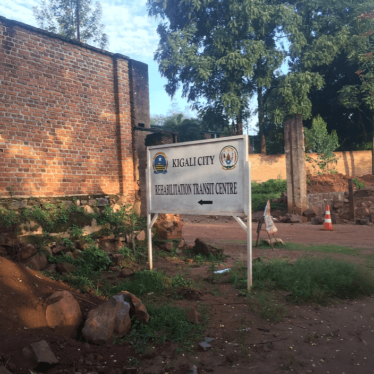
JURIST Guest Columnist Katherine Todrys of the Health and Human Rights Division of Human Rights Watch recounts her experiences researching disease transmission and living standards in African prisons. She calls for sweeping criminal justice reforms to address the systemic problems of overcrowding, human rights abuses and wrongful imprisonment.
I’ve interviewed hundreds of victims and witnesses of human rights abuses in Uganda, but I was genuinely surprised at the fear I heard recently when I met with activists in the country. “If you preach human rights, you are anti-development, an economic saboteur,” a colleague told me. “You aren’t going to talk about land, oil, and good governance. This is just the beginning, but the tensions have been accumulating.”
The African Union last month announced a plan to improve coordination to end atrocities by Joseph Kony’s Ugandan rebel group, the Lord’s Resistance Army (LRA). Efforts to arrest Kony and other LRA leaders wanted by the International Criminal Court (ICC) and to end LRA abuses are urgently needed. But that is only half of the picture; addressing the legacy of the LRA and Ugandan army abuses is the other. This history of abuse also has implications for US and other foreign support to Ugandan-led arrest operations for Kony.
In the past week, a 30-minute video about Joseph Kony and his rebel group, the Lord’s Resistance Army (LRA), has received more than 90 million internet hits. Viewers of the video now know, if they didn’t before, that he is a wanted man with much blood on his hands. For years Human Rights Watch has investigated the LRA’s horrors, from Uganda and the Democratic Republic of Congo to the Central African Republic (CAR) and South Sudan. We have visited remote massacre sites and listened to hundreds of victims and survivors who want their stories heard.
We’ve spent years investigating the horrors perpetrated by the LRA in central Africa — Uganda, Democratic Republic of Congo, Central African Republic (CAR), and South Sudan. We gathered evidence at massacre sites — wooden clubs covered in dried blood, rubber strips from bicycle tires used to tie up the victims, and freshly dug graves – and spoke to hundreds of boys and girls forced to fight for his army or held captive as sex slaves. And we’re elated that #stopKony is a trending topic on Twitter – if anyone deserves global notoriety it’s Kony.
Before he was arrested last year in Uganda on terrorism charges, Al Amin Kimathi was hailed as an outspoken activist who challenged East African governments to conduct lawful counterterrorism operations.
Worldwide, funding for HIV programs decreased last year, and UNAIDS estimates that there is a $6 billion annual gap between what is needed and what donors are prepared to provide. Until more funding is available, demanding more funds to address HIV in prisons risks robbing Peter to pay Paul. But there is a better approach.
The African Union last month announced a plan to improve coordination to end atrocities by Joseph Kony’s Ugandan rebel group, the Lord’s Resistance Army (LRA). Efforts to arrest Kony and other LRA leaders wanted by the International Criminal Court (ICC) and to end LRA abuses are urgently needed. But that is only half of the picture; addressing the legacy of the LRA and Ugandan army abuses is the other. This history of abuse also has implications for US and other foreign support to Ugandan-led arrest operations for Kony.
In the past week, a 30-minute video about Joseph Kony and his rebel group, the Lord’s Resistance Army (LRA), has received more than 90 million internet hits. Viewers of the video now know, if they didn’t before, that he is a wanted man with much blood on his hands. For years Human Rights Watch has investigated the LRA’s horrors, from Uganda and the Democratic Republic of Congo to the Central African Republic (CAR) and South Sudan. We have visited remote massacre sites and listened to hundreds of victims and survivors who want their stories heard.