• May 15, 2012

    Liberia's "big man" surely thought he'd enjoy a comfortable retirement when he left power back in 2003. But on April 26 the Special Court for Sierra Leone convicted Charles Taylor for war crimes and crimes against humanity, proving that even the most powerful aren't immune from justice

  • May 10, 2012

    Should Vladimir Putin be studying the conviction of Charles Taylor, the former Liberian president? What about Henry Kissinger? The verdict marked the first time since the post–World War II Nuremberg trials that a former head of state has been convicted by an international tribunal of war crimes and crimes against humanity. What may be of more lasting significance, however, is that Taylor was not convicted for oppressing his own people—though he did that as well—but for his material support to abusive forces in another country. In that respect, the decision speaks not just to tinpot dictators but to leaders of countries who fight proxy wars by knowingly giving client states or rebel allies the means to commit atrocities. 

  • Apr 26, 2012

    The verdict against former Liberian President Charles Taylor at the Sierra Leone Special Court has been eagerly anticipated by many in Sierra Leone. But, as is often the case with abusive leaders wielding power, bringing Taylor to justice was once considered a less than welcome development in diplomatic circles. More than a few feared at that time that bringing charges against a sitting president in the midst of a conflict would do more harm than good.

  • Mar 23, 2012
    The use of child soldiers extends far beyond Central and West Africa. Today, child soldiers are fighting in at least 14 countries, including Colombia, Myanmar (also known as Burma) and Afghanistan. In most of these cases, there have been no arrest warrants, no trials and no convictions for those responsible.
  • Sep 3, 2009
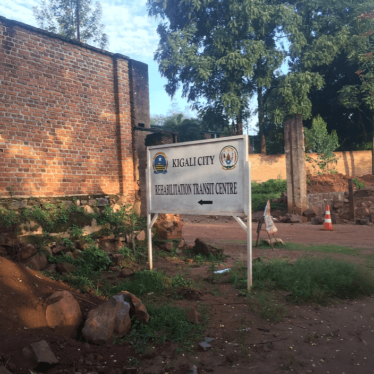
    As a newly minted investigator at the International Criminal Tribunal in Rwanda in 1995, I was not sure how people in Kigali, Rwanda's capital, would respond when I told them my line of work. In casual conversations at local restaurants I was surprised by how often I was asked if the tribunal planned to investigate crimes committed by the Rwandan Patriotic Front (RPF).
  • Jul 4, 2008
    Diplomats, judges, lawyers, human rights activists and members of nongovernmental organizations are currently marking the 10th anniversary of the completion of the treaty that established the International Criminal Court. The court's creation was an extraordinary step in extending the reach of law to those responsible for the mass slaughter of civilians and the use of rape as a weapon of war.
  • Jun 17, 2007
    The challenges judges need to rise to in trying war-crimes cases fairly and efficiently were evident at the opening of the trial of Charles Taylor, the former president of Liberia. But the significance of a trial of a former head of state associated with horrendous crimes shouldn't be obscured because the proceedings didn't open without a hitch.
  • May 24, 2006
    As the transfer of Liberia's former president to face trial in The Hague remains stalled, the EU ministerial meeting this week with the Economic Community of West African States could not be more timely.
  • Apr 10, 2006
    In the early hours of 29 March a Land-Rover with Nigerian diplomatic number plates arrived at a border post linking north-east Nigeria with Cameroon. It passed through immigration and was on its way through customs when officials realised that among the passengers was one of the world's most wanted war criminals: Charles Taylor, the former president of Liberia. For those who care about justice this was a historic moment, and one many believed could never come.
  • Mar 31, 2006
    The transfer of former Liberian president and war crimes suspect Charles Taylor to the UN-backed Special Court on Sierra Leone is more evidence that the world has become a less hospitable place for people who are accused of committing atrocities.