Reports

France’s Persistent Education Shortcomings in Mayotte

The 73-page report, “Exceptional Failure: France’s Persistent Education Shortcomings in Mayotte,” finds that Mayotte’s municipalities often impose significant and arbitrary barriers to school enrollment, including by demanding documentation not required by law. Children who are enrolled often attend overcrowded schools ill-equipped to meet their basic needs, such as access to drinking water, sanitation, nutritious food, and a safe learning environment. Children living in informal settlements known as bangas, are particularly affected, as are children from migrant families.

A boy looks over a school fence
A woman looks out of the window of a damaged building

Search

  • October 18, 2018

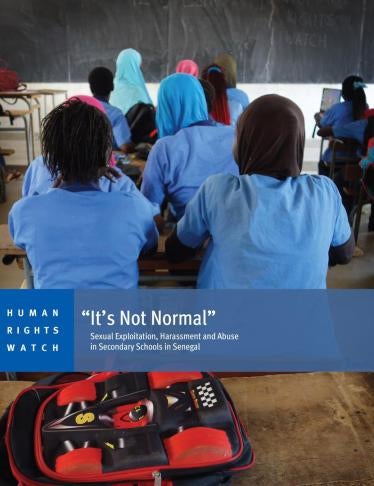
    Sexual Exploitation, Harassment and Abuse in Secondary Schools in Senegal

    This report documents abuses against female students in secondary schools, primarily by teachers and school officials. Human Rights Watch found cases of teachers who abuse their authority by engaging in sexual relations with students in exchange for money, good grades, food, or items such as mobile phones and new clothes. 

    map content
    Cover
  • July 18, 2018

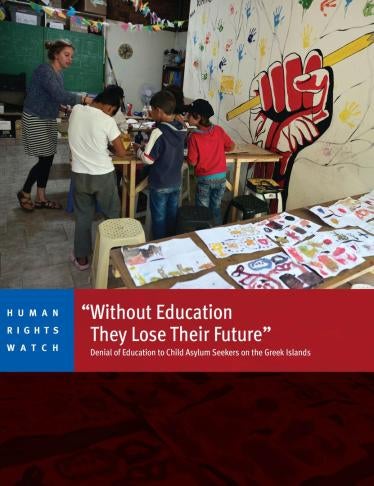
    Denial of Education to Child Asylum Seekers on the Greek Islands

    This report found that fewer than 15 percent of more than 3,000 school-age asylum-seeking children on the islands were enrolled in public school at the end of the 2017-2018 school year, and that in government-run camps on the islands, only about 100 children, all preschoolers, had access to formal education. The asylum-seeking children on the islands are denied the educational opportunities they would have on the mainland. Most of those who were able to go to school had been allowed to leave the government-run camps for housing run by local authorities and volunteers.

    map content
    video content
    Cover
  • June 14, 2018

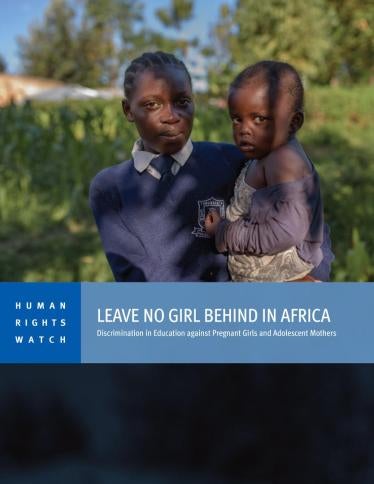
    Discrimination in Education against Pregnant Girls and Adolescent Mothers

    This report draws on extensive Human Rights Watch research on the rights of girls in Africa. Human Rights Watch examined national laws, policies, and practices that block or support pregnant girls’ and adolescent mothers’ right to primary and secondary education in all African Union (AU) member countries. Africa has one of the highest rates of adolescent pregnancy in the world. African governments should urgently adopt laws and policies to ensure that schools allow and support pregnant girls to stay in school and to return to school after having a child.

    Cover of the AU report
  • October 17, 2017

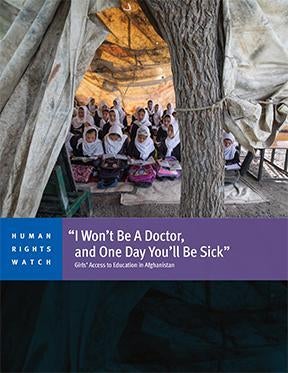
    Girls’ Access to Education in Afghanistan

    This report describes how, as security in the country worsens and international donors disengage from Afghanistan, progress made toward getting girls into school has stalled. It is based on 249 interviews in Kabul, Kandahar, Balkh, and Nangarhar provinces, mostly with girls ages 11 to 18 who were not able to complete their education.

    map content
    Cover for Afghanistan Report
  • September 14, 2017

    Lack of Transparency in Donor Funding for Syrian Refugee Education

    This report tracks pledges made at a conference in London in February 2016. Human Rights Watch followed the money trail from the largest donors to education in Lebanon, Turkey, and Jordan, the three countries with the largest number of Syrian refugees, but found large discrepancies between the funds that the various parties said were given and the reported amounts that reached their intended targets in 2016. The lack of timely, transparent funding contributed to the fact that more than 530,000 Syrian schoolchildren in those three countries were still out of school at the end of the 2016-2017 school year.

    Cover of the Children's Rights report on Syrian Refugees in Turkey, Lebanon, and Jordan
  • July 11, 2017

    Government Program to Protect Talibé Children in Senegal Falls Short

    This report examines the successes and failings of the first year of the new government program to remove children forced to beg from the streets. The report documents the ongoing abuses faced by many talibé children in Dakar and four other regions during – and despite – the program, including pervasive forced begging, violence and physical abuse, chaining and imprisonment, and sexual abuse. Human Rights Watch and the PPDH also assessed the ongoing challenge of ensuring justice for these abuses.

    photo gallery
    map content
    Cover of the Senegal report
  • June 21, 2017

    Discrimination Against LGBT Students in the Philippines

    This report documents the range of abuses against lesbian, gay, bisexual, and transgender (LGBT) students in secondary school. It details widespread bullying and harassment, discriminatory policies and practices, and an absence of supportive resources that undermine the right to education under international law and put LGBT youth at risk.

    map content
    video content
    Cover of the Philippines Report
  • June 15, 2017

    How Health and Education Pay the Price for Self-Dealing in Equatorial Guinea

    This report reveals that the government spent only 2 to 3 percent of its annual budget on health and education in 2008 and 2011, the years for which data is available, while devoting around 80 percent to sometimes questionable large-scale infrastructure projects. The report also exposes how, according to evidence presented in money laundering investigations carried out by several countries, senior government officials reap enormous profits from public construction contracts awarded to companies they fully or partially own, in many cases in partnership with foreign companies, in an opaque and noncompetitive process. 

    map content
    video content
    Cover of the Equatorial Guinea report
  • March 27, 2017

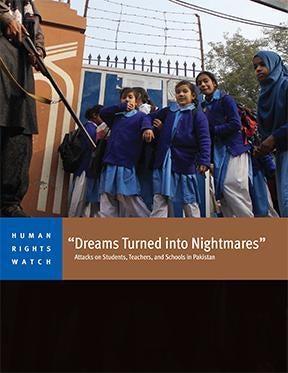
    Attacks on Students, Teachers, and Schools in Pakistan

    This report is based on 48 interviews with teachers, students, parents, and school administrators in the Pakistani provinces of Punjab, Sindh, and Khyber Pakhtunkhwa (KP). It documents attacks by militants from January 2007 to October 2016 that have destroyed school buildings, targeted teachers and students, and terrorized parents into keeping their children out of school. These attacks have often been directed at female students and their teachers and schools, blocking girls’ access to education. The report also examines occupation of educational institutions by security forces, political groups, and criminal gangs.

    map content
    video content
    Cover of Pakistan Report
  • March 23, 2017

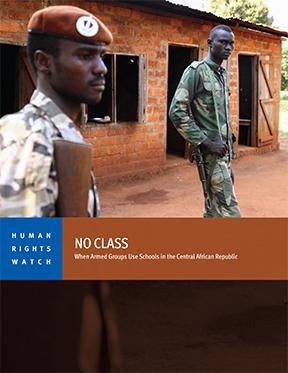
    When Armed Groups Use Schools in the Central African Republic

    This report documents how armed groups, and even soldiers from the United Nations peacekeeping mission, known as MINUSCA, have used school buildings as bases or barracks, or based their forces near school grounds. The government and the peacekeeping mission should increase protection for students and schools in areas of the country affected by armed conflict, Human Rights Watch said.


    photo gallery
    map content
    video content
    Cover of the Central African Republic report
  • March 20, 2017

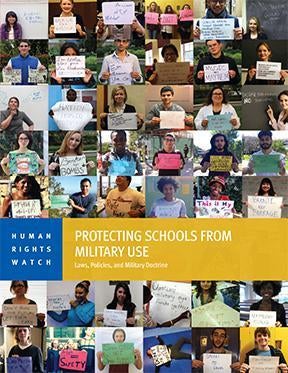
    Law, Policy, and Military Doctrine

    This report contains examples of law and practice from 40 countries, from Afghanistan to Yemen, instituting some level of protection for schools or universities from military use. Many of the examples come from countries currently or recently involved in armed conflict, indicating that governments and armed forces are recognizing the negative consequences of military use of schools and have found practical solutions to deter such use. Examples of these measures can be found throughout the world, in legislation, court decisions, and military policies and doctrine. Governments should adopt and follow protections for schools, Human Rights Watch said.

    video content
    Cover of the Safe Schools report
  • February 22, 2017

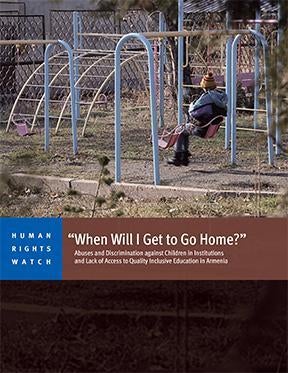
    Abuses and Discrimination against Children in Institutions and Lack of Access to Quality Inclusive Education in Armenia

    This report documents how thousands of children in Armenia live in orphanages, residential special schools for children with disabilities, and other institutions. They often live there for years, separated from their families. More than 90 percent of children in residential institutions in Armenia have at least one living parent. Human Rights Watch also found that the Armenian government is not doing enough to ensure quality, inclusive education for all children. Inclusive education involves children with disabilities studying in their community schools with reasonable support for academic and other achievement.

    video content
    Cover of the Armenia Report
  • February 14, 2017

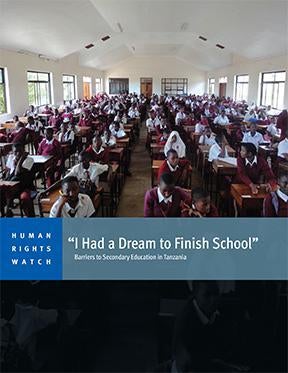
    Barriers to Secondary Education in Tanzania

    This report examines obstacles, including some rooted in outmoded government policies, that prevent more than 1.5 million adolescents from attending secondary school and cause many students to drop out because of poor quality education. The problems include a lack of secondary schools in rural areas, an exam that limits access to secondary school, and a discriminatory government policy to expel pregnant or married girls.

    photo gallery
    map content
    Cover for Tanzania Education Report
  • August 16, 2016

    Barriers to Education for Syrian Refugee Children in Jordan

    This report describes Jordan’s generous efforts to enroll Syrian children in its public school system, which was struggling with capacity and quality issues even before refugees began to arrive from Syria. But Human Rights Watch also documented barriers to education, including asylum-seeker registration requirements that many Syrians cannot meet; punishments for refugees working without permits that contribute to poverty, child labor, and school drop-outs; and a bar on enrollment for children who have been out of school for three or more years. Jordan has eased some restrictions, but authorities should expand efforts to realize the fundamental right to education for all Syrian children, Human Rights Watch said.

    map content
    video content
    Cover for Jordan Report
  • July 19, 2016

    Barriers to Education for Syrian Refugee Children in Lebanon

    This report documents the important steps Lebanon has taken to allow Syrian children to access public schools. But Human Rights Watch found that some schools have not complied with enrollment policies, and that more donor support is needed for Syrian families and for Lebanon’s over-stretched public school system. Lebanon is also undermining its positive education policy by imposing harsh residency requirements that restrict refugees’ freedom of movement and exacerbate poverty, limiting parents’ ability to send their children to school and contributing to child labor. Secondary school-age children and children with disabilities face particularly difficult obstacles.

    photo gallery
    video content
    Cover image for Lebanon Report