

• Mar 7, 2013
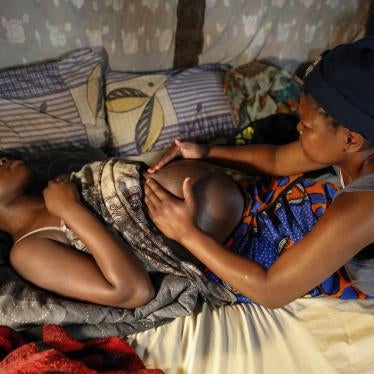
    The government of South Sudan should increase efforts to protect girls from child marriage. The country’s widespread child marriage exacerbates South Sudan’s pronounced gender gaps in school enrollment, contributes to soaring maternal mortality rates, and violates the right of girls to be free from violence, and to marry only when they are able and willing to give their free consent.
  • Oct 10, 2012
    As the world celebrates the first International Day of the Girl Child on October 11, 2012, eliminating child marriages should be a key political priority for governments to protect the rights of girls and women.

Reports

Women’s Status in the Family and Legal Status

  • Mar 18, 2013
    Kimberly N. "leaned in" to her career for years. As a vice president of a large charitable organization, she earned high praise and enjoyed her work. When Kimberley got pregnant, she negotiated a six-week maternity leave, and looked forward to resuming work. Things did not go according to plan.
  • Mar 7, 2013
    The government of South Sudan should increase efforts to protect girls from child marriage. The country’s widespread child marriage exacerbates South Sudan’s pronounced gender gaps in school enrollment, contributes to soaring maternal mortality rates, and violates the right of girls to be free from violence, and to marry only when they are able and willing to give their free consent.
  • Feb 18, 2013
    According to December 2011 figures from the Centers for Disease Control and Prevention, one in four women in the U.S. has been a victim of severe physical violence by an intimate partner in her lifetime. Nearly one in five has been raped.
  • Feb 6, 2013
    Two years ago, the signs were clear. My mother, with Alzheimer's, heart failure, and kidney failure, was not going to live long. My brothers and I took time off work for medical appointments and hospice care. I worried about her comfort, about how my dad would cope and how the grandkids would feel.
  • Dec 26, 2012
    Successive governments in Bangladesh have allowed harsh, discriminatory personal laws to persist. After a year of interviews, Aruna Kashyap finds women trapped in abusive marriages or propelled into poverty after divorce or separation.
  • Oct 11, 2012

    The first UN International Day of the Girl, designed to promote education for young women everywhere, is the perfect opportunity to finally stamp out child marriage, writes Gauri van Gulik from Human Rights Watch.

  • Oct 10, 2012
    As the world celebrates the first International Day of the Girl Child on October 11, 2012, eliminating child marriages should be a key political priority for governments to protect the rights of girls and women.
  • Oct 3, 2012
    Bangladesh's family laws for Muslims, Hindus and Christians, some dating to the 19th century, grant men far greater powers than women in marriage and accessing divorce. They do not recognise women's many contributions to marital homes, husbands' businesses and other family property. They give virtually no guidance to courts for determining maintenance amounts when marriages break down. Yet these laws have remained frozen in time for decades, and in some cases more than a century.
  • Oct 1, 2012
    When Namrata, a Bangladeshi Hindu, asked for a glass of water, her husband instead gave her a glass of acid. Today, with her mouth and throat destroyed, she eats through a feeding tube. Having already spent her life savings, her husband disappeared after the attack. Yet Namrata cannot legally divorce her husband due to Bangladesh’s archaic Hindu family laws.
  • Sep 19, 2012
    Human Rights Watch welcomes the Universal Periodic Review report on Tunisia, which includes recommendations to improve the situation of human rights in a context of democratic transition. Although Tunisia’s government accepted many of these recommendations, it also rejected several critical ones aimed at preventing a sliding back into authoritarianism.