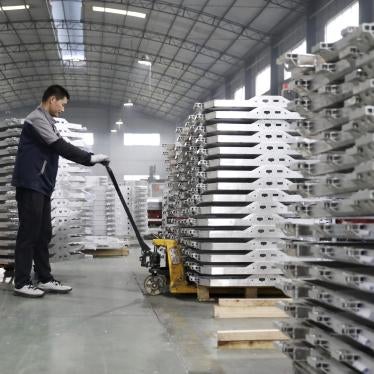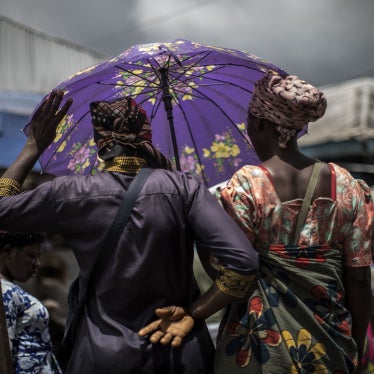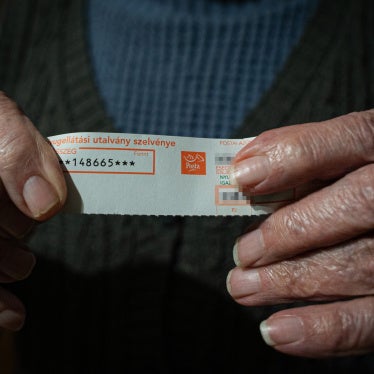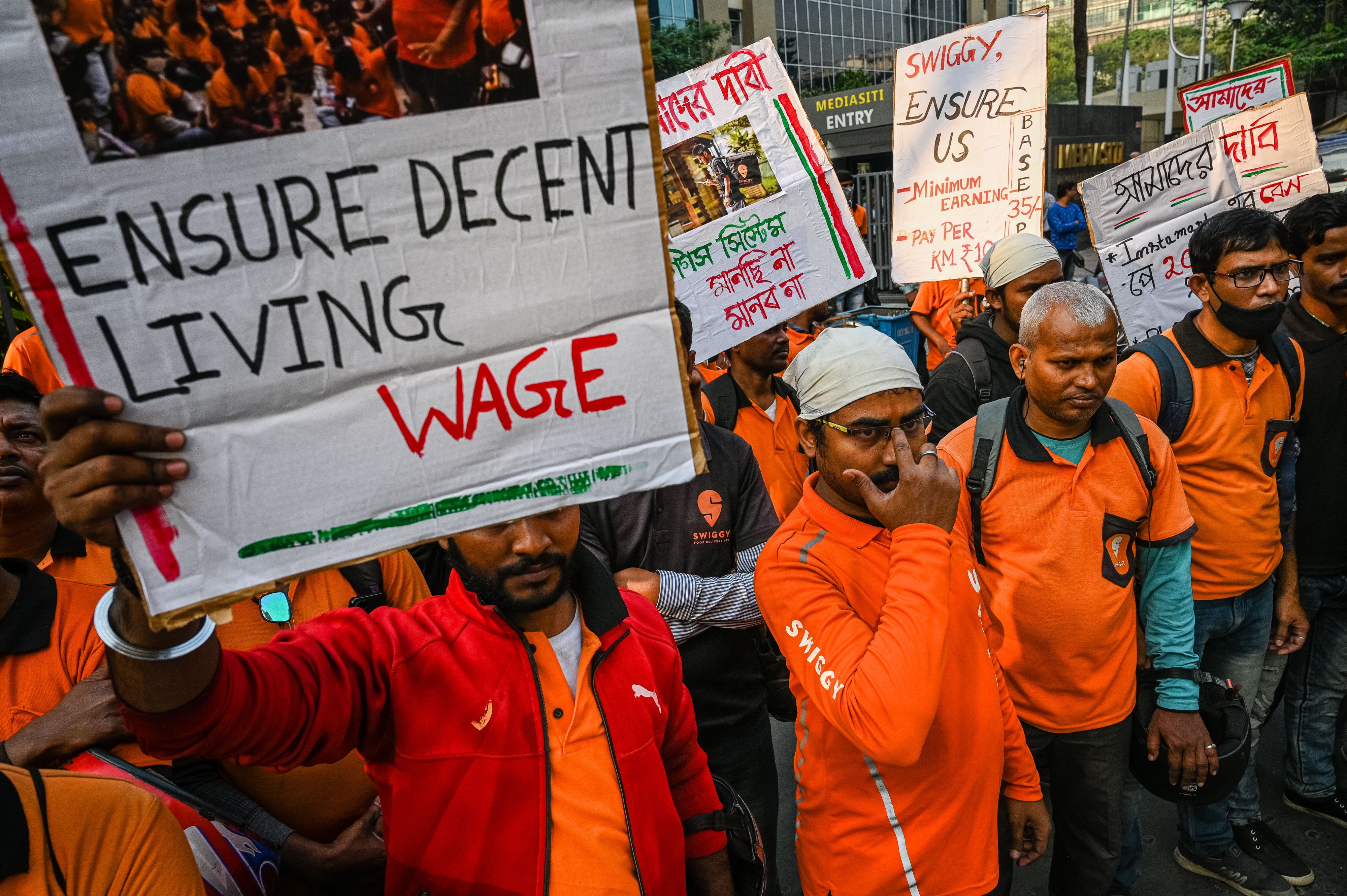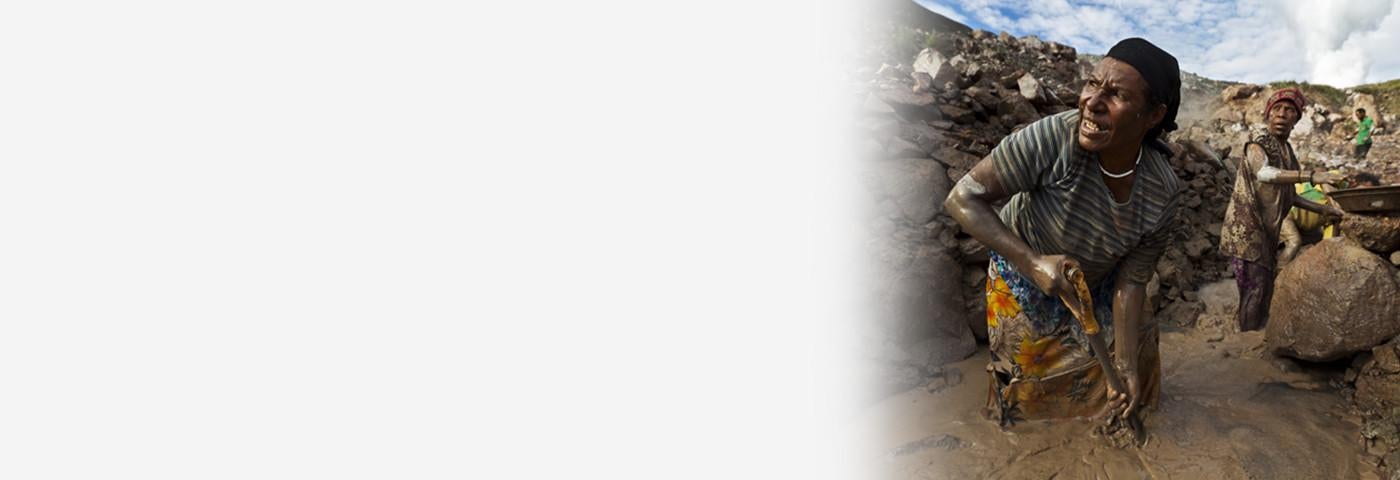


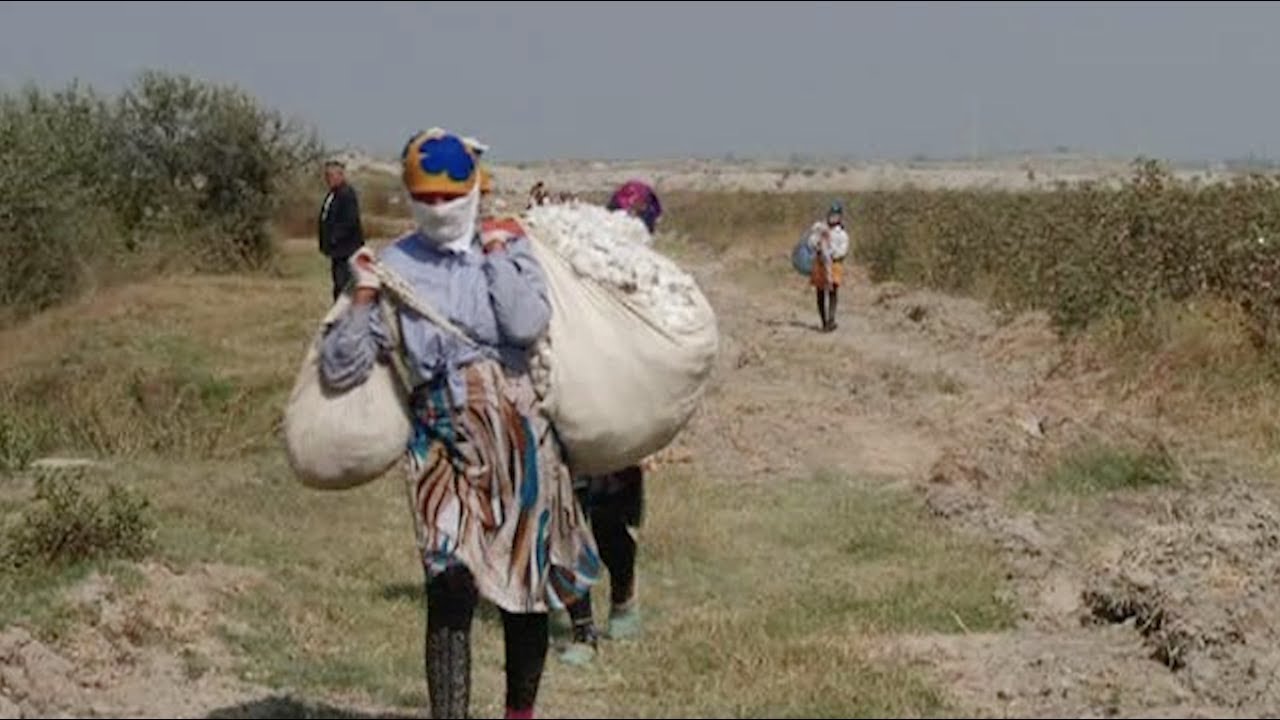
• Whether it is an oil company that relies on abusive private security forces, a tech company that censors or spies on users at the behest of a repressive government, or a corrupt government that siphons off the wealth of its nation, businesses and other economic activities can have negative impacts on people’s rights. Human Rights Watch investigates these and other situations to expose the problems, hold institutions accountable, and develop standards to prevent these activities. This work has included research and advocacy on human rights problems caused by corruption in resource-rich countries such as Equatorial Guinea, Angola, Nigeria, and Burma.
  • Arkansas state flag.
    Hundreds of Arkansas tenants face criminal charges every year because they don’t pay their rent on time and then fail to vacate their homes quickly enough. The Arkansas state legislature should repeal the abusive law that allows for these prosecutions, which has no parallel in any other US state.

Featured Content

  • Without Rules: A Failed Approach to Corporate Accountability

    By Christopher Albin-Lackey, senior researcher

    Some of the most powerful and sophisticated actors on the world stage are companies, not governments. In 2011 alone, oil and gas behemoth ExxonMobil generated revenues of US$467 billion—the size of Norway’s entire economy. Walmart, the world’s third-largest employer with more than 2 million workers, has a workforce that trails only the militaries of the United States and China in size.

    Many global businesses are run with consideration for the well-being of the people whose lives they touch. But others—whether through incompetence or by design—seriously harm the communities around them, their workers, and even the governments under which they work.

    Read the full essay >>

Reports

Business

  • Apr 29, 2013

    A decision by the US Supreme Court could severely limit the use of a federal statute that for more than 30 years has permitted foreign victims of atrocities abroad to obtain civil remedies in federal courts and has denied rights abusers a safe haven in the United States. It undercuts case law that had made the US courts a mainstay for redress for victims of serious human rights abuses.

  • Apr 19, 2013
    The World Bank’s “vision” statement will be undermined if it fails to recognize the importance of human rights, nine organizations warned. The human rights and development groups called on President Jim Kim to make a firm commitment to respect, protect, and fulfill human rights in all of its activities.
  • Apr 19, 2013
    The World Bank Group should uphold human rights as it works to create a world free of poverty and economic exclusion, Human Rights Watch said in a letter to the Group’s president, Dr. Jim Kim.
  • Apr 19, 2013
    Human Rights Watch recognizes that the World Bank operates in countries and environments where there are many human rights challenges. A commitment to human rights would greatly enhance the impact of the Bank’s efforts to reduce poverty and promote inclusive and sustainable development.
  • Mar 25, 2013
    The United Nations Post-2015 Development Agenda should be grounded in human rights, Human Rights Watch said in a letter to the UN High Level Panel of Eminent Persons on the Post-2015 Development Agenda.
  • Mar 24, 2013
    Human Rights Watch welcomes the High-level Panel’s efforts to advance a Post-2015 Development Agenda that seeks to learn from and build on the progress achieved through the Millennium Development Goals (MDGs). The Post-2015 consultations have revealed a strong international consensus for placing human rights at the center of the Post-2015 framework. The human rights framework unites the core aims of economic development, equality, and environmental sustainability, and its use will ensure accountability for the new agenda by anchoring it in existing international human rights obligations.
  • Mar 18, 2013
    The World Bank’s board should support an internal investigation into allegations of abuse linked to a World Bank project in Ethiopia. The Inspection Panel, the World Bank’s independent accountability mechanism, has recommended an investigation into whether it has violated its policies in a project linked to the Ethiopian government’s resettlement program, known as “villagization.”
  • Feb 20, 2013
    Workers in the copper mining sector in Zambia remain vulnerable to abuse. New Human Rights Watch research found that the government of President Michael Sata, who promised to prioritize labor rights when he took office in September 2011, has made some improvements in supporting the oversight of the mines, but there remains inadequate enforcement of national labor laws designed to protect workers’ rights.
  • Feb 18, 2013
    Latin American and African officials participating in a cross-regional meeting in Equatorial Guinea should press their host, President Teodoro Obiang Nguema Mbasago, to undertake serious human rights and democratic reforms ahead of planned parliamentary elections in May, 2013. President Dilma Rousseff of Brazil, among other officials, is anticipated to attend the Africa-South America Summit scheduled for February 20-23.
  • Feb 13, 2013
    The Arab uprisings have been a poignant reminder of how the Internet can promote free expression and assembly, but also how governments can try abuse it. The medium used by demonstrators to organize protests and bring medical supplies to Tahrir Square, for example, was also used by the government to pinpoint human rights defenders for arrest, harassment, and even torture.