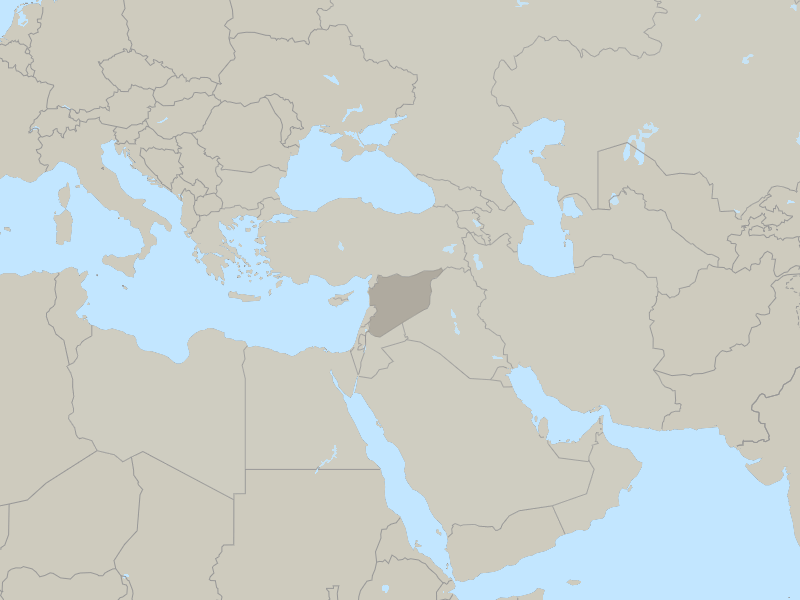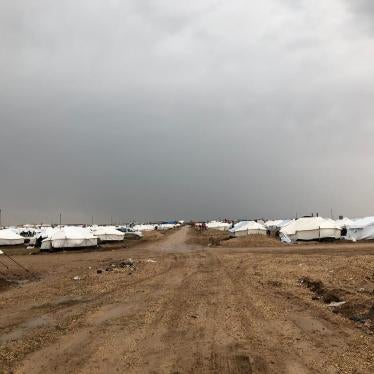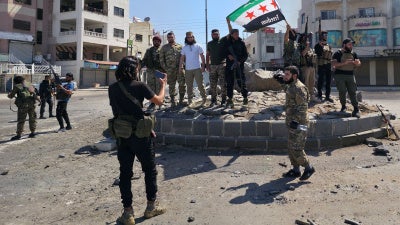
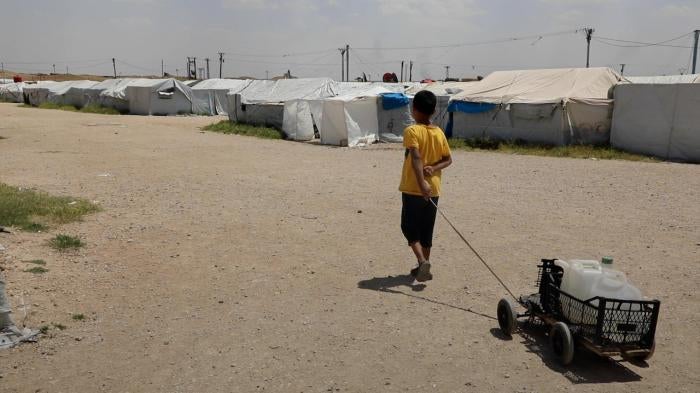

• Syria responded to months of peaceful protests with brutal force involving indiscriminate air and artillery assaults on residential areas and apparent targeting of civilians, and torture, which constitute war crimes and crimes against humanity, pushing the political confrontation into an internal armed conflict. The opposition is increasingly conducting offensive operations. Some opposition forces have carried out serious abuses like kidnapping, torture, and what appear to be extrajudicial executions. The spread and intensification of fighting have led to a dire humanitarian situation with hundreds of thousands internally displaced or seeking refuge in neighboring countries.

  • The BRICS countries should call for an end to indiscriminate attacks on civilians and civilian-populated areas in Syria, and insist that cluster munitions and incendiary weapons should not be used. Brazil, Russia, India, China, and South Africa are meeting in Durban for the annual BRICS summit on March 26 and 27, 2013.

Reports

  • Arbitrary Arrests, Torture, and Enforced Disappearances in Syria’s Underground Prisons since March 2011
  • War Crimes in Northern Idlib during Peace Plan Negotiations
  • Summary Executions by Syrian Security Forces and Pro-Government Militias

Syria

  • Apr 2, 2013

    Since the beginning of the uprising in Syria, Human Rights Watch has made numerous trips to the northern part of the country from across the Turkish border. I was there in December for four days, visiting several towns in the countryside north and east of Aleppo City. Some of my colleagues went to Aleppo in February; we have also conducted research trips in the last year in Idlib and Latakia provinces. The Syrian opposition controls the ground in these areas, and is struggling, with growing but still insufficient international help, to provide for the civilian population. The Syrian government, meanwhile, still controls the skies.

  • Mar 30, 2013
    The Chinese call it jin zhuan, or golden brick. The Russians have suggested calling it briuki, an acronym meaning trousers in Russian. And what about the ambiguous S? It originally was just a plural for the emerging economies of Brazil, Russia, India, and China, places where a Goldman Sachs analyst was urging greater investment. Now it stands for South Africa, which joined in 2010 despite having an economy roughly on the order of China’s sixth-largest province.
  • Mar 26, 2013

    Official communiqués on the BRICS summit in Durban are promising new initiatives on trade, economic development and technical co-operation. But Russia wants more from its partners than just trade. With concern rising in Europe over the worst crackdown on Russian democracy since the Soviet Union collapsed more than 20 years ago, Vladimir Putin is coming to Africa to find supporters of its world view.

  • Mar 26, 2013
    The BRICS countries should call for an end to indiscriminate attacks on civilians and civilian-populated areas in Syria, and insist that cluster munitions and incendiary weapons should not be used. Brazil, Russia, India, China, and South Africa are meeting in Durban for the annual BRICS summit on March 26 and 27, 2013.
  • Mar 22, 2013

    During his visit Friday to Jordan, there’s little doubt President Obama will praise it for its hospitality toward some 350,000 Syrian refugees. While praise and support for Jordan’s reception of many Syrian refugees is deserved, the president should not give Jordan a free pass when it comes to its forcible returns of Palestinian refugees to Syria.

  • Mar 22, 2013
    Brics should call for the Syrian government to permit the delivery of humanitarian aid across its borders, including from Turkey
  • Mar 21, 2013
    Jordan is routinely and unlawfully rejecting Palestinian refugees, single males, and undocumented people seeking asylum at its border with Syria, said Human Rights Watch and Harvard Law School’s International Human Rights Clinic (the Harvard Clinic).
  • Mar 16, 2013

    Syrian forces’ use of cluster munitionsin residential areas is causing mounting civilian casualties. An initial review of available information has identified at least 119 locations across Syriawhere at least 156 cluster bombs have been used in the past six months.  

  • Feb 26, 2013

    The Syrian government launched at least four ballistic missiles that struck populated areas in the city of Aleppo and a town in Aleppo governorate during the week of February 17, 2013, Human Rights Watch said today. The attacks killed more than 141 people, including 71 children, and caused immense physical destruction.

  • Feb 22, 2013
    President Francois Hollande of France should urge President Vladimir V. Putin of Russia to reverse his administration’s crackdown on civil society and erosion of human rights when the two leaders meet on February 28, 2013.