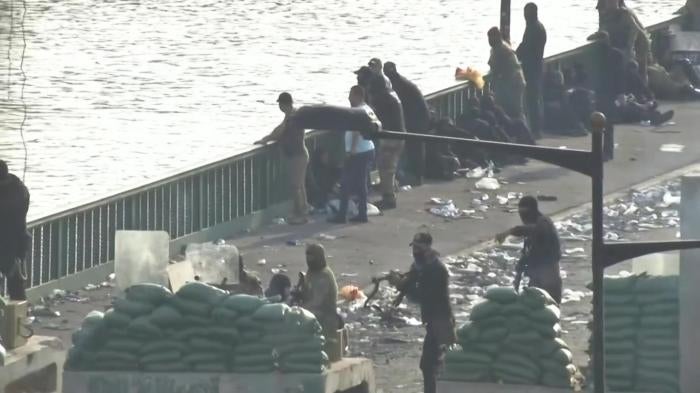
• Since the Arab Spring began, Iraqi security forces have clamped down violently against peaceful demonstrators who demanded better services and an end to corruption. Since late 2011, authorities have curtailed demonstrations by flooding Baghdad’s weekly protests with pro-government supporters and undercover security agents. Iraq remains exceptionally dangerous for journalists, with security forces routinely threatening or even beating and arresting media workers. Authorities also confiscate or destroy their equipment. Armed groups kill hundreds of civilians and security forces every year. Abusers are rarely brought to justice for violating the rights of Iraq's most vulnerable citizens – women and girls, minorities, members the LBGT community, and detainees.

  • Iraqi authorities should investigate allegations of torture and unfair trials of Palestinians in Iraqi prisons.A recently concluded conference in Baghdad attended by the Iraqi president, Jalal Talabani, and the Palestinian president, Mahmoud Abbas, addressed concerns about Palestinians held in Israeli jails, but did not examine allegations of serious abuses against Palestinians in Iraqi custody.

Featured Content

Reports

Iraq

  • Dec 13, 2012
    Iraqi authorities should investigate allegations of torture and unfair trials of Palestinians in Iraqi prisons.A recently concluded conference in Baghdad attended by the Iraqi president, Jalal Talabani, and the Palestinian president, Mahmoud Abbas, addressed concerns about Palestinians held in Israeli jails, but did not examine allegations of serious abuses against Palestinians in Iraqi custody.
  • Dec 9, 2012
    Iraqi authorities should immediately stay the execution of a Yemeni national who was 16 at the time of his alleged offense.
  • Dec 9, 2012
    Iraqi authorities should stay the execution of an imprisoned Libyan national, Adel Shalani, and provide information on his case.
  • Oct 14, 2012
    The Iraqi and Turkish authorities should immediately re-open border crossings where more than 10,000 Syrians have been stranded for weeks and allow all those wishing to seek asylum to cross without delay.
  • Oct 13, 2012
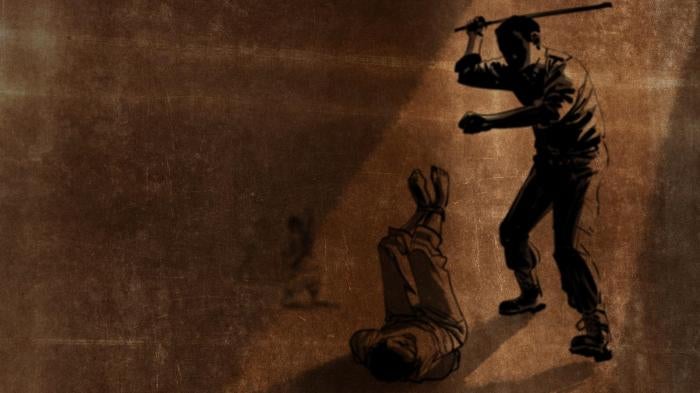
    The Erbil Appellate Court should immediately set aside the October 7, 2012, conviction of an independent journalist who reported on alleged corruption in the regional government’s security agency. Kurdistan Regional Government (KRG) authorities should conduct a prompt, thorough, and impartial investigation into allegations that the journalist, Karzam Karim, was beaten and tortured in detention and that his lawyer was threatened by security agency officials.
  • Oct 9, 2012
    Serious questions about whether Iraq’s justice system meets international fair trial standards highlight the urgent need for a moratorium on capital punishment.
  • Aug 31, 2012
    Iraq carried out at least 26 executions on August 27 and 29, 2012, but provided few details about the identity of those executed or the charges against them. The Justice Ministry has announced 96 executions so far in 2012.
  • Aug 29, 2012
    The practice of female genital mutilation continues in the Kurdistan region of Iraq a year after a landmark law banning it went into effect because the Kurdistan Regional Government has not taken steps to implement the law. The Family Violence Law, which went into effect on August 11, 2011, includes several provisions to eradicate female genital mutilation (FGM), recognized internationally as a form of violence against women.
  • Aug 29, 2012
    Turkey, Iraq, Jordan, and Lebanon have mostly opened their borders to more than 200,000 refugees from neighboring Syria, but in the past week some officials in these countries have said they are reaching their limit and may soon close their borders.
  • Jul 11, 2012
    A new draft law on information technology crimes would restrict free speech in violation of international law and poses a severe threat to journalists, whistleblowers, and peaceful activists, Human Rights Watch said in a report released today. The pending law includes vague provisions that would allow Iraqi authorities to harshly punish expression they decide constitutes a threat to governmental, social, or religious interests. The Council of Representatives, the parliament, should not approve the law without revising it to remove the rights restrictions.