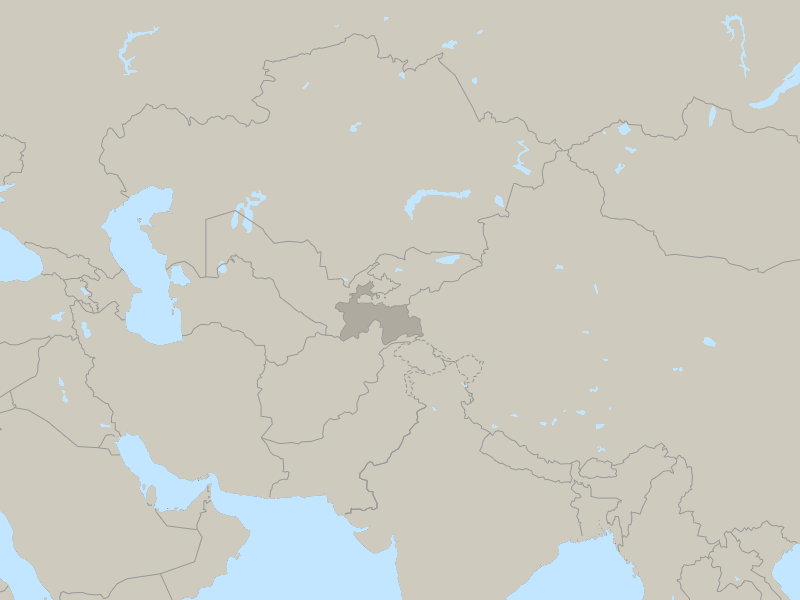
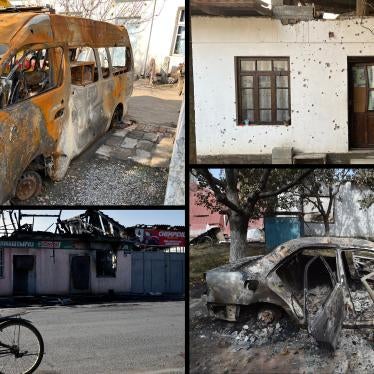
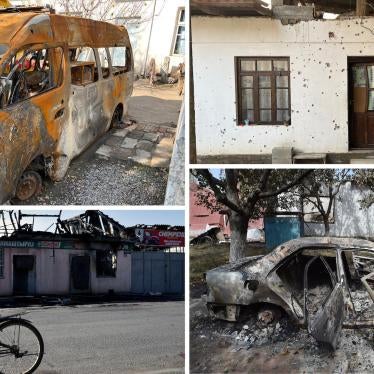
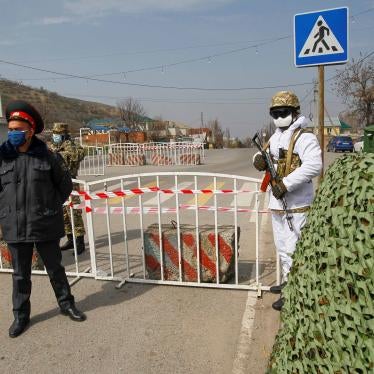
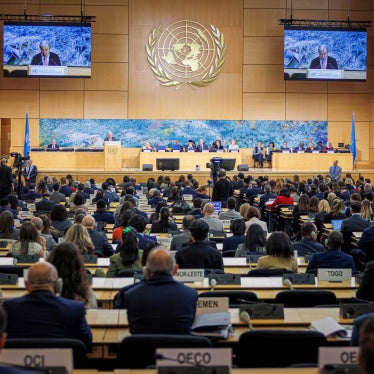
In September 2022, Kyrgyzstan and Tajikistan fought an intense four-day conflict along their common border. Around 50 civilians were killed and at least 121 injured. More than 130,000 people were displaced from their homes.
VO: The border between Kyrgyzstan and Tajikistan has been disputed since the dissolution of the Soviet Union in 1991. Periodic, small-scale clashes have erupted there over access to land and water between local populations and at times with border guards.
During those four days in September 2022, the countries deployed their forces, who launched indiscriminate and disproportionate attacks – attacks that could amount to war crimes. The laws of war require Kyrgyzstan and Tajikistan to protect civilians during armed conflict.
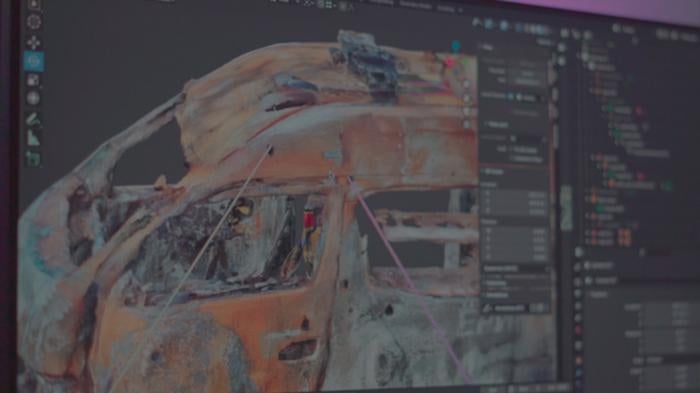
Human Rights Watch traveled to both sides of the border to piece together what happened. We spoke with witnesses, analyzed satellite imagery, reviewed photos and videos, and built 3D models.
Date: September 14, 2022
Clashes broke out between border guards. People started to flee.
Date: September 16, 2022
KYRGYZSTAN
Time: 5 a.m. (TJ) / 6 a.m. (KG)
VO: Jakyp Meldikulov,a 55-year-old retiree, from Kyrgyzstan fled his village of Dostuk after hearing news of violence at the border.
Jakyp Meldikulov: Kyrgy Resident - On the 16th, after getting up at 6 a.m., we prepared and fled by car. We drove for 1 km, then realized we forgot something. We returned to get it. We did not manage to reach our home; shooting had started. We were turned back [by Kyrgyz forces] and drove away.
VO: Heavy fighting between forces of the two countries broke out. Over the next hours, it spread across multiple locations along the border.
TAJIKISTAN
Time: 6:20 a.m. (TJ) / 7:20 a.m. (KG)
VO: Human Rights Watch investigated an attack by Kyrgyz forces near the village of Chorbog, where two Tajik ambulances and a vehicle carrying civilians came under fire. The attack killed ten civilians, including four children and two medical workers, and injured six more.
By analyzing the movement of the vehicles, their final positions, and the damage they sustained, the 3D model helped us determine that the two ambulances were hit by shots fired from around the Kyrgyz village of Dostuk (DOS-took), about 110 meters away.
TAJIKISTAN
Time: 7:30 a.m. (TJ) / 8:30 (KG)
VO: In a separate incident, the Tajik town of Khistevarz was hit by shelling between 7:30 and 8 a.m. 59-year-old Savrineso Hojiboeva was killed and four of her relatives were severely injured when a shell fell inside the family’s courtyard, in what appears to have been an indiscriminate attack.
Rahimova Fayziniso: Savrineso’s sister: My two grandchildren were outside, my son and 4 to 5 other men were also outside when suddenly there was a big explosion, and I thought that the house had collapsed on me. There was smoke everywhere. Electrical wires were broken.
I began to call my son, and he says, ‘Mom, stand still. Aunt fell.’ I ask. "Which aunt?" My brain did not understand anything. I didn't even realize she was dead.
VO: Heavy fighting continued along the border throughout the day. Tajik forces overwhelmed Kyrgyz forces and took control of multiple Kyrgyz villages.
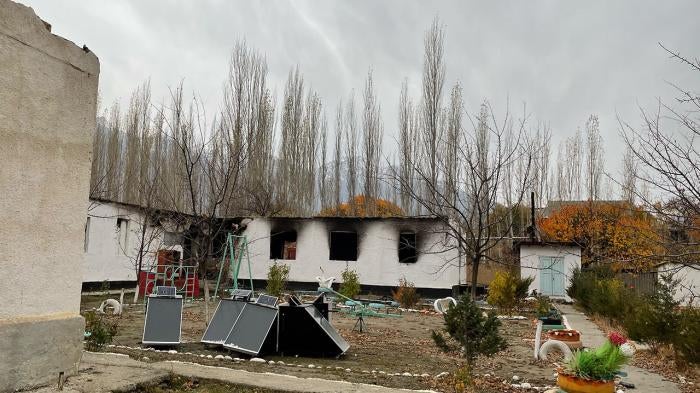
People in civilian clothes speaking Tajik carried out widespread looting under the watch of Tajik forces, while hundreds of homes and other types of civilian infrastructure, such as kindergartens, schools, and medical facilities, were set on fire in what may have been an attempt to clear the area of its population.
KYRGYZSTAN
Time: Before 1:30 p.m. (TJ) / 2:30 p.m. (KG)
VO: Sometime before 2:30 p.m., Myrzakmat Hamidov, a 72-year-old retired man from Kyrgyzstan, was killed in his garden in Borboduk. The village was under the control of Tajik forces at the time.
Satkiniso Ahmedova: Myrzakmat’s wife - In the morning [my husband] took our grandchild to school, children were returned home on the way due to the conflict. He came back, I told him that we need to flee. He said, “I am an old man, they took everything from me, what else can they take now?”. He came and stayed here [in the garden]. Then I entered the neighbor’s basement and sat there. After 30 minutes, my daughter called me saying that her dad, who had been answering her calls, was not answering any more. And then I came running. As I came, my husband was lying there [on the ground]. Somebody had covered him.
Time: 4 p.m. (TJ) / 5 p.m. (KG)
VO: Around 5 p.m., in the central square in Ovchi Kal’acha, a Tajik town on the border, Kyrgyz forces used a laser-guided bomb with blast fragmentation effects near Tajik forces, minutes after they had arrived. Dozens of civilians were also in the square at the time.
We used 3D modelling to reconstruct Immediate aftermath of the strike, which killed at least 10 civilians and injured 13 others – mostly men who had gathered outside a local mosque after a funeral. We identified the bomb and mapped out the positions of the military vehicles and the civilian victims and found that the attack was disproportionate and apparently indiscriminate .
Zoidbek Dadobekov: Tajik Resident It was about five o'clock. At that very moment, they struck from the sky. The crowding and stampede began.
VO: Zoidbek Dadobekov was outside the entrance of the mosque, about 10 meters from the impact site, when the bomb struck. The first thing I saw was my bloodied leg. Blood was flowing down the bottom of my leg. And the consequences of this, for example for me personally, is that I became disabled. My life is destroyed. I've been in bed for two months now. The future of my children, instead of studying, is migrant labor. What else can it be? The burden of their life is now on their shoulders.
Date: September 17, 2022
VO: Looting and burning continued in some Kyrgyz villages while Tajik forces had control. By the end of the day, they withdrew.
Jakyp Meldikulov: Kyrgyz resident When we returned... the walls were still standing, we saw the burns. There was nothing left inside the [houses]. There was no shelling; we saw that [the houses] were burned down on purpose. We lost property that we had been working to procure for so many years. It’s hard.
Rec 1: The two countries should investigate these serious violations, including apparent war crimes by their respective forces, hold those responsible to account. They should also provide redress to the victims and take steps to prevent violations occurring in future.
Zoidbek Dadobekov: I do not know why this war is going on, what is the reason. There have already been several wars, what is the use of this? Only people die.
Rec 2: Any border demarcation deal should respect the rights of local populations, including to property, education, adequate housing, and water.