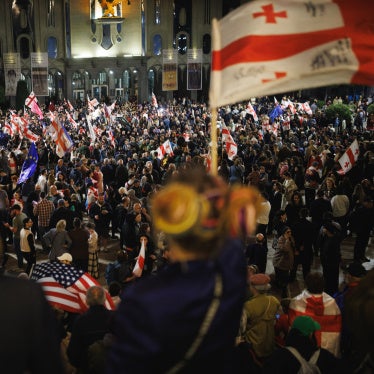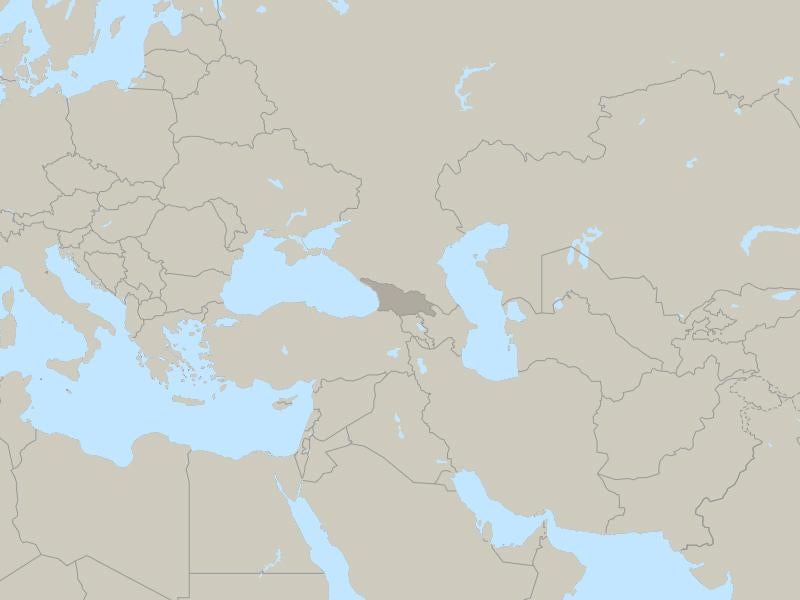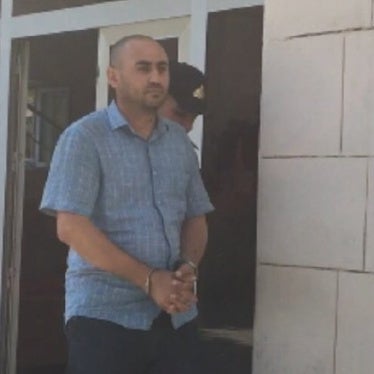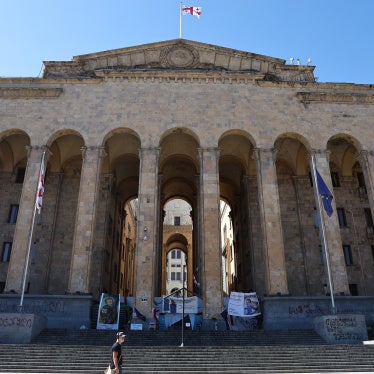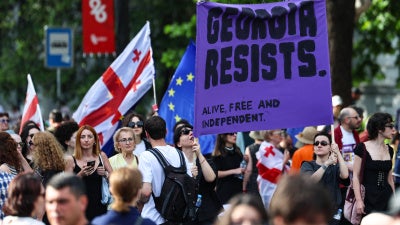
• The Georgian government uses the Code of Administrative Offenses to lock up protestors and activists at times of political tension. The code allows for a person to be imprisoned for up to 90 days for certain minor offenses, but lacks due process and a fair trial required by international law. The government used excessive force to disperse anti-government protests in Tbilisi, the capital, in May, and prosecuted dozens of demonstrators in these administrative trials, failing to fully respect their due process rights. The authorities also failed to effectively investigate past instances of excessive use of force. Other concerns include restrictions on the media and on freedom of association, as well as forced evictions of internally displaced persons.
  • Georgia’s human rights record remained uneven in 2011. The government used excessive force to disperse anti-government protests in Tbilisi, the capital, in May, and prosecuted dozens in misdemeanor trials without full respect for due process rights. The authorities failed to effectively investigate these events and past instances of excessive use of force. Other concerns include restrictions on freedom of association and media, as well as forced evictions of internally displaced persons (IDPs) living in state-owned temporary housing.

Reports

Georgia

  • Sep 26, 2012
    Georgia’s use of administrative detention to lock up protesters and political activists violates the country’s international commitments to safeguard against arbitrary detention.
  • Sep 19, 2012
    Video footage broadcast on Georgian television on September 18, 2012, depicts sexual and other abuse of inmates in a notorious prison in Georgia, which should be subject to criminal investigation.
  • Jan 10, 2012
    Twenty years ago, in July 1991, I was poised to start a job researching human rights violations in the Soviet Union. A month later, the failed coup to unseat Communist Party leader Mikhail Gorbachev precipitated rapid political changes that would lead to the dissolution of the Soviet Union on December 25. Watching these events, my family told me I would no longer have a job. Like many others, they assumed that the end of communism would usher in a new era of democracy, the rule of law, and human rights in the Soviet Union’s successor states. I started my new job as planned and it only took five minutes to see that those assumptions were wrong.
  • Jan 4, 2012
    Georgia’s system for handling administrative offenses, or misdemeanors, violates the defendant’s due process rights.
  • Nov 19, 2011
    They like playing dominoes in Abkhazia. As dusk falls, young men unpack their pieces on the promenade by the Black Sea in Sukhumi, the picturesque capital of this breakaway territory bidding for independence from Georgia.
  • Nov 18, 2011
    We write in advance of the upcoming Cooperation Councils with Armenia, Azerbaijan, and Georgia to urge you to ensure these meetings are used to raise concrete concerns in human rights, making clear that addressing them is of core importance to the EU and an essential component of the EU’s engagement with each country.
  • Oct 6, 2011
    Human rights need to be high on President Sarkozy’s agenda for his lightning-trip through the South Caucasus.
  • Jul 15, 2011
    The rights of ethnic Georgian returnees to Abkhazia are hostage to nearly two decades of political conflict.
  • May 25, 2011
    Riot police in Georgian capital Tbilisi beat demonstrators while trying to disperse a peaceful anti-government protest.
  • Feb 18, 2011
    After almost 19 years since the first exchange of fire in August 1992, the Georgian–Abkhaz conflict remains as far from political resolution as ever.