
• Nov 6, 2012
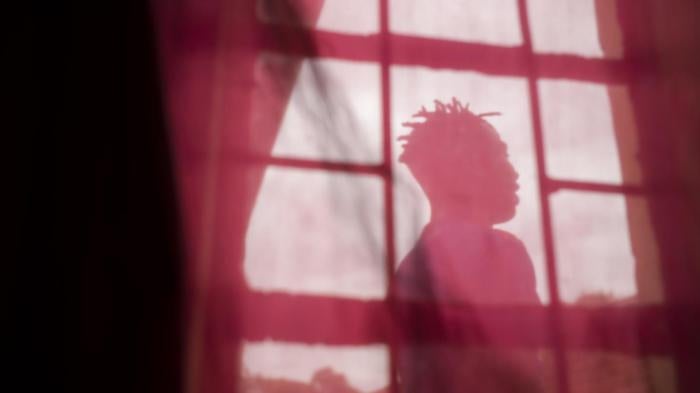
    The Malawian government’s decision to suspend enforcement of laws that criminalize consensual same-sex conduct is the right thing to do, and should serve as an inspiration to other countries that criminalize homosexuality. During a radio debate last week with activists from Malawi’s lesbian, gay, bisexual, and transgender (LGBT) community, the justice minister announced a moratorium on arrests on the basis of the country’s colonial-era sodomy laws.
  • Aug 1, 2012
    Secretary of State Hillary Clinton on her trip to Africa should promote freedom of expression and association and encourage countries to address police and security force abuses, Human Rights Watch said in a public letter today. Secretary Clinton is scheduled to visit Senegal, South Sudan, Uganda, Kenya, Malawi, and South Africa between July 31 and August 10, 2012.

Reports

Malawi

  • Nov 6, 2012
    The Malawian government’s decision to suspend enforcement of laws that criminalize consensual same-sex conduct is the right thing to do, and should serve as an inspiration to other countries that criminalize homosexuality. During a radio debate last week with activists from Malawi’s lesbian, gay, bisexual, and transgender (LGBT) community, the justice minister announced a moratorium on arrests on the basis of the country’s colonial-era sodomy laws.
  • Sep 3, 2012
    JURIST Guest Columnist Katherine Todrys of the Health and Human Rights Division of Human Rights Watch recounts her experiences researching disease transmission and living standards in African prisons. She calls for sweeping criminal justice reforms to address the systemic problems of overcrowding, human rights abuses and wrongful imprisonment.
  • Aug 10, 2012
    The new Malawi government took an important step in June when it indicated it could not host the African Union summit if it meant welcoming President Omar al-Bashir of Sudan to its territory, given that he is an International Criminal Court suspect for crimes committed in Darfur. This is a key acknowledgment of the court’s work 10 years into its existence and takes a firm stand at a time when many Africans are criticizing the court for what is seen as an anti-Africa bias in its attempts to bring to trial government leaders and others allegedly responsible for the gravest crimes — genocide, war crimes and crimes against humanity
  • Aug 1, 2012
    Secretary of State Hillary Clinton on her trip to Africa should promote freedom of expression and association and encourage countries to address police and security force abuses, Human Rights Watch said in a public letter today. Secretary Clinton is scheduled to visit Senegal, South Sudan, Uganda, Kenya, Malawi, and South Africa between July 31 and August 10, 2012.
  • Jul 31, 2012
  • Jun 14, 2012
    At a news conference shortly after she was sworn in as Malawi’s president, Joyce Banda announced her government’s intention to decriminalise homosexuality. It is unclear how she will achieve this, but the move is in stark contrast to the approach of her predecessor, Bingu wa Mutharika, who openly condemned it.
  • Jun 8, 2012

    The Malawi government showed strong support for victims of international crimes by deciding not to be the host of the African Union (AU) summit if President Omar al-Bashir of Sudan is allowed to attend, African civil society organizations and international organizations with a presence in Africa said today.


  • Mar 22, 2012
    The Malawi government’s recent surge of arrests and threats against critics reflects its broader crackdown on free speech and other basic rights. On March 9, 2012, Malawi’s State House, the President's office, issued a statement warning journalists and human rights activists that those who insulted President Bingu wa Mutharika faced prosecution and up to two years in prison.
  • Oct 13, 2011
    Malawi should arrest Sudanese President Omar al-Bashir or bar his entry to the country. Al-Bashir is expected to travel to Malawi to attend the Common Market for Eastern and Southern Africa (COMESA) summit on Friday, October 14, 2011.
  • Aug 17, 2011
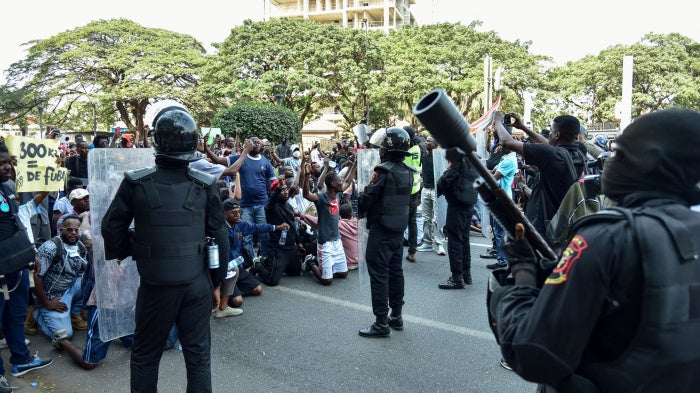
    Police in Malawi should use restraint during future protests to avoid repeating the use of excessive and lethal force that killed 19 people on July 20, 2011. Vigils and demonstrations planned throughout the country for August 17 and 18 to commemorate those killed in July and raise concerns about the economy and human rights were indefinitely postponed by organizers on August 16 after a court issued an injunction banning them.