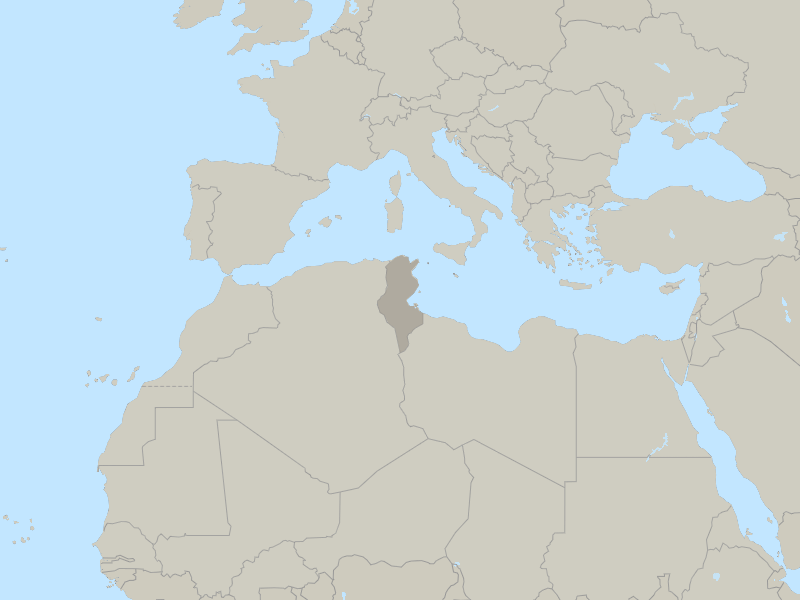
Tunisia
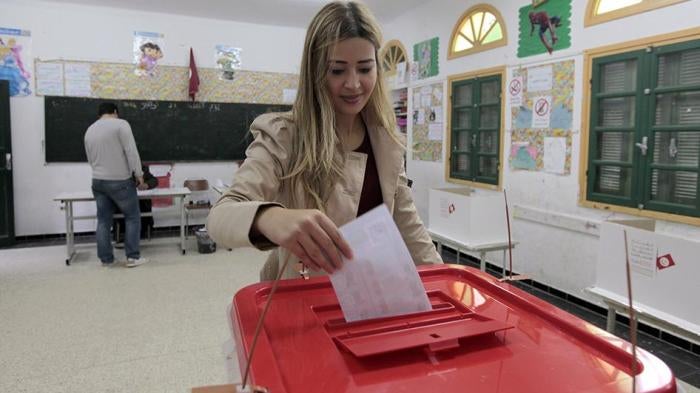
Tunisian authorities intensified repression of political opposition and other critical voices by carrying out mass arrests, imprisoning journalists, and targeting civil society groups. As of November 2024, over 80 people were detained on political grounds or for exercising their fundamental rights, including political opponents, activists, lawyers, journalists, human rights defenders, and social media users. Authorities undermined the integrity of the October 2024 presidential election to ensure President Kais Saied’s re-election, including by excluding or imprisoning prospective challengers and amending the electoral law just days before the election. Tunisian security forces continued abuses against migrants, asylum seekers, and refugees with impunity. The European Union continued efforts to enhance migration cooperation with Tunisia despite ongoing violations.
-
Refugees and Migrants

Videos
Videos-
-

-

-
July 19, 2023
Tunisia: No Safe Haven for Black African Migrants, Refugees
Security Forces Abuse Migrants; EU Should Suspend Migration Control Support

News
-
September 8, 2026
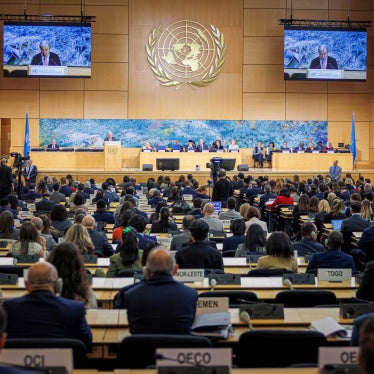
HRW Oral Statement on Sri Lanka and Tunisia
HRW Oral Statement - Item 2 General Debate - HRC63
-
September 4, 2026
Human Rights Watch Updated Briefing Paper on the Human Rights Situation in Tunisia
Update on human rights in Tunisia and the need for international scrutiny
-
September 3, 2026
Tunisia: Court Upholds Unjust Conspiracy Convictions
-

-
July 16, 2026
“A Blueprint For Complicity” - Three Years On, EU-Tunisia Deal Continues to Fuel Human Rights Violations
Joint Statement by 46 Human Rights and Humanitarian Organizations
-
July 8, 2026
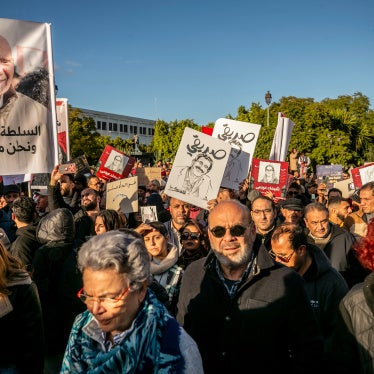
Sounding the Alarm over Tunisia’s Crackdown
UN Experts, Civil Society Highlight Deepening Repression
-
July 7, 2026
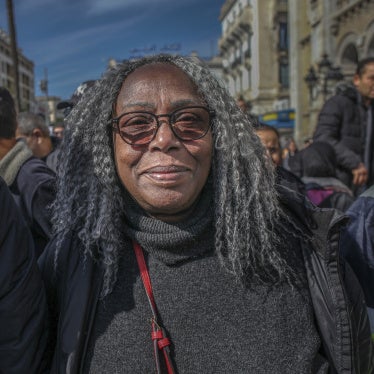
Tunisia: Harsh Sentences for Rights Defenders
New Convictions Amid Drastic Closing of Civic Space
-
June 26, 2026
Tunisia: Rights Defender Given 25-Year Sentence

-
June 26, 2026
Three Years After the EU-Tunisia Deal, Review EU Approach Toward Tunisia's Human Rights Decline
Joint CSO Letter
-
June 25, 2026
Tunisia: Executive Capture of the Judiciary and the Criminalization of the Legal Profession
Civil society joint statement - ID with SR on independence of judges and lawyers - HRC62